
When homeowners hear the term foundation stabilization, they often assume it means fixing a crack. In reality, stabilization is not about cosmetic repair — it’s about stopping movement, controlling structural stress, and preventing a foundation wall from continuing to fail.
Cracks are symptoms. Bowing, leaning, and shifting walls are the problem.
This guide explains what foundation stabilization actually means, why foundations move, how professionals determine when stabilization is required, and why modern reinforcement methods — including carbon fiber systems — have become a preferred solution in many situations.
Quick Answers Homeowners Want (Q&A)
Q: What does foundation stabilization mean?
Foundation stabilization refers to reinforcing a foundation wall or structural element so it can resist ongoing pressure and prevent further movement.
Q: Is stabilization the same as foundation repair?
Not exactly. Repair often addresses visible damage (cracks, leaks). Stabilization addresses the cause — pressure and movement.
Q: Can a foundation be stabilized without excavation?
In many cases, yes. Interior-installed systems such as carbon fiber reinforcement can stabilize walls without digging.
Why Foundations Move in the First Place
Foundation walls are designed to support vertical loads from the home above. What many homeowners don’t realize is that basement and crawlspace walls also experience horizontal forces — often for decades.
The most common forces causing wall movement include:
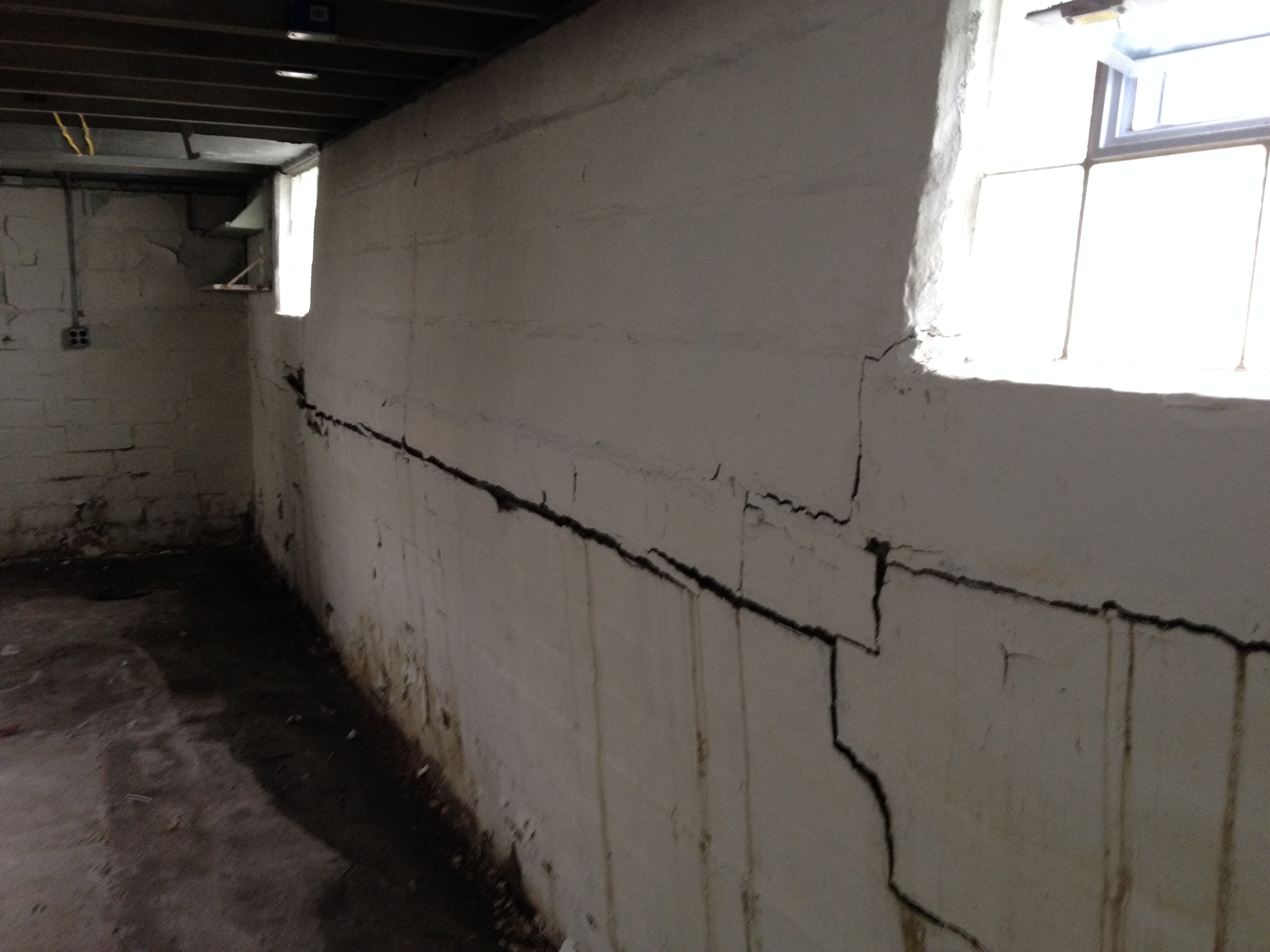
When soil becomes saturated, it increases in weight and pushes inward on foundation walls. This pressure builds after heavy rain, snowmelt, or prolonged wet seasons.
2. Expansive Soil
Clay-heavy soils expand when wet and contract when dry. This constant cycle places repeated stress on foundation walls.
3. Poor Drainage
Short downspouts, clogged gutters, and improper grading allow water to collect near the foundation, dramatically increasing pressure.
4. Freeze–Thaw Cycles
In colder regions, freezing soil expands outward, adding seasonal stress to walls.
5. Construction Backfill
The soil placed against foundation walls after construction is often looser and more susceptible to water retention and pressure.
Signs a Foundation Needs Stabilization
Many homeowners don’t realize their foundation is moving until the symptoms become obvious. Early detection can significantly reduce repair complexity.
Common warning signs include:
- Horizontal cracks in basement walls
- Inward bowing or bulging
- Leaning foundation walls
- Stair-step cracks in block foundations
- Doors and windows sticking or misaligning
- Recurring wall cracks after previous repairs
- Gaps between walls and floors or ceilings
If any of these signs are present, stabilization — not just sealing — should be evaluated.
Foundation Repair vs Foundation Stabilization
Foundation Repair (Surface-Level)
- Crack injection
- Mortar patching
- Waterproof coatings
These methods can be appropriate for non-moving, cosmetic, or moisture-related issues.
Foundation Stabilization (Structural)
- Reinforcement systems
- Anchoring solutions
- Load-resisting supports
Stabilization is required when:
- Walls are bowing or leaning
- Cracks continue to widen
- Pressure is actively acting on the structure
Common Foundation Stabilization Methods
Carbon Fiber Reinforcement Systems
Carbon fiber reinforcement has become increasingly popular because it offers:
- High tensile strength
- Low-profile installation
- Interior-only access
- Minimal disruption to landscaping
- No loss of usable basement space
Carbon fiber is designed to restrain wall movement, not mask it.
Steel Beam Reinforcement
Steel beams are a traditional stabilization option used when:
- Wall bowing is more advanced
- Additional rigidity is required
- Visible structural support is acceptable
Steel beams are effective but can reduce basement usability and visual appeal.
Wall Anchors / Tieback Systems
Wall anchors are used when:
- Exterior excavation is possible
- There is sufficient yard space
- Gradual wall correction is desired
These systems transfer pressure away from the foundation wall into stable soil.
How Professionals Decide Which Stabilization Method Is Right
There is no one-size-fits-all solution. A professional evaluation typically considers:
- Degree of wall movement
- Crack patterns
- Foundation material (poured concrete vs block)
- Access (interior vs exterior)
- Finished basement considerations
- Long-term water management
The goal is always the same: stop movement and prevent progression.
What Foundation Stabilization Can — and Cannot — Do
What stabilization does:
- Stops further inward wall movement
- Reduces structural stress
- Protects against worsening cracks
- Preserves long-term structural integrity
What stabilization does not always do:
- Instantly straighten severely bowed walls
- Replace the need for drainage improvements
- Fix cosmetic damage by itself
Stabilization works best when paired with proper water control.
People Also Ask
Can a foundation wall be straightened after it bows?
In some cases, partial correction is possible. Many systems focus on preventing further movement rather than full reversal.
How long does foundation stabilization last?
When properly designed and installed, stabilization systems are intended to be long-term solutions.
Is foundation stabilization worth it?
Stabilization can prevent more invasive and costly repairs later, making it a proactive investment.
FAQ: Foundation Stabilization
Is foundation stabilization disruptive?
Many modern methods are installed from inside the basement with minimal disruption.
Will stabilization increase home value?
Documented stabilization can reduce buyer concerns and inspection objections.
Do I need stabilization if my wall is cracked but not bowing?
Not always — but cracks combined with pressure or repeat movement should be evaluated.
Final Thought
Foundation stabilization isn’t about reacting to damage — it’s about preventing failure. When walls are under pressure, the most responsible solution is one that stops movement before it becomes irreversible.