
Horizontal cracks in block foundation walls are among the most concerning conditions a homeowner can encounter. Because block walls rely heavily on mortar joints for strength, horizontal cracking often signals significant lateral pressure and early-to-moderate wall failure.
This guide explains why block foundations crack horizontally, how to determine severity, and what repair methods actually work long-term.
Immediate Answers (Q&A)
Q: Are horizontal cracks in block foundations serious?
Yes. They often indicate wall bending caused by lateral soil pressure.
Q: Are block foundations weaker than poured concrete?
Block walls are structurally sound when properly supported, but mortar joints create natural weak points under pressure.
Q: Can horizontal cracks in block walls be repaired?
Yes — especially when addressed early with proper stabilization.
Why Block Foundation Walls Crack Horizontally
Block foundations differ from poured concrete in one critical way: they are segmented.
Each block is bonded by mortar joints, which are more vulnerable to lateral stress.
Common causes include:
Lateral Soil Pressure
Saturated or expansive soil pushes inward against the wall.
Mortar Joint Failure
Mortar is weaker than concrete block, making horizontal cracking more likely along joints.
Poor Drainage
Water buildup increases pressure dramatically.
Freeze–Thaw Expansion
Seasonal freezing increases stress along mortar joints.
Why Horizontal Cracks in Block Walls Are Structural
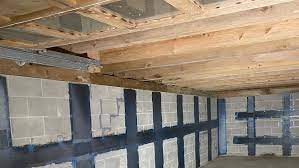
- The wall is bending inward
- Mortar joints are failing
- Structural capacity is being reduced
Left unaddressed, cracks can widen and spread across multiple courses of block.
Signs a Horizontal Block Crack Is Getting Worse
- Crack widening
- Bowing or bulging near the crack
- Stair-step cracks forming nearby
- Multiple horizontal cracks
- Moisture seepage through joints
- Interior wall finishes separating
These signs indicate pressure is ongoing.
Why Sealing Block Cracks Alone Is Not Enough
Mortar patching or crack sealing:
- Does not increase wall strength
- Does not resist soil pressure
- Often fails as movement continues
Sealing should be considered secondary to stabilization.
Correct Repair Strategy for Horizontal Block Cracks
Step 1: Pressure Reduction
- Improve grading
- Extend downspouts
- Address surface water issues
Step 2: Structural Stabilization
Effective stabilization methods include:
Carbon Fiber Reinforcement
- Bonds across cracked joints
- Adds tensile strength
- Low-profile interior install
- Preserves basement space
Steel Beam Reinforcement
- Strong structural support
- Used for more advanced bowing
- Reduces usable wall area
Wall Anchors
- Exterior-based solution
- Transfers pressure away from the wall
- Allows gradual correction
Why Carbon Fiber Is Often Ideal for Block Walls
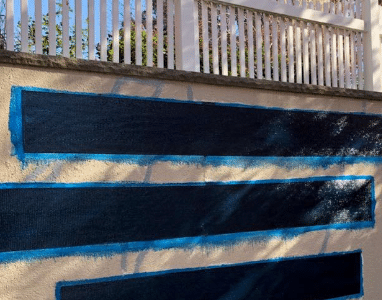
- Bridges multiple mortar joints
- Reinforces weak planes
- Distributes stress vertically
- Avoids invasive excavation
It is often used when walls are cracked but not yet severely displaced.
People Also Ask
Do block foundation cracks mean replacement is needed?
Not always. Many block walls can be stabilized successfully if addressed early.
Can block walls collapse from horizontal cracks?
If left untreated and pressure continues, structural failure is possible.
Can horizontal cracks be repaired from inside the basement?
Yes. Many stabilization systems are designed for interior installation.
FAQ: Block Foundation Horizontal Cracks
How many cracks are too many?
Multiple cracks often indicate ongoing pressure and should be evaluated.
Will stabilization stop water intrusion?
Stabilization controls structure; sealing and drainage control moisture.
Are block foundations more expensive to repair?
Costs vary by severity, but early stabilization is usually far less expensive than replacement.
Review-Style Trust Signals
- “They stabilized the block wall before it got worse.”
- “No more cracking after reinforcement.”
- “Clear explanation and no pressure.”
Final Thought
Horizontal cracks in block foundation walls are not cosmetic defects — they are structural warnings. When pressure is controlled and the wall is reinforced early, homeowners can avoid far more disruptive and expensive repairs.