
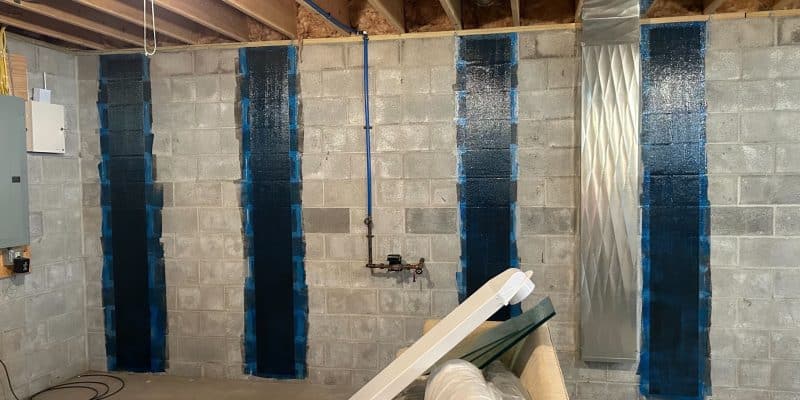
The use of carbon fiber in foundation repair has emerged as a revolutionary technique, providing enhanced durability and efficiency compared to traditional methods. Carbon fiber’s exceptional strength, flexibility, and resistance to environmental factors make it an ideal material for reinforcing and repairing foundations. This article delves into advanced carbon fiber techniques for foundation repair, exploring their applications, benefits, and the future of this innovative technology.
The Evolution of Foundation Repair
Traditional Foundation Repair Methods
- Steel I-Beams
- Steel I-beams have been traditionally used to stabilize bowing foundation walls. While effective, their installation is intrusive and labor-intensive.
- Wall Anchors
- Wall anchors involve the installation of steel plates and rods to stabilize foundation walls. This method requires significant excavation and can disrupt landscaping.
- Underpinning
- Underpinning extends the foundation’s depth or breadth to transfer the load to more stable soil. This method is effective but costly and invasive.
Introduction of Carbon Fiber
- High Strength and Durability
- Carbon fiber offers superior tensile strength and durability compared to traditional materials like steel.
- Lightweight and Flexible
- Carbon fiber is lightweight and can be easily molded to fit various shapes and surfaces, making it versatile for different repair needs.
- Corrosion Resistance
- Unlike steel, carbon fiber is resistant to corrosion, chemicals, and environmental factors, ensuring long-lasting performance.
Advanced Carbon Fiber Techniques for Foundation Repair
1. Carbon Fiber Reinforcement Straps
- Application
- Carbon fiber straps are applied to foundation walls to reinforce and stabilize them. They are particularly effective for addressing bowing walls and cracks.
- Installation Process
- The installation involves cleaning the surface, applying epoxy adhesive, and pressing the carbon fiber straps onto the epoxy-coated surface. The straps are then smoothed and secured, ensuring proper adhesion.
- Benefits
- The use of carbon fiber straps is minimally invasive, quick to install, and provides long-term stability and durability.
2. Carbon Fiber Grid Stitching
- Application
- Carbon fiber grid stitching involves the installation of a grid of carbon fiber strips across cracks in the foundation. This technique distributes the stress and prevents further cracking.
- Installation Process
- The process involves cleaning the surface, injecting epoxy into the cracks, and applying the carbon fiber grid over the cracks. The grid is then secured with additional layers of epoxy.
- Benefits
- Carbon fiber grid stitching provides enhanced crack repair, preventing further movement and water infiltration.
3. Carbon Fiber Sheets and Wraps
- Application
- Carbon fiber sheets and wraps are used to encase entire sections of foundation walls, providing comprehensive reinforcement and protection.
- Installation Process
- The installation involves cleaning the surface, applying epoxy adhesive, and wrapping the carbon fiber sheets around the foundation walls. The sheets are then smoothed and secured with additional layers of epoxy.
- Benefits
- Carbon fiber sheets and wraps offer maximum coverage and protection, enhancing the overall strength and durability of the foundation.
4. Carbon Fiber Rods
- Application
- Carbon fiber rods are used to reinforce foundation walls and footings. They can be inserted into drilled holes and secured with epoxy, providing additional support and stability.
- Installation Process
- The process involves drilling holes into the foundation, inserting the carbon fiber rods, and securing them with epoxy. The rods are then smoothed and secured, ensuring proper adhesion.
- Benefits
- Carbon fiber rods provide targeted reinforcement, enhancing the load-bearing capacity of the foundation.
Advantages of Carbon Fiber in Foundation Repair
- High Strength-to-Weight Ratio
- Carbon fiber’s exceptional strength and lightweight properties make it an ideal material for reinforcing foundations without adding significant weight.
- Durability and Longevity
- Carbon fiber is resistant to corrosion, chemicals, and environmental factors, ensuring long-lasting performance and minimal maintenance.
- Minimal Invasiveness
- The installation of carbon fiber is quick and minimally invasive, causing minimal disruption to the property and occupants.
- Flexibility and Versatility
- Carbon fiber can be molded to fit various shapes and surfaces, making it versatile for different foundation repair needs.
- Cost-Effective
- Compared to traditional repair methods, carbon fiber is often more cost-effective due to lower labor and material costs.
Case Studies and Real-World Applications
- Residential Foundation Repair
- Case studies of residential properties where carbon fiber was used to reinforce bowing walls and repair cracks, demonstrating its effectiveness and durability.
- Commercial and Industrial Applications
- Examples of commercial and industrial buildings where carbon fiber was used for foundation reinforcement, highlighting its versatility and strength.
- Seismic Retrofitting
- Case studies of buildings in earthquake-prone areas where carbon fiber was used to enhance seismic resistance, providing added safety and stability.
Future of Carbon Fiber in Foundation Repair
- Advancements in Materials and Technology
- Ongoing research and development in carbon fiber materials and technology are expected to further enhance its strength, durability, and versatility.
- Increased Adoption and Awareness
- As awareness of the benefits of carbon fiber grows, its adoption in foundation repair is expected to increase, providing more homeowners and contractors with access to this innovative solution.
- Integration with Smart Technologies
- The integration of carbon fiber with smart technologies, such as sensors and monitoring systems, can provide real-time data on foundation health and performance, enabling proactive maintenance and repairs.

- The integration of carbon fiber with smart technologies, such as sensors and monitoring systems, can provide real-time data on foundation health and performance, enabling proactive maintenance and repairs.
Advanced carbon fiber techniques have transformed the field of foundation repair, offering enhanced durability, efficiency, and long-term performance compared to traditional methods. With its exceptional strength, flexibility, and resistance to environmental factors, carbon fiber is an ideal material for reinforcing and repairing foundations. By understanding the benefits, applications, and installation processes of carbon fiber techniques, homeowners and contractors can make informed decisions when it comes to foundation repair. The future of carbon fiber in foundation repair looks promising, with ongoing advancements and increased adoption expected to further enhance its capabilities and benefits.
Contact the Professionals at StablWall Today (866) 782-5955