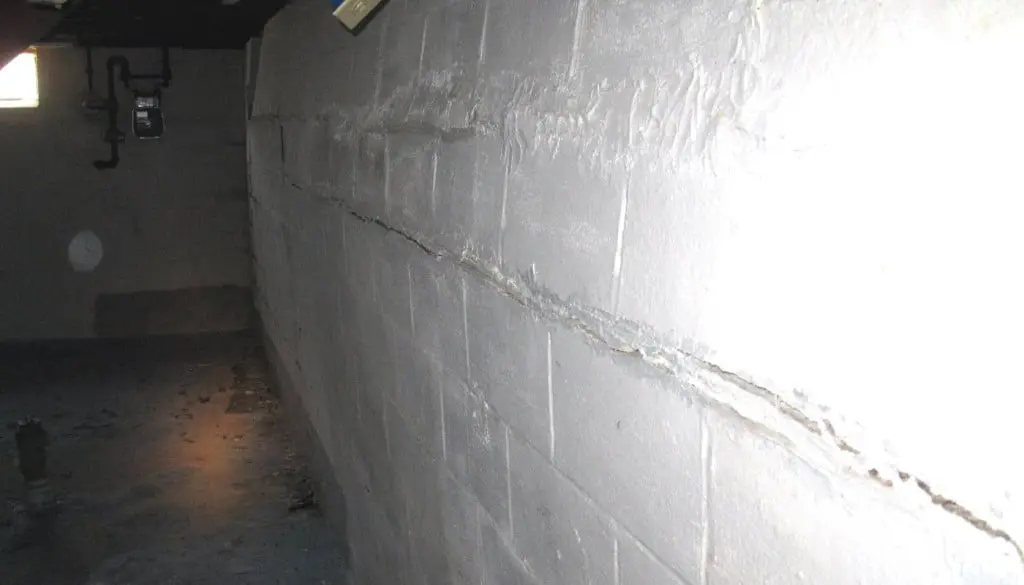
Carbon Fiber Foundation Crack Repair Carbon fiber is made through a complex process involving high heat that rearranges molecules. It also requires sophisticated equipment. For years, carbon fiber was just too expensive to produce to be viable for anything but the most critical applications, like space shuttles, airplane wings, and repairs of bridges and commercial concrete structures. But more recently, more reasonable production costs and its incredible strength have opened the door to a host of new applications – and we’re seeing more and more carbon fiber-based products in hundreds of everyday uses. StablWall is designed around the same concepts used in heavy industrial settings – the sheets are wider, and cover more area than other carbon fiber products on the market today – the benefit to you is more coverage and better strength! StablWall uses technology to help you feel confident about the strength of your foundation, StablWall uses carbon fiber technology to strengthen basement walls and concrete structures. For the first time, homeowners and residential contractors can benefit from carbon fiber’s strength – until recently, carbon fiber was only available to commercial or government contractors. StablWall consists of carbon fiber sheets. Those sheets consist of thousands of strands linked together and running in the same direction. When those sheets are bonded to a concrete structure, they add tremendous strength to that structure. The StablWall System also consists of specially engineered epoxies that bond the carbon fibers to a concrete wall or structure. Once bonded, the wall becomes significantly stronger than it was before – thereby eliminating the worry of additional cracking or bowing or a Bowed Cinder Block, which can be a sign of structural integrity failure. Better yet, the StablWall system does not detract from the look or amount of space you have to work with. Facts About Philadelphia, PA Philadelphia, a city in Pennsylvania whose name means City of Brotherly Love, was originally settled by Native American tribes, particularly the Lenape hunter gatherers, around 8000 B.C. By the early 1600s, Dutch, English and Swedish merchants had established trading posts in the Delaware Valley area, and in 1681, Charles II of England granted a charter to William Penn for what would become the Pennsylvania colony. Penn arrived in the new city of Philadelphia in 1682. A Quaker pacifist, Penn signed a peace treaty with Lenape chief Tamanend, establishing a tradition of tolerance and human rights. But in 1684, the ship Isabella landed in Philadelphia carrying hundreds of enslaved Africans. Tensions over slavery, especially among local Quakers, resulted in the 1688 Germantown Petition Against Slavery, the first organized protest against slavery in the New World. Penn’s colony thrived, and soon Philadelphia was the biggest shipbuilding center in the colonies. Among those attracted to the city was Benjamin Franklin, who in 1729, became the publisher of The Pennsylvania Gazette. The Pennsylvania State House—later known as Independence Hall—held its first Assembly meeting there in 1735. State representatives ordered a large bell for the building in 1751 with a Biblical inscription: “Proclaim LIBERTY throughout all the Land unto all the inhabitants thereof.” British Parliament passed a series of tax acts on the colonies in the 1760s, including the Stamp Act and the Townshend Acts, sparking colonial outrage. In response, the Continental Congress convened in Philadelphia in 1774. After Philadelphia resident Thomas Paine’s pamphlet Common Sense met with widespread acclaim, the stage was set to formally declare independence, which the Founding Fathers did on July 4, 1776. Philadelphians were the first to hear the Declaration of Independence read aloud in the State House yard. In 1790, after the Revolutionary War (during which the city witnessed the Battle of Germantown), Philadelphia served as capital of the United States. By that time, it was the new nation’s biggest city, with 44,096 residents. The First Bank of the United States and the first U.S. Mint were founded in Philadelphia, and the U.S. Constitution was written there in 1787. With the city’s history of civil rights—the Pennsylvania Abolition Society met there in 1775— Philadelphia was an ideal spot for William Lloyd Garrison to establish the American Anti-Slavery Society, which grew to nearly 250,000 members by 1838. Local abolitionists adopted the old State House bell as a symbol, renaming it the “Liberty Bell.” Philadelphia rallied to the Union cause during the Civil War, and local industries profited by supplying weapons, uniforms and warships. In 1876, suffragette Susan B. Anthony delivered the Declaration of the Rights of Women outside Independence Hall. The city grew in size and prestige during the Gilded Age, as wealthy suburbs sprouted along the Main Line of the Pennsylvania Railroad. During the 1870s, the first U.S. zoo and the Centennial Exhibition fair opened in Philadelphia. The city’s shipbuilding industries supplied the Allies in World War I, but Philadelphia was also a center of the Spanish flu pandemic of 1918-1919—over 500,000 citizens contracted the deadly disease.
WHERE TO FIND US:
StablWall 349 Highland Road Macedonia, OH 44056 Phone: (866) 782-5955