Carbon Fiber Foundation Crack Repair
Carbon fiber is made through a complex process involving high heat that rearranges molecules. It also requires sophisticated equipment. For years, carbon fiber was just too expensive to produce to be viable for anything but the most critical applications, like space shuttles, airplane wings, and repairs of bridges and commercial concrete structures. But more recently, more reasonable production costs and its incredible strength have opened the door to a host of new applications – and we’re seeing more and more carbon fiber-based products in hundreds of everyday uses. StablWall is designed around the same concepts used in heavy industrial settings – the sheets are wider, and cover more area than other carbon fiber products on the market today – the benefit to you is more coverage and better strength! StablWall uses technology to help you feel confident about the strength of your foundation, StablWall uses carbon fiber technology to strengthen basement walls and concrete structures. For the first time, homeowners and residential contractors can benefit from carbon fiber’s strength – until recently, carbon fiber was only available to commercial or government contractors. StablWall consists of carbon fiber sheets. Those sheets consist of thousands of strands linked together and running in the same direction. When those sheets are bonded to a concrete structure, they add tremendous strength to that structure. The StablWall System also consists of specially engineered epoxies that bond the carbon fibers to a concrete wall or structure. Once bonded, the wall becomes significantly stronger than it was before – thereby eliminating the worry of additional cracking or bowing. Better yet, the StablWall system does not detract from the look or amount of space you have to work with. Contact StablWall Today! 866.782.5955
Facts About New York
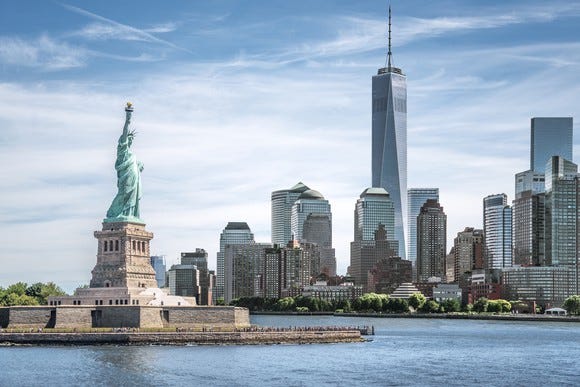
In 1664, the British seized New Amsterdam from the Dutch and gave it a new name: New York City. For the next century, the population of New York City grew larger and more diverse: It included immigrants from the Netherlands, England, France and Germany. During the 1760s and 1770s, the city was a center of anti-British activity–for instance, after the British Parliament passed the Stamp Act in 1765, New Yorkers closed their businesses in protest and burned the royal governor in effigy. However, the city was also strategically important, and the British tried to seize it almost as soon as the Revolutionary War began. In August 1776, despite the best efforts of George Washington’s Continental Army in Brooklyn and Harlem Heights, New York City fell to the British. It served as a British military base until 1783. The city recovered quickly from the war, and by 1810 it was one of the nation’s most important ports. It played a particularly significant role in the cotton economy: Southern planters sent their crop to the East River docks, where it was shipped to the mills of Manchester and other English industrial cities. Then, textile manufacturers shipped their finished goods back to New York. But there was no easy way to carry goods back and forth from the growing agricultural hinterlands to the north and west until 1817, when work began on a 363-mile canal from the Hudson River to Lake Erie. The Erie Canal was completed in 1825. At last, New York City was the trading capital of the nation. As the city grew, it made other infrastructural improvements. In 1811, the “Commissioner’s Plan” established an orderly grid of streets and avenues for the undeveloped parts of Manhattan north of Houston Street. In 1837, construction began on the Croton Aqueduct, which provided clean water for the city’s growing population. Eight years after that, the city established its first municipal agency: the New York City Police Department. Meanwhile, increasing number of immigrants, first from Germany and Ireland during the 1840s and 50s and then from Southern and Eastern Europe, changed the face of the city. They settled in distinct ethnic neighborhoods, started businesses, joined trade unions and political organizations and built churches and social clubs. For example, the predominantly Irish-American Democratic club known as Tammany Hall became the city’s most powerful political machine by trading favors such as jobs, services and other kinds of aid for votes. At the turn of the 20th century, New York City became the city we know today. In 1895, residents of Queens, the Bronx, Staten Island and Brooklyn–all independent cities at that time–voted to “consolidate” with Manhattan to form a five-borough “Greater New York.” As a result, on December 31, 1897, New York City had an area of 60 square miles and a population of a little more than 2 million people; on January 1, 1898, when the consolidation plan took effect, New York City had an area of 360 square miles and a population of about 3,350,000 people. The 20th century was an era of great struggle for American cities, and New York was no exception. The construction of interstate highways and suburbs after World War II encouraged affluent people to leave the city, which combined with deindustrialization and other economic changes to lower the tax base and diminish public services. This, in turn, led to more out-migration and “white flight.” However, the Hart-Cellar Immigration and Nationality Act of 1965 made it possible for immigrants from Asia, Africa, the Caribbean and Latin America to come to the United States. Many of these newcomers settled in New York City, revitalizing many neighborhoods. The United States Census Bureau estimates that the population of New York was 19,542,209 on July 1, 2018, a 0.85% increase since the 2010 United States Census. Despite the open land in the state, New York’s population is very urban, with 92% of residents living in an urban area, predominantly in the New York City metropolitan area. Two-thirds of New York State’s population resides in New York City Metropolitan Area. New York City is the most populous city in the United States, with an estimated record high population of 8,550,405 in 2015, incorporating more immigration into the city than emigration since the 2010 United States Census. At least twice as many people live in New York City as in the second-most populous U.S. city (Los Angeles) and within a smaller area. Long Island alone accounted for a Census-estimated 7,838,722 residents in 2015, representing 39.6% of New York State’s population. 6.5% of New York’s population were under five years of age, 24.7% under 18, and 12.9% were 65 or older. Females made up 51.8% of the state’s population. Hispanic or Latino of any race were 17.6% of the population in 2010: 2.4% were of Mexican, 5.5% Puerto Rican, 0.4% Cuban, and 9.4% other Hispanic or Latino origin. According to the 2010–2015 American Community Survey, the largest ancestry groups were Italian (13.0%), Irish (12.1%), German (10.3%), American (5.4%), and English (5.2%). The state’s most populous racial group, non-Hispanic white, has declined as a proportion of the state population from 94.6% in 1940 to 58.3% in 2010. As of 2011, 55.6% of New York’s population younger than age 1 were minorities. New York’s robustly increasing Jewish population, the largest outside of Israel, was the highest among states both by percentage and absolute number in 2012. It is driven by the high reproductive rate of Orthodox Jewish families, particularly in Brooklyn and communities of the Hudson Valley. New York is home to the second-largest African American population (after Georgia) and the second largest Asian-American population (after California) in the United States. New York’s uniracial Black population increased by 2.0% between 2000 and 2010, to 3,073,800. The Black population is in a state of flux, as New York is the largest recipient of immigrants from Africa, while established African Americans are migrating out of New York to the southern United States. The New York City neighborhood of Harlem has historically been a major cultural capital for African-Americans of sub-Saharan descent, and Bedford-Stuyvesant in Brooklyn has the largest such population in the United States. Meanwhile, New York’s unifacial Asian population increased by a notable 36% from 2000 to 2010, to 1,420,244. Queens, in New York City, is home to the state’s largest Asian-American population and is the most ethnically diverse county in the United States; it is the most ethnically diverse urban area in the world.