
Carbon fiber foundation crack repair is a structural reinforcement method used to stabilize certain cracked and bowing foundation walls and help prevent additional inward movement.
Unlike a simple crack filler, carbon fiber reinforcement is bonded directly to the foundation wall so the damaged area can better resist the forces causing it to bend.
For homeowners dealing with horizontal cracks, stair-step cracking, or early-stage wall bowing, carbon fiber can offer a low-profile alternative to bulky steel reinforcement or more disruptive repair methods.
The important distinction is that carbon fiber is not simply covering a crack. It is intended to reinforce an appropriate foundation wall when structural movement is part of the problem.
Quick Answers About Carbon Fiber Foundation Repair
What is carbon fiber foundation crack repair?
It uses high-strength carbon fiber reinforcement bonded to a concrete or masonry foundation wall to increase resistance to movement and stabilize damaged areas.
Does carbon fiber stop foundation wall movement?
When the system is appropriate for the wall condition and correctly installed, its purpose is to resist further movement. StablWall describes carbon fiber reinforcement as a method used to stabilize bowing and cracked foundation walls.
Does carbon fiber stop water leaks?
Not necessarily. Structural stabilization and waterproofing solve different problems. Crack sealing, drainage improvements, or other moisture-control measures may still be required.
Why Is Carbon Fiber Used for Foundation Repair?
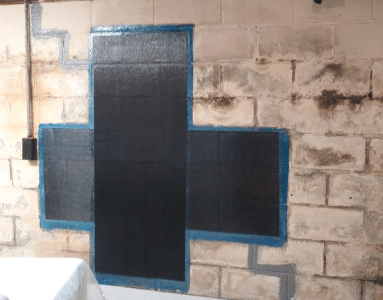
Carbon fiber is useful in structural reinforcement because it has high tensile strength while remaining thin and lightweight.
When installed correctly, the carbon fiber and bonding system work with the wall to resist the tensile forces created as the foundation begins to bend inward.
StablWall’s existing guidance describes carbon fiber straps as a minimally invasive method for reinforcing bowing foundation walls and preventing additional movement.
Benefits can include:
- High tensile strength
- Low-profile installation
- Corrosion resistance
- Minimal loss of basement space
- Interior installation in appropriate applications
- Less visual obstruction than steel beams
What Foundation Problems Can Carbon Fiber Repair?
Carbon fiber foundation reinforcement is commonly considered for several related conditions.
Horizontal Foundation Cracks
Horizontal cracks can develop when lateral pressure causes a basement wall to bend inward.
Because this type of cracking may be related to wall movement rather than simple shrinkage, reinforcement may be necessary.
For a more detailed explanation, read StablWall’s guide to horizontal foundation crack repair. StablWall specifically identifies carbon fiber reinforcement as an option for early-to-moderate wall movement and horizontal cracking without severe bowing.
Bowing Foundation Walls
Carbon fiber is frequently used to stabilize foundation walls that have begun moving inward but are still suitable for reinforcement.
It is especially attractive when homeowners want to avoid large steel beams projecting into the basement.
Stair-Step Cracks in Block Walls
Stair-step cracking through mortar joints can indicate movement in concrete block foundations.
Depending on the cause and severity, carbon fiber reinforcement may be used to bridge and strengthen affected areas.
How Does Carbon Fiber Foundation Crack Repair Work?
The exact installation depends on the system and wall, but the process generally involves four stages.
1. Foundation Wall Evaluation
Before reinforcement is selected, the wall should be evaluated for:
- Crack pattern
- Wall material
- Degree of bowing or displacement
- Active movement
- Moisture conditions
- Overall structural condition
Carbon fiber should not be selected simply because a crack is visible.
2. Surface Preparation
The concrete or masonry surface must be properly prepared so the bonding material can adhere correctly.
This step is critical because the performance of the reinforcement depends on transferring forces between the wall, adhesive, and carbon fiber.
3. Carbon Fiber Installation
Carbon fiber straps, sheets, or other reinforcement components are bonded to the prepared foundation wall using the specified adhesive system.
Once cured, the reinforcement becomes integrated with the wall and helps resist additional deformation.
StablWall has a separate step-by-step carbon fiber foundation repair guide covering assessment, preparation, installation, and final inspection.
4. Moisture and Drainage Correction
If excessive soil moisture or poor drainage contributed to the wall pressure, those conditions should also be addressed.
That might include:
- Correcting grading
- Extending downspouts
- Improving drainage
- Sealing appropriate cracks
- Addressing waterproofing issues
Structural reinforcement does not automatically eliminate the conditions that created the pressure.
What Can Carbon Fiber Foundation Repair Do?
A properly selected carbon fiber system can help:
- Stabilize certain bowing foundation walls
- Resist additional inward movement
- Reinforce cracked masonry or concrete
- Preserve usable basement space
- Avoid bulky interior steel beams
- Minimize disruption compared with some traditional repairs
The key word is stabilize.
Carbon fiber reinforcement is generally intended to restrain future movement rather than automatically return a substantially bowed wall to its original position.
What Can Carbon Fiber Not Do?
Carbon fiber is not appropriate for every foundation problem.
It should not be assumed to:
- Straighten severely displaced walls
- Correct major structural failure by itself
- Eliminate exterior drainage problems
- Waterproof every foundation crack
- Replace reconstruction when a wall is too damaged for reinforcement
- Solve settlement problems that require underpinning
This distinction is important for both homeowners and contractors because carbon fiber foundation crack repair works best when the repair method matches the actual structural condition.
Carbon Fiber vs. Steel Beams
Both systems can be used to stabilize bowing foundation walls, but they approach the problem differently.
Carbon fiber reinforcement is thin, bonded directly to the wall, and preserves basement space.
Steel beams provide substantial physical bracing but typically extend farther into the room.
For walls that fall within the appropriate conditions for carbon fiber reinforcement, the lower profile can be a major advantage.
For a broader comparison of stabilization methods, see StablWall’s foundation crack repair methods guide.
Carbon Fiber vs. Wall Anchors
Wall anchors typically rely on connections between the foundation wall and stable soil outside the home.
Carbon fiber reinforcement is generally installed from the interior and does not require the same exterior anchor placement.
That can make carbon fiber attractive where exterior access is difficult or homeowners want to avoid disturbing landscaping.
However, anchors and carbon fiber are not interchangeable in every situation. The correct method depends on wall displacement, access, structural requirements, and the goal of the repair.
How Long Does Carbon Fiber Foundation Repair Last?
Carbon fiber itself is resistant to corrosion, which gives it an advantage over materials that can rust.
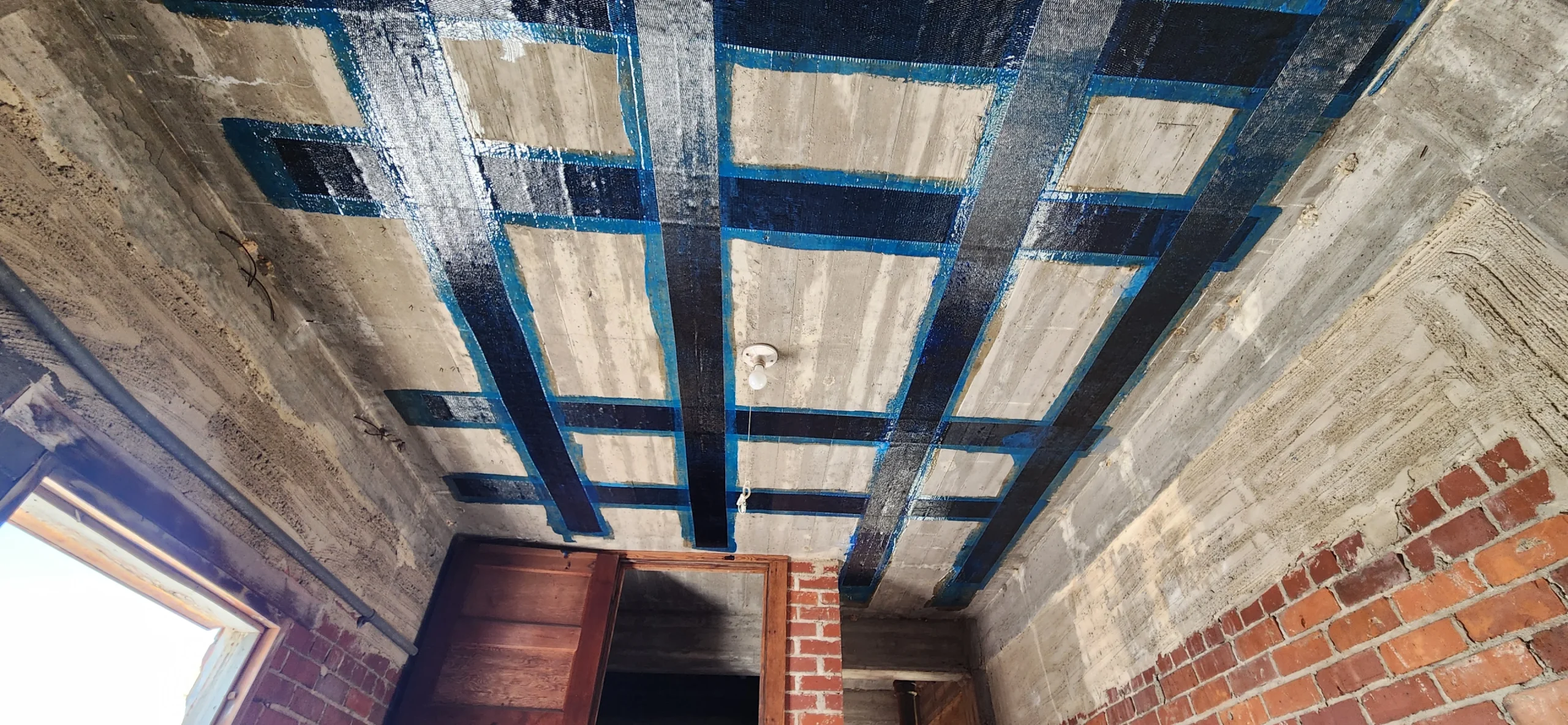 The long-term performance of any system, however, depends on more than the reinforcement material alone.
Important factors include:
- Proper diagnosis
- Correct wall preparation
- Appropriate adhesive
- Proper installation
- Condition of the masonry or concrete
- Whether contributing drainage issues are addressed
Carbon fiber should therefore be viewed as part of an engineered or properly specified stabilization system rather than as a stand-alone strip of material.
When Is Carbon Fiber the Right Choice?
Carbon fiber foundation crack repair may be worth considering when:
- A foundation wall has horizontal cracking
- A block wall has stair-step cracking related to lateral movement
- The wall is bowing inward but remains suitable for reinforcement
- Interior space is important
- Exterior excavation is undesirable or unnecessary
- A low-profile stabilization system is preferred
StablWall’s existing guidance similarly positions carbon fiber as especially useful for bowing block walls and horizontal cracking caused by lateral pressure.
When Might Carbon Fiber Not Be Enough?
More extensive repair may be necessary when:
- The wall has severe displacement
- Blocks are significantly shifted or damaged
- Structural deterioration is advanced
- The foundation problem involves settlement rather than lateral wall movement
- The wall requires straightening rather than stabilization alone
- Site conditions call for another engineered repair strategy
The earlier movement is evaluated, the more repair options may remain available.
Carbon Fiber Foundation Crack Repair FAQ
Will carbon fiber work on concrete block foundations?
Yes, carbon fiber reinforcement can be used on appropriate concrete block or masonry foundation walls when the wall condition and selected system allow it.
Can carbon fiber be used on poured concrete walls?
Yes, some carbon fiber reinforcement systems can also be installed on appropriate poured concrete foundation walls.
Does carbon fiber straighten a bowed wall?
Usually, its primary role is stabilization and resistance to additional movement. Straightening a significantly bowed wall is a separate repair objective.
Can carbon fiber be installed in a finished basement?
Installation requires access to the structural foundation wall, so drywall or other finishes may need to be removed where reinforcement is installed.
Is carbon fiber better than steel?
Neither material is automatically better for every foundation. Carbon fiber can provide a much lower-profile repair, while some wall conditions may require steel or another stabilization method.
Does carbon fiber waterproof foundation cracks?
Carbon fiber primarily addresses structural reinforcement. Waterproofing or crack sealing may still be required if moisture intrusion is present.
The Bottom Line
Carbon fiber foundation crack repair can be an effective way to stabilize appropriate cracked or bowing foundation walls without sacrificing significant basement space or automatically requiring exterior excavation.
Its biggest advantage is not simply that carbon fiber is strong. It is that the reinforcement can be bonded directly to the wall to help resist the forces responsible for continued inward movement.
But carbon fiber is not a universal foundation repair.
The wall first needs to be evaluated to determine why it cracked, how much it has moved, and whether stabilization with carbon fiber is appropriate for that specific condition.
When the diagnosis, product specification, surface preparation, and installation are correct, carbon fiber can provide a clean and durable structural reinforcement solution.