Foundation Repair vs Foundation Stabilization: What’s the Difference and Why It Matters
Homeowners dealing with foundation issues often hear two terms used interchangeably: foundation repair and foundation stabilization.
They sound similar, but they are not the same thing, and misunderstanding the difference can lead to incomplete fixes, repeated repairs, and unnecessary stress.
This guide explains what each term really means, how they work together, and why choosing the right approach matters for your home’s long-term safety.
Why the Confusion Exists
From a homeowner’s perspective, foundation problems often look the same:
Cracks in walls
Moisture in the basement
Uneven floors
Doors that stick
Because the symptoms overlap, it’s easy to assume one solution fixes everything. In reality, foundation repair and stabilization address different parts of the problem.
Understanding that distinction puts homeowners back in control.
What Foundation Repair Actually Means
Foundation repair focuses on fixing visible or functional damage.
This includes:
Sealing cracks
Repairing mortar joints
Addressing water intrusion
Restoring damaged wall surfaces
Repair solutions are often the right choice when:
The foundation is structurally stable
Damage is cosmetic or functional
There’s no ongoing movement
Foundation repair improves the condition of the structure as it exists today.
What Foundation Stabilization Really Means
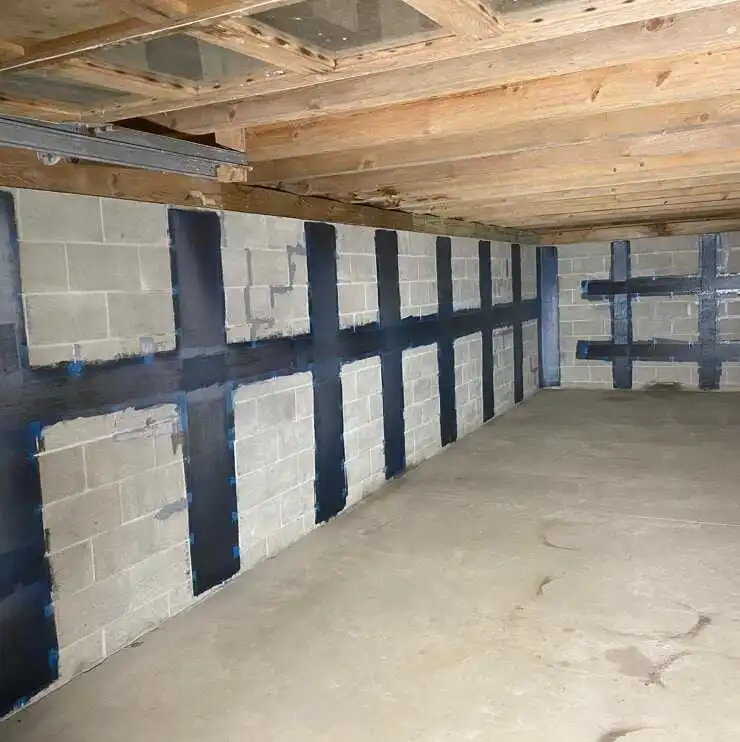
Foundation stabilization focuses on stopping movement.
It addresses the forces that cause damage in the first place, such as:
Soil pressure pushing against walls
Uneven settlement beneath the home
Long-term structural stress
Stabilization doesn’t fix cracks directly. Instead, it ensures the structure stops shifting so repairs remain effective.
Think of stabilization as protecting the foundation’s future.
Repair Without Stabilization: When It Makes Sense
Foundation repair alone may be appropriate when:
Cracks are hairline or vertical
No wall bowing is present
Cracks are stable over time
No structural movement is detected
In these cases, sealing or patching can be sufficient and cost-effective.
The key is confidence that the structure is not under active stress.
Repair Without Stabilization: When It Falls Short
Problems arise when repairs are made while movement continues.
Homeowners may notice:
Cracks reopening
New cracks forming nearby
Water intrusion returning
Walls slowly bowing over time
In these cases, repair treats the symptom while the cause remains active.
This is when stabilization becomes necessary.
Stabilization Without Repair: Is That Ever Done?
Yes, and it often surprises homeowners.
In some situations, stabilization is performed first to:
Stop wall movement
Prevent further damage
Secure the structure
Cosmetic or crack repairs may be delayed or handled separately once stability is restored.
This approach prioritizes safety and long-term performance.
How Repair and Stabilization Work Together
In many homes, the most effective solution involves both.
A common sequence looks like this:
Stabilize the foundation to stop movement
Repair existing cracks or damage
Monitor the structure over time
This combination ensures repairs don’t fail and the foundation remains secure.
Why Estimates Can Look So Different
Homeowners often receive multiple estimates with vastly different recommendations.
One company may suggest crack sealing. Another may recommend stabilization. This doesn’t always mean one is wrong.
Differences usually come from:
How thoroughly the structure was evaluated
Whether movement was detected
How much risk the company is willing to accept
A proper evaluation explains why a solution is recommended, not just what it costs.
Common Homeowner Questions
If my crack isn’t leaking, do I still need stabilization?
Possibly. Lack of water doesn’t mean lack of movement. Structural stress can exist without moisture.
Is stabilization overkill?
Not when movement is present. Stabilization prevents future damage rather than reacting to it later.
Can stabilization increase home value?
Proper stabilization often protects or improves resale value by removing structural uncertainty.
What Homeowners Say After Understanding the Difference
Homeowners frequently say things like:
“Now the recommendations make sense.”
“I understand why one repair failed and another worked.”
“I finally feel confident about the solution.”
Clarity removes doubt, which is often the biggest obstacle to action.
Why Diagnosis Matters More Than the Solution
The best solution is useless if the diagnosis is wrong.
That’s why companies like Stablwall emphasize identifying whether damage is cosmetic, functional, or structural before recommending repair, stabilization, or a combination of both.
The goal isn’t to sell more work. It’s to match the solution to the problem.
The Homeowner Takeaway
Foundation repair fixes what you see. Foundation stabilization protects what you don’t.
Knowing the difference helps homeowners:
Avoid unnecessary repairs
Prevent recurring damage
Make confident decisions
Protect their home long-term
A stable foundation makes every repair stronger, more durable, and more valuable.
Contact StablWall Today!
Follow Us
Listen Below To Our Interview With the Carey Brothers From The Louisville Remodeling Deck Expo Show
Manage Consent
To provide the best experiences, we use technologies like cookies to store and/or access device information. Consenting to these technologies will allow us to process data such as browsing behavior or unique IDs on this site. Not consenting or withdrawing consent, may adversely affect certain features and functions.
Functional Always active
The technical storage or access is strictly necessary for the legitimate purpose of enabling the use of a specific service explicitly requested by the subscriber or user, or for the sole purpose of carrying out the transmission of a communication over an electronic communications network.
Preferences
The technical storage or access is necessary for the legitimate purpose of storing preferences that are not requested by the subscriber or user.
Statistics
The technical storage or access that is used exclusively for statistical purposes.The technical storage or access that is used exclusively for anonymous statistical purposes. Without a subpoena, voluntary compliance on the part of your Internet Service Provider, or additional records from a third party, information stored or retrieved for this purpose alone cannot usually be used to identify you.
Marketing
The technical storage or access is required to create user profiles to send advertising, or to track the user on a website or across several websites for similar marketing purposes.

 From a homeowner’s perspective, foundation problems often look the same: