
A horizontal crack running across a basement or foundation wall deserves attention because it can indicate something very different from ordinary concrete shrinkage.
In many cases, horizontal foundation cracks develop when outside soil and water pressure push against the foundation wall, causing it to flex or bow inward. When movement is involved, filling or sealing the visible crack alone does not correct the underlying structural problem.
Effective horizontal foundation crack repair starts by determining why the crack formed, whether the wall is moving, and how much displacement has already occurred. Depending on those findings, the solution may involve drainage improvements, structural reinforcement, carbon fiber, steel reinforcement, wall anchors, or more extensive repairs.
StablWall’s own foundation-repair guidance similarly distinguishes cracks associated with ongoing lateral pressure and wall movement from cracks that primarily require sealing.
Quick Answer: Are Horizontal Foundation Cracks Serious?
Horizontal foundation cracks can be serious because they may indicate that lateral soil or hydrostatic pressure is pushing a basement wall inward.
The crack itself is only part of the diagnosis.
A professional evaluation should consider:
- The crack’s location and direction
- Whether it is getting longer or wider
- Inward wall bowing or bulging
- Displacement between masonry courses
- Stair-step or diagonal cracks nearby
- Water seepage or efflorescence
- Soil and drainage conditions outside
- Previous repairs
- The construction type of the foundation wall
A narrow crack should not automatically be considered harmless. Wall movement and the cause of the crack can matter more than crack width alone.
What Causes Horizontal Foundation Cracks?
Horizontal foundation cracks commonly develop when a wall is subjected to lateral pressure from the surrounding soil.
Concrete and concrete masonry foundation walls are designed to carry substantial loads, but increasing sideways pressure can eventually cause a wall to flex inward.
Several conditions can contribute to that pressure.
1. Hydrostatic Pressure Around the Foundation
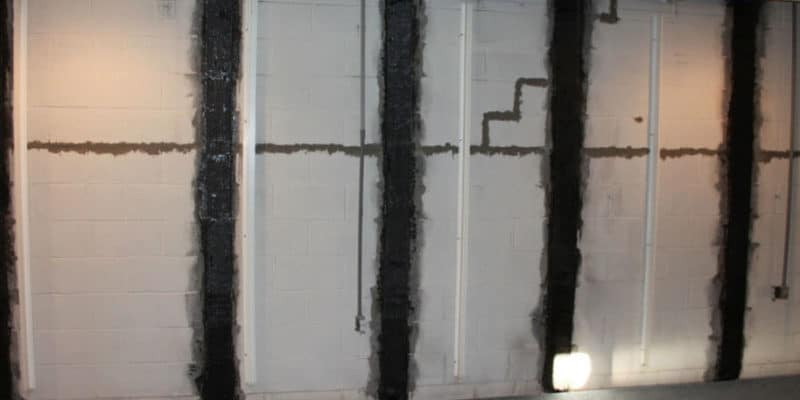
Drainage problems that may contribute include:
- Downspouts discharging too close to the house
- Improper grading
- Poor surface-water drainage
- Saturated soil
- Groundwater conditions
StablWall identifies hydrostatic pressure and poor drainage among the contributors to horizontal cracking and foundation wall movement.
2. Expansive Soil
Some soils expand significantly as their moisture content increases.
Clay-rich soil can be particularly problematic because repeated wetting and drying can change the pressure placed against a foundation wall.
The wall may withstand this stress for years before visible cracking or bowing develops.
3. Freeze-Thaw Conditions
In cold climates, seasonal freezing can add another source of stress.
Moisture in the surrounding soil freezes and expands, and changing soil conditions can increase pressure against basement walls.
Repeated seasonal cycles may contribute to progressive foundation wall movement.
4. Poor Drainage and Grading
Water should move away from a home rather than collect beside its foundation.
When the surrounding grade directs runoff toward the structure—or gutters and downspouts continually deposit water close to the wall—the adjacent soil can remain saturated.
Addressing drainage does not automatically repair a wall that has already moved, but it can be an important part of addressing the conditions contributing to the problem.
Why Are Horizontal Foundation Cracks Different From Vertical Cracks?
Crack direction provides useful diagnostic information, although direction alone should never be used to diagnose a structural problem.
A vertical foundation crack may be associated with concrete shrinkage, settlement, water intrusion, or other conditions.
A horizontal crack is more concerning when it appears in conjunction with inward wall movement caused by lateral pressure.
With concrete block or CMU foundations, the crack may follow a horizontal mortar joint.
You may also see:
- Inward bowing near the center of the wall
- Stair-step cracks extending from the horizontal crack
- Separation at mortar joints
- Displacement between blocks
Poured concrete walls can develop longer horizontal fractures accompanied by inward deflection.
StablWall also notes that horizontal cracking in block walls can occur where external pressure is acting against the foundation.
How Can You Tell If a Horizontal Foundation Crack Is Structural?
No photograph or crack-width measurement can replace an appropriate inspection, but several conditions make structural movement more likely.
Warning Signs to Look For
Pay particular attention if:
- The foundation wall is visibly bowing inward
- One portion of the wall protrudes farther than another
- The crack has grown over time
- Several horizontal cracks are present
- Stair-step cracking appears nearby
- Mortar joints are separating
- Water enters through the damaged area
- Previous crack repairs have reopened
- The wall appears to be leaning
- Doors, floors, or finishes above the area show unexplained changes
The combination of horizontal cracking and inward wall displacement is especially important.
A foundation professional or qualified structural professional can determine whether the wall requires stabilization and which repair method is appropriate.
What Does a Bowing Foundation Wall Look Like?
A bowing basement wall does not always look dramatic.
Early movement may appear as a slight inward curve. In a concrete block wall, a horizontal mortar joint may begin separating around the area experiencing the greatest stress.
As movement progresses, homeowners may notice a combination of horizontal and stair-step cracks.
The wall shown below is an example of why horizontal cracking should not simply be treated as a cosmetic surface defect.
The visible separation and displacement of the masonry indicate that the condition of the wall itself must be evaluated, not merely the opening in the mortar joint.
Can You Just Seal a Horizontal Foundation Crack?
Sealing a horizontal foundation crack may help control water intrusion, but sealing alone does not stabilize a wall that is actively moving.
This distinction is extremely important.
Epoxy, polyurethane, hydraulic cement, mortar, and other crack-repair materials have legitimate applications. However, filling a crack does not necessarily counteract the lateral forces pushing against the wall.
If movement continues:
- The repaired crack can reopen
- Another crack may develop nearby
- Bowing may progress
- Water may find another entry point
- Additional structural repair may eventually be required
For this reason, the underlying cause and structural condition should be evaluated before treating a horizontal crack as a simple waterproofing problem.
For a broader explanation of available approaches, see StablWall’s foundation crack repair methods guide.
How Is a Horizontal Foundation Crack Repaired Correctly?
There is no single repair method appropriate for every horizontal crack.
A sound repair strategy generally follows three objectives:
Step 1: Identify and Address Contributing Pressure
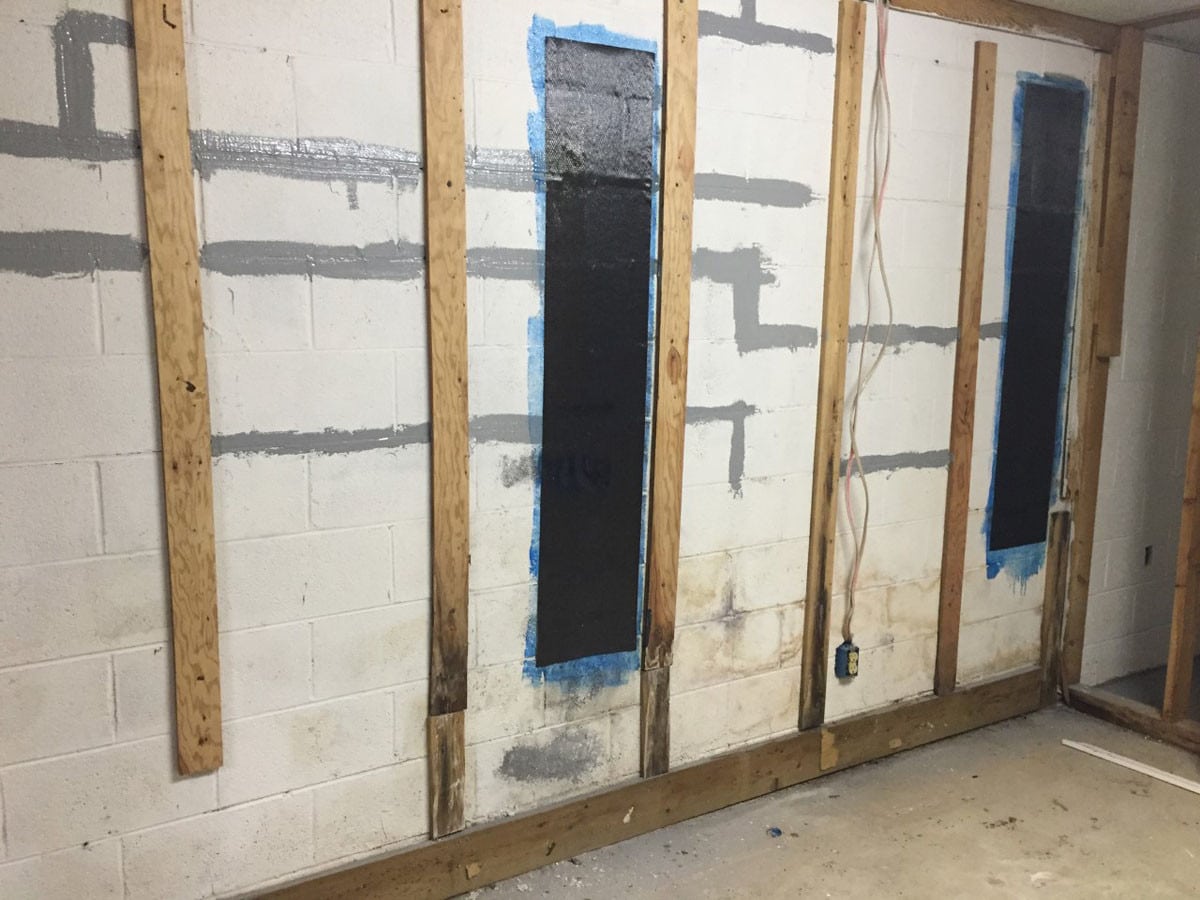
Possible corrective measures can include:
- Improving exterior grading
- Extending downspouts
- Repairing gutters
- Improving surface drainage
- Addressing persistent water accumulation
- Evaluating exterior waterproofing or drainage systems where appropriate
Reducing the source of pressure helps protect the repair, but drainage improvements cannot reverse structural damage that has already occurred.
Step 2: Stabilize the Foundation Wall
If the wall has experienced structural movement, reinforcement may be necessary to prevent additional inward deflection.
Common foundation wall stabilization methods include:
- Carbon fiber reinforcement
- Steel beams
- Wall anchors
- Other engineered structural reinforcement systems
Which method is appropriate depends on the amount and type of movement, foundation construction, site conditions, access, and the objectives of the repair.
StablWall provides a more detailed overview in its guide to foundation stabilization solutions.
Step 3: Address Crack Sealing and Moisture
Once the structural problem has been appropriately addressed, crack sealing and moisture management may form part of the complete repair.
This order matters.
Structural stabilization addresses movement. Crack sealing addresses the opening and potential water pathway.
They are related tasks, but they are not interchangeable.
What Is the Best Repair for a Horizontal Foundation Crack?
The best horizontal foundation crack repair is the method that addresses the actual cause and severity of wall movement.
For some foundation walls with appropriate conditions, carbon fiber reinforcement can provide a low-profile stabilization solution.
Other situations may require:
- Steel reinforcement
- Wall anchors
- Excavation
- Wall straightening
- Reconstruction
- A combination of structural and drainage measures
A severely displaced or compromised wall should not automatically be treated with the same solution used for an early-stage bowing wall.
How Does Carbon Fiber Foundation Repair Work?
Carbon fiber reinforcement is designed to add tensile strength to a foundation wall and resist additional movement.
Rather than installing a bulky beam in front of the wall, a properly specified carbon fiber system bonds reinforcement directly to the prepared masonry or concrete substrate.
Once bonded, the reinforcement works with the wall to resist the tensile stresses associated with inward deflection.
StablWall describes its residential carbon-fiber systems as bonding directly to concrete or masonry substrates to stabilize cracked, bowed, and structurally deficient foundation walls.
Learn more about carbon fiber foundation repair and when it may be appropriate.
When Is Carbon Fiber a Good Option for Horizontal Foundation Cracks?
Carbon fiber may be considered when the wall’s condition falls within the specifications of the selected reinforcement system and the substrate can be properly prepared.
Potential advantages include:
- High tensile strength
- Low-profile installation
- Minimal loss of basement space
- No bulky interior steel beams
- Application directly to suitable concrete or masonry
- Structural reinforcement without automatically requiring exterior excavation
However, carbon fiber is not automatically the correct repair for every cracked or bowed foundation wall.
The severity of displacement, condition of the wall, substrate, structural loads, and cause of movement all need to be considered.
StablWall’s published FAQ, for example, provides specific application limitations for its system, reinforcing why product specifications and site conditions matter when selecting a repair.
Carbon Fiber vs. Steel Beams vs. Wall Anchors
Homeowners researching horizontal foundation crack repair frequently encounter these three options.
Carbon fiber reinforcement can provide a thin, low-profile method of stabilizing appropriate foundation walls against further inward movement.
Steel beams can brace bowing walls from the interior but take up more physical space and may remain visibly prominent.
Wall anchors connect the affected wall to stable soil outside the foundation and can be appropriate in situations where access and wall conditions permit their installation.
None is universally “best.”
The appropriate solution depends on what the wall is doing, how far it has moved, what is causing that movement, and what the repair is expected to accomplish.
For additional comparison, read Common Foundation Repair Techniques.
Can a Bowing Foundation Wall Be Repaired Without Excavation?
In some cases, yes.

Carbon fiber is one example.
This can reduce disruption to:
- Landscaping
- Patios
- Walkways
- Driveways
- Porches and decks
- Exterior utilities
However, avoiding excavation should not be the primary criterion for choosing a repair.
The repair method should be selected according to the structural condition of the wall.
Does a Horizontal Crack Mean the Foundation Wall Must Be Replaced?
No. A horizontal crack does not automatically mean the foundation wall needs to be rebuilt.
Many foundation walls can be stabilized if the problem is identified before deterioration or displacement becomes too severe.
At the other end of the spectrum, a wall with substantial movement or compromised masonry may require a more extensive repair.
That is one reason early evaluation matters: the condition of the wall can influence which stabilization options remain practical.
What Happens If You Ignore a Horizontal Foundation Crack?
A horizontal crack associated with ongoing wall movement may continue to worsen as pressure remains against the foundation.
Possible progression can include:
- A small horizontal crack develops.
- The wall begins moving inward.
- The crack extends or widens.
- Stair-step cracks appear.
- Individual blocks or sections become displaced.
- Water intrusion becomes more noticeable.
- The wall requires increasingly extensive stabilization or repair.
Not every crack follows the same progression, and the rate of movement can vary substantially.
That uncertainty is precisely why a horizontal crack accompanied by movement should be evaluated rather than simply monitored indefinitely.
Can Horizontal Foundation Cracks Leak Water?
Yes.
Cracks and deteriorated mortar joints can provide pathways for moisture to enter the basement.
However, water intrusion and structural movement are two different issues.
A waterproofing product might address the leak without stopping the wall from moving. Likewise, structural reinforcement may stabilize the wall while drainage or waterproofing work is still required to address moisture.
A comprehensive repair therefore asks two separate questions:
Why is the wall moving?
and
Why is water reaching the wall?
Answering both can produce a more durable solution.
Horizontal Foundation Crack Repair in Concrete Block vs. Poured Concrete
The type of foundation matters.
Concrete Block or CMU Walls
Horizontal cracking commonly follows mortar joints because those joints can become points where movement becomes visible.
Other symptoms may include:
- Stair-step cracks
- Rotated blocks
- Bulging
- Separated mortar joints
- Inward displacement
Poured Concrete Walls
Horizontal cracking may appear as a more continuous fracture through the concrete.
Professionals evaluate the crack along with:
- Wall deflection
- Crack location
- Water intrusion
- Previous repairs
- Exterior soil and drainage conditions
Both types of walls can experience structural problems, but the appropriate reinforcement strategy may differ.
Horizontal Foundation Crack Repair FAQ
Are horizontal foundation cracks always structural?
No. A horizontal crack cannot be diagnosed solely from its orientation. However, horizontal cracking accompanied by inward bowing, displacement, or continuing movement is a significant structural warning sign and should be professionally evaluated.
How wide does a horizontal foundation crack have to be before it is serious?
There is no universal crack width that determines whether every foundation problem is serious. Crack direction, location, wall displacement, progression, construction type, and cause all matter.
Can horizontal foundation cracks be repaired from inside?
Yes. Some structural reinforcement systems, including certain carbon fiber and steel systems, can be installed from inside the basement. Suitability depends on the wall and the repair design.
Will epoxy fix a horizontal foundation crack?
Epoxy can have applications in crack repair, but filling a crack does not by itself stop an actively bowing wall. Structural movement must be addressed separately when present.
Does carbon fiber straighten a bowed wall?
Carbon fiber reinforcement is primarily used to stabilize appropriate walls and resist further movement. Stabilizing a wall and returning a substantially displaced wall to its original position are different objectives.
Can carbon fiber repair concrete block foundation walls?
Carbon fiber reinforcement systems can be used on appropriate masonry substrates, including concrete block, when the wall condition, preparation, installation method, and system specifications permit it.
Should I repair drainage before fixing the crack?
Drainage conditions contributing to soil saturation should be addressed as part of the overall solution. However, drainage improvements alone should not be assumed to stabilize a foundation wall that has already experienced structural movement.
Will homeowners insurance cover horizontal foundation crack repair?
Coverage depends on the policy and the cause of the damage. Homeowners should review their policy and contact their insurer rather than assuming foundation movement is covered.
When Should You Have a Horizontal Foundation Crack Inspected?
Consider professional evaluation when you discover:
- A new horizontal crack
- Visible wall bowing
- Increasing displacement
- Repeated cracking after previous repairs
- Multiple crack patterns
- Water intrusion combined with wall movement
- Significant mortar-joint separation
- Changes that appear to be progressing
The purpose of an inspection is not simply to identify the crack.
It is to determine why the wall cracked, whether it is moving, and what type of repair will address that condition.
The Bottom Line on Horizontal Foundation Crack Repair
Horizontal foundation cracks should be treated as a potential symptom of structural stress, particularly when accompanied by inward bowing or displacement.
The most important principle is simple:
Don’t confuse sealing a crack with stabilizing a foundation wall.
A lasting horizontal foundation crack repair begins with identifying the cause, evaluating wall movement, reducing contributing soil or water pressure where possible, and selecting an appropriate structural reinforcement method.
For suitable foundation walls, carbon fiber reinforcement can provide a strong, low-profile approach to preventing additional inward movement without the bulk associated with traditional steel reinforcement.
StablWall manufactures carbon-fiber structural strengthening systems for residential concrete and masonry foundation applications, including cracked and bowed walls.
To explore the system further, visit StablWall’s Residential Foundation Repair solutions.