

If you work in foundation repair or basement stabilization, you already know this: homeowners don’t call because they “noticed a line.” They call because they’re worried that line means bigger structural trouble. The most helpful thing you can do, before you ever talk about a solution, is explain what the crack pattern suggests and why it matters.
StablWall positions its carbon fiber system as a cost-effective, permanent reinforcement approach that addresses multiple crack types, including horizontal, vertical, and stair-step cracking. But to write content that performs in SEO and converts, you want to lead with education and then connect that education to the correct reinforcement strategy.
In this guide, we’ll break down the three most common crack types and explain how carbon fiber reinforcement is used to stop movement, stabilize walls, and help homeowners regain peace of mind.
Horizontal foundation cracks: the ones you don’t ignore
 What a horizontal crack usually indicates
A horizontal crack is often treated as the “red flag” crack, and for good reason. StablWall explains that horizontal cracks often indicate a more serious problem, commonly linked to external forces on the wall.
Common causes: hydrostatic pressure and unbalanced soil pressure
StablWall notes that horizontal cracking is typically driven by hydrostatic (water) pressure from outside the wall and may lead to a failing foundation. StablWall They also describe excessively unbalanced soil pressure as a common cause, where movement tends to form cracks near the middle or near the top of the wall.
From a homeowner’s perspective, this is easy to understand: water and soil don’t push gently. If drainage is poor or the soil is saturated, pressure builds and the wall can begin to bow inward. A horizontal crack is often the visible symptom of that pressure.
Why “patching” is not a structural fix
Homeowners will often ask if they can “seal it.” That’s the moment to clarify the difference between:
sealing to reduce water entry, and
reinforcing to stop wall movement.
A structural crack pattern needs a structural response. That’s where reinforcement systems like carbon fiber are relevant.
Vertical foundation cracks: common, but not always “minor”
What vertical cracks can mean
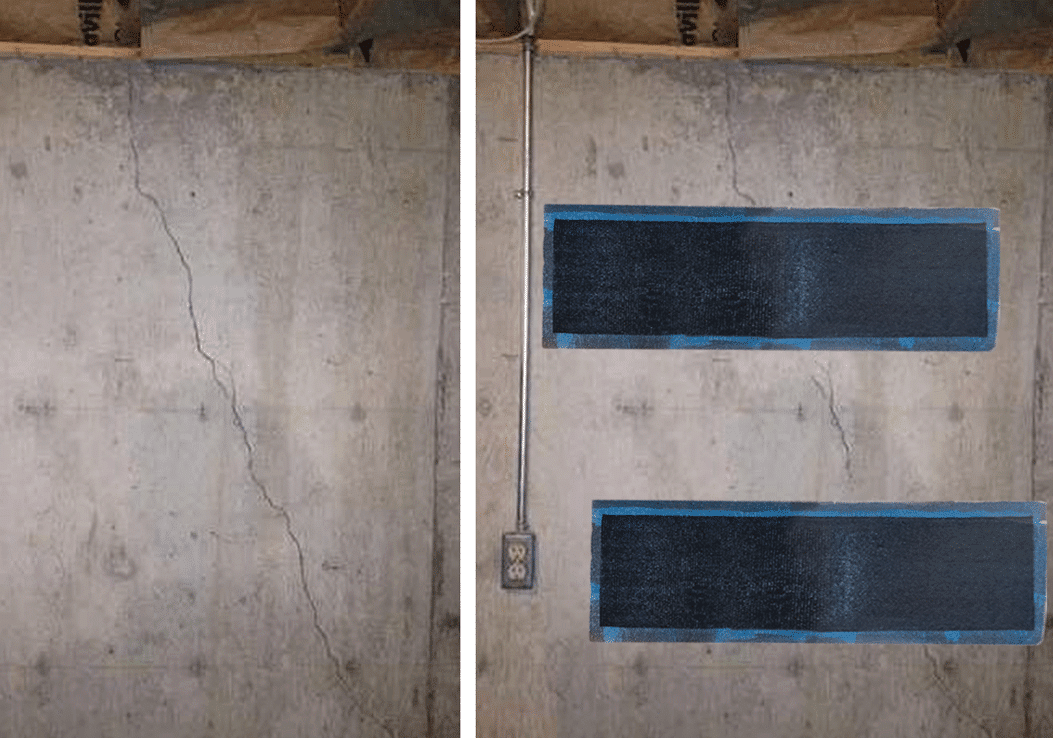
Vertical cracks run up and down and can be tricky because they aren’t automatically “cosmetic.” StablWall explains that vertical cracks can be caused by expansion and shrinkage, wall movement, or tipping walls, and they become a bigger problem when horizontal or shearing movement occurs.
Settlement and widening patterns
StablWall also notes vertical cracks are often tied to foundation settling. If the crack widens at the top or bottom, that can suggest the wall is settling or heaving, which may indicate more serious issues.
A good SEO article should spell out what homeowners can watch for:
widening over time,
stair-step branching from a vertical crack,
inward bowing nearby,
sticking doors or sloped floors (even if the crack is vertical).
Stair-step cracks: the “block foundation warning sign”
Why stair-step cracks form
Stair-step cracks usually appear in concrete block or brick foundations and look like diagonal cracking that follows mortar joints. StablWall describes them as diagonal cracks that start along a joint or near the end of the wall and climb up or down.
Common causes: moisture and pressure, often tied to drainage
StablWall points to moisture issues and excessive pressure on one part of the wall, including gutter or drainage problems. They also emphasize that it’s important to correct the source of the issue before installing reinforcement.
This is an important trust-builder: it shows the solution isn’t “sell carbon fiber,” it’s “solve the cause and then stabilize the structure.”
How StablWall carbon fiber reinforcement works
Why carbon fiber is different than traditional bracing
StablWall describes its system as carbon fiber sheets installed with specially engineered bonding adhesives. Once adhered, it becomes one with the wall through a chemical reaction, and they claim the finished product becomes 10x stronger than steel and 5x stronger than other carbon fiber products.
They also highlight an important homeowner-facing benefit: it’s thin as a dime. That matters because many homeowners hate the look and lost space associated with steel beams.
Crack direction matters: placement is strategic
StablWall’s Installation Manual explains that sheets should be installed perpendicular to the direction of cracking, with examples such as:
vertical crack: install sheets horizontally
horizontal crack: install sheets vertically
stair-step crack: form sheets in a plus-sign pattern
This is excellent SEO content because it demonstrates expertise, not just marketing.
Deflection guidelines
The Installation Manual also notes StablWall can be used on cracks/bows up to 2 inches in deflection, and if deflection is greater than 2 inches, a “pushback” is recommended prior to installation.
That gives you an “honest boundary,” which increases conversions: you’re not claiming it solves everything, you’re explaining when it’s appropriate.
Where corner reinforcement fits in
Corners are stress concentrators. StablWall specifically markets a Corner Wrap option to reinforce the corner of a foundation or structure and distribute pressure horizontally to correct damage and help prevent future damage.
For content strategy, this lets you build internal links:
“horizontal crack repair”
“stair-step crack repair”
“corner wrap reinforcement”
all pointing to relevant StablWall service pages.
Why contractors like fast, permanent solutions
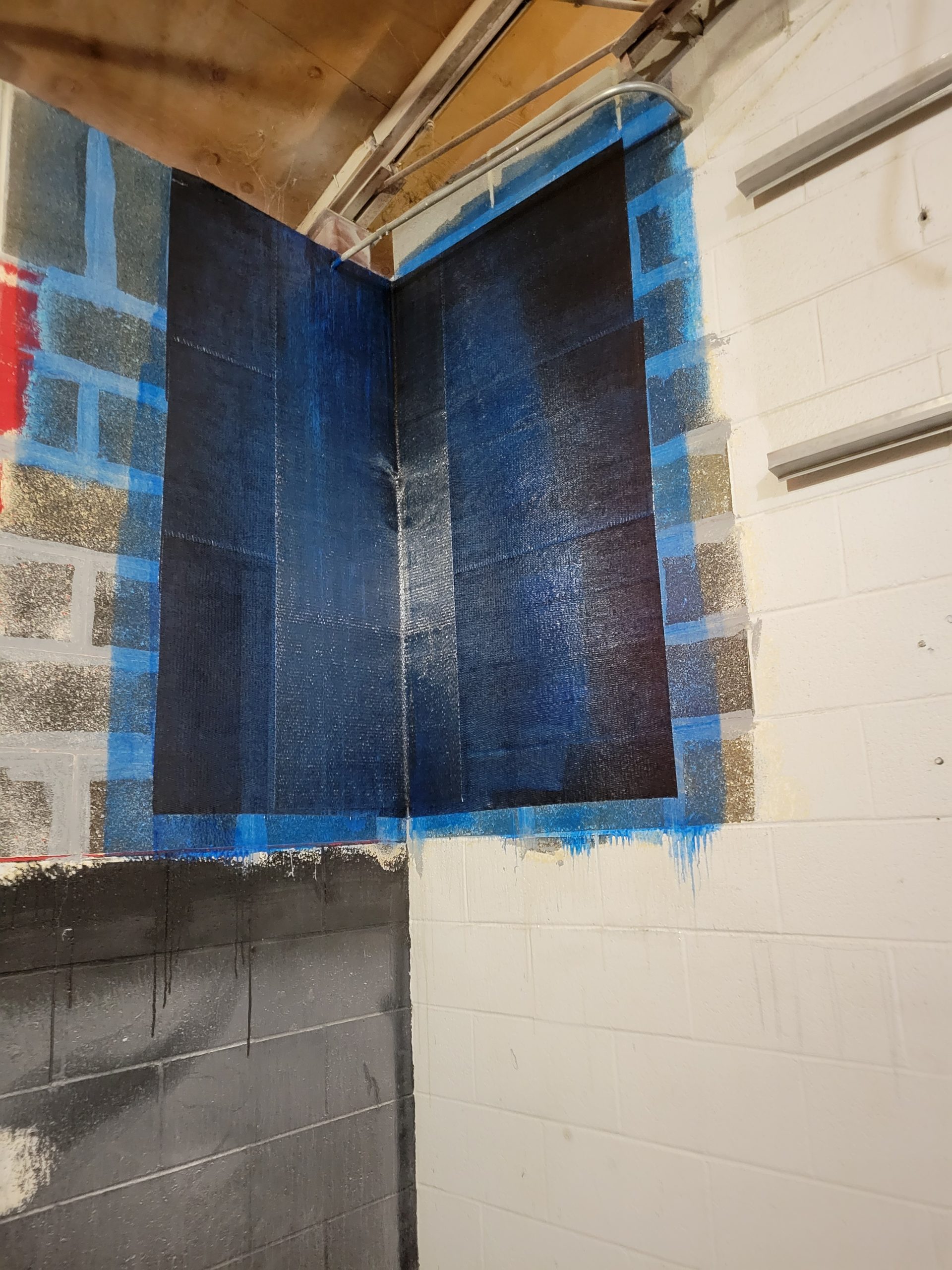 StablWall’s Residential page is written heavily for contractors, emphasizing that it’s cost effective, permanent, and easy to install, and that it installs quickly with long-lasting repair to reduce follow-up visits.
That becomes a strong “value section” in the blog:
faster turnaround,
less disruption,
professional-looking finished result,
reinforces without bulky steel.
FAQs
Is a horizontal crack always structural?
Not always, but it’s often treated as more serious because it can be linked to hydrostatic pressure and wall movement.
What crack type is most common in block foundations?
Stair-step cracks are common in block/brick foundations because they follow mortar joints.
How do I know if a vertical crack is getting worse?
If it widens at the top or bottom, or if you see signs of movement, it may be tied to settlement or heaving.
Does carbon fiber reinforcement stop movement?
The StablWall system is designed to reinforce and stabilize walls by bonding carbon fiber to the substrate; correct placement and proper surface prep are critical.
Conclusion and CTA
Foundation cracks are not all the same. Horizontal cracks often point to external pressure, vertical cracks may relate to settlement or movement, and stair-step cracks frequently trace moisture and pressure problems in block foundations.
If your goal is a clean, professional reinforcement method that’s thin, fast, and built for permanent stabilization, StablWall’s carbon fiber system is positioned as a strong option for contractors and homeowners. For quotes, product questions, or next steps, StablWall directs users to call or submit the contact form.