
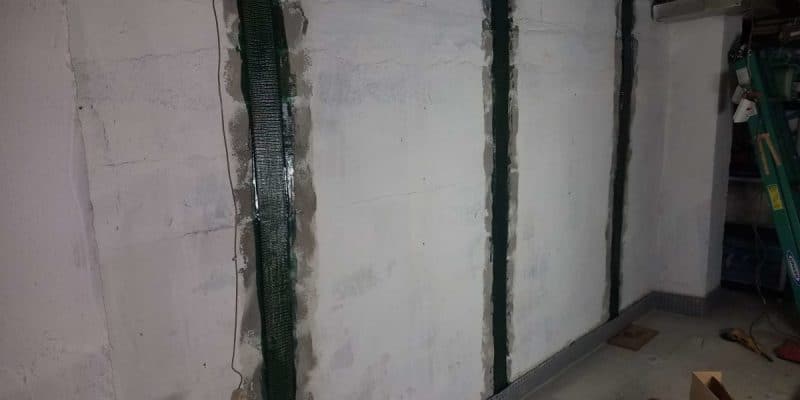
Have you ever considered the potential of carbon fiber reinforcement in preventing costly foundation repairs? It’s a lightweight, robust solution that helps homeowners save on recurring maintenance expenses. This technology enhances the foundation’s resilience against environmental stresses like soil movement and moisture changes, ensuring the integrity of the structure. But how exactly does this innovative material work? You’ll want to explore further to discover the science behind this cost-saving method and how it could revolutionize home construction and maintenance.
Key Takeaways
- Carbon fiber reinforcement enhances structural strength, preventing foundation issues caused by environmental stressors.
- Due to its exceptional strength-to-weight ratio, carbon fiber is stronger yet lighter than steel, reducing the likelihood of foundation failure.
- The corrosion-resistant nature of carbon fiber minimizes maintenance needs, eliminating the costs associated with routine upkeep and potential future repairs.
- The installation process for carbon fiber reinforcement is quicker and less labor-intensive than traditional foundation repairs, resulting in lower labor costs.
- Although initial cost for carbon fiber reinforcement can be higher, long-term savings are realized through the elimination of future maintenance and repair costs.
Understanding Foundation Problems
Ever wondered why your walls crack or doors stick? It’s not just wear and tear, it’s a symptom of foundation problems.
You see, over time, environmental factors such as weather conditions and soil movement can wreak havoc on your home’s foundation. This is the invisible enemy you’re battling.
If you’ve noticed sloping floors, a leaning chimney, or cracked bricks, you’re dealing with foundation issues. The soil beneath your house expands and contracts due to changes in moisture levels. This movement can cause your foundation to shift, leading to the problems you’re seeing.
Maybe you’re thinking, “It’s just a small crack, no big deal.” But, it’s not that simple. Small cracks can lead to big problems if left untreated. Water can seep in, leading to mold and causing more damage.
Foundation problems aren’t just cosmetic. They’re a threat to your home’s structural integrity.
Addressing these issues early can save you a whole lot of money and stress in the long run. So, don’t ignore those cracks and sticky doors. They’re telling you something’s wrong.
What Is Carbon Fiber Reinforcement?
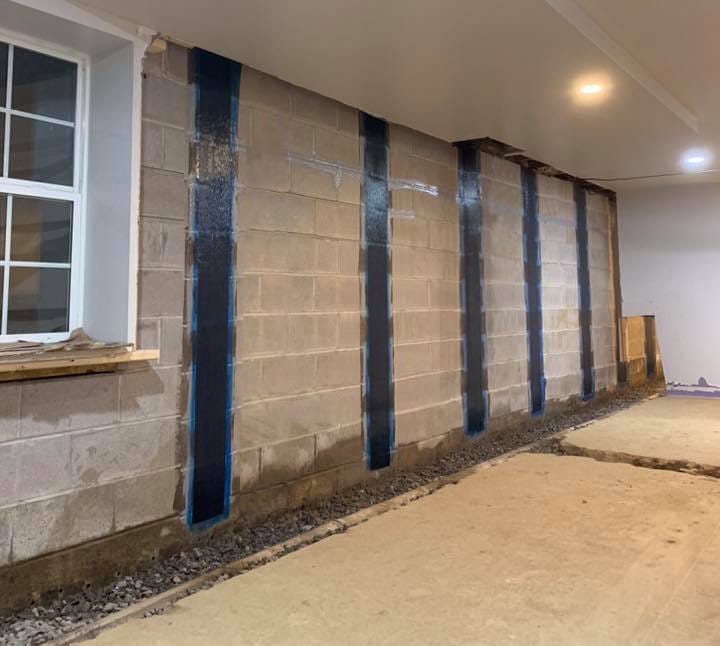 Considering the serious implications of foundation problems, it’s clear that a proactive solution is needed. That’s where carbon fiber reinforcement comes into play. In the simplest terms, it’s a technique used to strengthen the structural integrity of a building.
Picture carbon fiber as a high-tech fabric. It’s composed of thousands of strands of carbon atoms, forming an incredibly strong, yet flexible material. When it’s applied to a structure, it’s not just draped over the surface. It’s integrated within the foundation itself, creating a bond that’s stronger than steel.
You might be wondering how it’s applied. Well, first, the foundation is cleaned and primed. Then, a layer of epoxy is applied. The carbon fiber is carefully positioned and pressed into the epoxy.
Once it’s hardened, you’re left with a reinforced structure that’s ready to withstand the tests of time and nature.
Benefits of Carbon Fiber in Construction
Imagine the skeleton of a building, strong and resilient, thanks to carbon fiber reinforcement. Carbon fiber’s benefits in construction are far-reaching. It’s not just about strength; it’s about practicality and cost savings too.
Firstly, you can’t ignore the astonishing strength-to-weight ratio of carbon fiber. It’s lighter than steel, yet it’s stronger and stiffer. This makes it an ideal material for reinforcement, especially in areas where weight is a concern. When you’re building high-rise structures, every pound matters.
Secondly, carbon fiber is corrosion-resistant. Unlike metals that rust over time, carbon fiber doesn’t degrade, which means it’s more durable and requires less maintenance. This longevity translates into cost savings for you.
Thirdly, carbon fiber’s adaptability is another plus. It can be molded into any shape, making it versatile for various construction needs.
Lastly, the installation process is quicker and less labor-intensive compared to traditional reinforcement materials. This not only reduces labor costs but also shortens construction timelines.
Carbon Fiber Vs Traditional Materials
When comparing carbon fiber to traditional materials like steel or concrete, you’ll find it outperforms in several key areas.
Carbon fiber is lighter, yet it’s stronger than steel. This means you’re getting a material that won’t weigh down your structure but will provide superior support.
Unlike steel, carbon fiber doesn’t rust or corrode, so you won’t have to worry about environmental damage eating away at your foundation.
Concrete, on the other hand, can crack and weaken over time, but carbon fiber maintains its strength for the long haul.
It’s not just about strength and durability, though. Carbon fiber is also more flexible than traditional materials.
This flexibility allows it to absorb and distribute loads, reducing the chances of foundation failure.
Lastly, you’ll find that carbon fiber is more cost-effective in the long run.
While the upfront costs may be higher, the long-term savings from reduced maintenance and repair needs make it a wise investment.
Applying Carbon Fiber Reinforcement
To reinforce your foundation with carbon fiber, you’ll first need to prepare the area. This involves cleaning the surface to guarantee it’s free of dust, oil, or any loose concrete.
Next, you’ll need to grind the wall to create a smooth, flat surface.
Once the area is prepped, you’ll apply an epoxy resin. This acts as a binding agent and guarantees the carbon fiber adheres securely to the wall. Make sure you’re using a quality epoxy that’s designed for use with carbon fiber.
Now comes the part where you apply the carbon fiber. You’ll cut the carbon fiber fabric to the appropriate length and then press it into the epoxy. You’ll need to verify that it’s fully saturated with the epoxy and that there are no bubbles or wrinkles.
Lastly, you’ll cover the carbon fiber with another layer of epoxy. This seals it and helps guarantee it adheres properly to the wall.
Once the epoxy dries, your foundation is reinforced and ready to withstand the pressures it faces. It’s essential to recognize that while this process sounds simple, it’s best left to professionals to guarantee it’s done correctly.
Durability and Longevity of Carbon Fiber
 Having applied carbon fiber reinforcement to your foundation, you might wonder about its lifespan. Rest assured, carbon fiber is an incredibly durable material, known for its outstanding longevity. Its intrinsic qualities such as high tensile strength and corrosion resistance contribute to its long-lasting nature. You won’t be facing the need for a replacement anytime soon.
The longevity of carbon fiber is remarkable. Unlike other materials, it doesn’t degrade or weaken over time. It withstands the harshest conditions and adverse weather, maintaining its structural integrity.
It’s not affected by moisture or temperature fluctuations, which are common factors that deteriorate other materials.
What’s more, carbon fiber doesn’t need much maintenance. Once it’s installed, you don’t have to worry about it. It’s a set-and-forget solution, saving you time and stress.
In short, with carbon fiber reinforcement, you’re investing in durability and longevity. It’s a smart move that guarantees the stability of your foundation for years, even decades to come.
You’ll be reaping the benefits long after the initial investment. This way, carbon fiber effectively prevents costly future foundation repairs, proving its worth in the long run.
Cost Analysis: Carbon Fiber Vs Repairs
Let’s get down to brass tacks: what’s the cost comparison between carbon fiber reinforcement and traditional foundation repairs?
You might be surprised to learn that carbon fiber, while initially more expensive, can save you a bundle in the long run.
We’re about to break down these costs, so you can make the best decision for your home.
Carbon Fiber Reinforcement Costs
When considering the cost of carbon fiber reinforcement, it’s essential to weigh it against the potential expense of foundation repairs. Carbon fiber reinforcement, although initially seeming pricy, can save you significant amounts in the long run.
Firstly, understand that carbon fiber is a high-strength, lightweight material that’s more durable than steel. Its upfront cost is justified by its longevity and resilience. You’re not just paying for material; you’re investing in the longevity of your home.
The cost of carbon fiber reinforcement varies depending on the size and condition of your foundation. A small, fairly new foundation may require less reinforcement and as a result would cost less.
Larger, older foundations might need more extensive reinforcement, increasing the cost.
Moreover, the labor involved in applying carbon fiber reinforcement is less intensive compared to other foundation repair methods, which reduces labor costs.
It’s also important to note that carbon fiber reinforcement is a one-time expenditure. Unlike other methods, it doesn’t require frequent maintenance or additional costs down the line.
Repair Expenses Comparison
You might be wondering how the costs of carbon fiber reinforcement compare to traditional foundation repairs. Well, let’s explore that right now.
- Initial Costs: Traditional foundation repairs can cost anywhere from $5,000 to $15,000, depending on the severity of the damage. In contrast, carbon fiber reinforcement typically ranges from $4,000 to $12,000. So, you’re likely to save some cash initially with the carbon fiber method.
- Long-term Costs: Carbon fiber reinforcement is a one-time cost. Once it’s installed, you won’t need to spend another dime on it.
But traditional repairs might require additional fixes down the line, which could cost you more in the long run.
- Maintenance Costs: Traditional repairs require regular maintenance, which can add up over time.
On the other hand, carbon fiber reinforcement doesn’t need any upkeep, cutting out those extra costs.
- Indirect Costs: Traditional repairs can disrupt your life, forcing you to move out while the work’s being done.
That’s an indirect cost you won’t have with carbon fiber reinforcement.
In the end, carbon fiber reinforcement could save you a significant amount of money, both immediately and in the future.
Real-life Examples of Carbon Fiber Use
Although it may seem like a modern innovation, carbon fiber has been utilized in various ways for several years. You’ve likely seen carbon fiber in action without realizing it. It’s in the bodywork of high-performance cars, the frames of top-of-the-line bicycles, and even in the aerospace industry.
Take, for instance, the McLaren P1, a hypercar that’s body is entirely made of carbon fiber. This use of carbon fiber gives the car an exceptional strength-to-weight ratio, making it faster and safer. It’s not only high-end cars that are benefitting. More accessible vehicles like the BMW i3 are also incorporating carbon fiber into their design to improve performance and fuel efficiency.
In the world of cycling, carbon fiber isn’t just a luxury, it’s a necessity. High-end bikes like the Specialized S-Works Venge use carbon fiber frames to reduce weight and increase speed. This isn’t just for competitive cyclists, though. Even if you’re a casual rider, you’re likely to find carbon fiber in your helmet or handlebars.
In these ways, carbon fiber has been proving its worth in real-life applications, saving costs and boosting performance.
Future Prospects of Carbon Fiber Technology
Often, we witness the remarkable ways carbon fiber is currently being utilized, but its potential for the future is even more exciting. You might be wondering, “What are the future prospects of carbon fiber technology?” So, let’s explore.
- Infrastructure: You’ve seen carbon fiber’s strength in building reinforcement, but imagine it being used more extensively. It can guarantee the longevity of bridges, towers, and even cities, reducing repair costs considerably over time.
- Renewable Energy: Wind turbines could benefit from carbon fiber’s lightweight and robust attributes. Larger, more efficient blades could be constructed, leading to increased energy production.
- Automotive: While it’s already used in high-end vehicles, expect to see it in everyday cars. It’ll make them lighter, fuel-efficient, and safer.
- Aerospace: Carbon fiber’s lightweight and strength make it ideal for space exploration. It could potentially lower the cost of satellite and spacecraft production, making space more accessible.
Frequently Asked Questions
Are There Any Potential Health Risks Associated With Using Carbon Fiber Reinforcement?
No, there aren’t any known health risks associated with using carbon fiber reinforcement. It’s a safe method for structural repair, and you don’t have to worry about exposure to harmful substances or toxins.
Is Carbon Fiber Reinforcement Eco-Friendly and Sustainable?
Yes, carbon fiber reinforcement is both eco-friendly and sustainable. It’s made from recycled materials and, once installed, reduces the need for future repairs, thereby conserving resources. You’re investing in durability and environmental conservation.
Are There Government Incentives or Subsidies for Using Carbon Fiber in Construction?
You’re asking if there are government incentives for using carbon fiber in construction. Currently, there aren’t specific subsidies, but there may be general ones for innovative, sustainable construction methods. It’s worth checking with your local authority.
How Does Weather or Climate Influence the Performance of Carbon Fiber Reinforcement?
Weather or climate doesn’t greatly affect carbon fiber reinforcement. It’s resilient, withstanding temperature fluctuations. You’ll notice structures are safer and more durable, preventing costly repairs regardless of your region’s weather or climate conditions.
Can Carbon Fiber Reinforcement Be Used in Conjunction With Other Construction Materials?
Yes, you can use carbon fiber reinforcement with other construction materials. It’s often paired with concrete to boost its strength. So, you’re not limited to using it alone, enhancing its versatility in construction projects.
You’ll be amazed to know that carbon fiber has a strength-to-weight ratio nearly five times higher than steel. This makes it an incredibly cost-effective solution for foundation reinforcement. Not only does it save you from recurring repair expenses, but its durability guarantees your home’s foundation can withstand environmental stresses for years to come. So, isn’t it time you considered this innovative technology for your home? The future of foundation repair is here, and it’s wrapped in carbon fiber.
Contact the Professionals at StablWall Today! (866) 782-5955