

Like the legendary Hercules making his choice between pleasure and virtue, you’re faced with a dilemma when deciding on the best material for your foundation repairs. Have you considered carbon fiber? Known for its strength and durability, it’s become a popular choice in recent years. Yet, it’s not without its drawbacks. While it’s true that carbon fiber offers excellent corrosion resistance and requires minimal maintenance, it may not be the best fit for all types of foundation issues. Are you wondering if the benefits outweigh the costs? Let’s explore this further.
Key Takeaways
- Carbon fiber offers high durability and corrosion resistance, ideal for long-lasting foundation repairs.
- Despite higher initial costs, carbon fiber’s low maintenance and longevity could provide long-term savings.
- Carbon fiber may not be suitable for severe foundation issues, especially vertical cracks or settling foundations.
- Compared to concrete and steel, carbon fiber is lightweight and less invasive during installation.
- Carbon fiber repairs may affect the resale value of the property due to visible carbon fiber straps.
Understanding Carbon Fiber Basics
The world of carbon fiber may seem complex at first, but it’s actually a straightforward material to understand. It’s a strong, lightweight material made from carbon atoms. These atoms bond together in crystals that align parallel with the long axis of the fiber. This alignment makes the fibers incredibly strong for their size.
You’ve probably seen carbon fiber in various applications, from race cars to high-end sports equipment. But did you know it’s also becoming popular in the construction industry, particularly for foundation repairs? This is due to its unique properties.
Carbon fiber isn’t only strong, but also resistant to corrosion, giving it a significant edge over traditional materials like steel.
One important point to remember is that carbon fiber isn’t a one-size-fits-all solution. Its effectiveness hinges on how it’s used and applied. For instance, in foundation repairs, the fiber needs to be properly bonded to the wall to guarantee its strength and stability.
Now you know the basics of carbon fiber, you’re better equipped to decide if it’s the right choice for your foundation repairs.
Pros of Carbon Fiber Repairs
You’re likely wondering why carbon fiber is an excellent choice for foundation repairs.
Let’s start with its durability – an essential factor when considering foundation solutions.
We’ll also consider the cost-effectiveness of carbon fiber, ensuring you get the most bang for your buck.
Durability of Carbon Fiber
Unshakable strength and longevity, that’s what carbon fiber brings to the table in foundation repairs. This material is designed to last, providing a robust and durable solution for all your foundation repair needs. It’s not just a quick fix; it’s a long-term investment in the structural integrity of your property.
Consider this: carbon fiber doesn’t just resist, it practically ignores the common causes of foundation wear such as moisture, temperature fluctuation, and ground movement. Unlike other materials that may warp, rot, or corrode, carbon fiber stands firm.
It’s unaffected by rust, mold, or termites, the usual culprits of foundation damage.
Moreover, carbon fiber is flexible yet sturdy, able to withstand high pressure without cracking or breaking. That’s the kind of resilience you need when you’re dealing with something as critical as your home’s foundation.
It doesn’t matter if you’re battling against shifting soils or harsh weather conditions, carbon fiber has your back.
Cost-Effectiveness Analysis
Stepping into the financial aspect, let’s explore the cost-effectiveness of carbon fiber repairs. When you’re considering the long-term investment of your home, carbon fiber offers a bang for your buck.
It’s less labor-intensive than other methods, which translates to lower installation costs. Additionally, it doesn’t require heavy equipment or extensive excavation, meaning less disruption to your property and lifestyle.
You’re probably wondering about the long-term costs. Well, you’re in luck. Carbon fiber doesn’t deteriorate or corrode over time, which eliminates the need for regular maintenance or replacements.
In fact, once it’s installed, you can pretty much forget about it. This isn’t the case with traditional methods like steel beams, which may rust and require replacement.
Don’t forget about the potential savings in energy costs. Carbon fiber provides better insulation than other materials, which can lead to significant savings on your heating and cooling bills over time.
Cons of Carbon Fiber Repairs
While carbon fiber has its perks for foundation repairs, it also comes with a set of drawbacks.
First and foremost, it’s not a one-size-fits-all solution. It’s most effective against bowing and leaning walls, but isn’t as useful for vertical cracks or if your foundation is settling. You’ll need alternative methods for these.
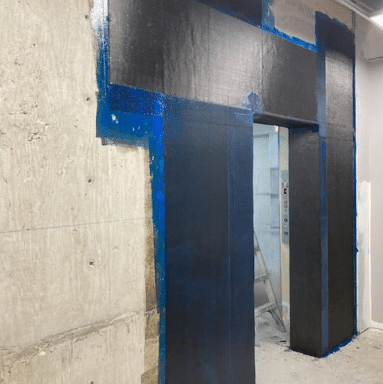
Secondly, carbon fiber isn’t always hidden. If it’s applied to a finished area, like a basement with drywall, you’ll need to refinish around the repair. This adds time and cost.
Plus, the carbon fiber straps could affect the resale value of your home, as potential buyers might see them as a red flag.
Lastly, while carbon fiber is strong, it’s not indestructible. It can fail if not installed correctly or if the foundation’s issues are too severe.
If your foundation’s problems are beyond a certain point, carbon fiber mightn’t be the right choice.
Carbon Fiber vs. Traditional Materials
When it comes to foundation repairs, you’re not limited to carbon fiber. Traditional materials like concrete and steel have been the go-to for years. So, why consider carbon fiber?
You’re likely familiar with concrete. It’s sturdy, easily available, and has a proven track record. However, it’s not without its flaws. Concrete can be prone to cracking over time, particularly in areas subject to freeze-thaw cycles. In addition, concrete repairs can be quite disruptive and time-consuming.
Then there’s steel, another heavyweight in the foundation repair arena. It’s extremely durable and resistant to most environmental conditions. Yet, it’s susceptible to rust and corrosion, especially in moist environments. Furthermore, steel repairs can be more invasive, requiring extensive excavation.
On the other hand, carbon fiber is a relative newcomer. It’s strong, lightweight, and resistant to environmental damage. It’s also less invasive to install, often requiring only minor excavation. The material adheres directly to the existing structure, creating a bond that’s stronger than the original foundation.
Additionally, carbon fiber won’t rust, crack, or degrade over time like traditional materials. It’s a high-tech solution that’s giving the old-timers a run for their money.
Cost Analysis: Carbon Fiber
Let’s cut to the chase: carbon fiber isn’t the cheapest option on the market. But, before you dismiss it based on cost alone, consider the bigger picture.
Sure, you could go with cheaper materials like steel or concrete. Initial costs would be lower, and you’d have your foundation repaired in no time.
But think about this: how soon before those materials start showing signs of wear and tear? How much would you have to shell out for maintenance and eventual replacement?
Now, think about carbon fiber. Yes, it’s more expensive upfront. But it’s also incredibly durable and resistant to environmental damage.
This means fewer repairs and less maintenance over time. Plus, it’s lightweight and easy to install, potentially saving you on labor costs.
So, while the initial price tag might give you pause, remember that you’re investing in the long-term health of your foundation.
In the long run, carbon fiber could prove to be more cost-effective than you’d think.
In the end, it’s about more than just cost. It’s about value.
And when it comes to protecting your home, isn’t that what really matters?
Case Studies in Carbon Fiber Usage
Diving into real-life examples, it’s crucial to explore how carbon fiber has been used in various foundation repair projects.
In Oklahoma, for instance, a residential home was experiencing massive wall cracks due to soil pressure. Carbon fiber strips were applied to the affected walls, providing instant reinforcement and preventing further damage.
Similarly, in a commercial project in New York, the foundation of a century-old building was on the verge of collapse. Carbon fiber sheets were strategically installed, halting the deterioration and adding much-needed structural integrity.
Over in California, an earthquake-prone region, carbon fiber is frequently used to retrofit foundations. A notable case involved a hospital whose foundation needed to withstand potential seismic activity. Carbon fiber proved to be a game-changer, enhancing the building’s resilience considerably.
Lastly, let’s look at a case from Florida where a homeowner was dealing with a sinking foundation due to soil erosion. Carbon fiber was used to stabilize the foundation, preventing the house from sinking further.
These case studies show carbon fiber’s versatility and effectiveness in foundation repairs.
Whether it’s resisting soil pressure, reinforcing old structures, bracing for earthquakes, or combating erosion, it’s clear that carbon fiber holds its own in diverse scenarios.
Deciding If Carbon Fiber Fits Your Needs
So, you’re thinking about carbon fiber for your foundation repairs?
First, let’s look at its strengths and limitations and compare it to other repair material options.
Carbon Fiber: Strengths & Limitations
In the world of foundation repair, carbon fiber stands as a powerful ally. Its strength-to-weight ratio surpasses that of steel, making it an ideal choice for reinforcing structures. Yet, like any other material, it’s not without its limitations.
| Strengths | Limitations |
|---|---|
| High strength-to-weight ratio | Can be expensive |
| Corrosion-resistant | Requires professional installation |
| Versatile and flexible | Not suitable for all types of damage |
| Long-lasting | Compatibility with older structures |
| Eco-friendly | Limited availability in some areas |
You’ll find carbon fiber’s high strength-to-weight ratio and resistance to corrosion particularly appealing. It’s versatile and flexible, able to conform to your structure’s unique contours. Plus, it’s a long-term solution that’s kind to the environment.
However, you should consider its downsides. It can be pricey and often requires a pro for installation. It might not be the best fit for all types of damage and older structures may not be compatible. Ultimately, it may not be readily available in your area. Weigh the pros and cons carefully before making your choice.
Comparing Repair Material Options
Having weighed the strengths and limitations of carbon fiber, you’re likely wondering how it stacks up against other materials commonly used in foundation repair.
Steel, for instance, is a popular choice due to its durability and strength. Yet, it’s susceptible to rust and corrosion over time. Unlike carbon fiber, steel isn’t flexible and can’t absorb forces like shifting soil, which could lead to further damage.
Polyurethane resin is another material you might consider. It’s a flexible solution that fills cracks and prevents water intrusion. However, it doesn’t provide the same structural support as carbon fiber or steel. It’s best used for minor cracks, not significant foundation issues.
Then there’s helical piers, often used to lift and stabilize a sinking foundation. They’re a robust solution, but the installation process can be invasive and time-consuming.
Cost Evaluation of Carbon Fiber
You might be weighing up whether carbon fiber fits your needs for foundation repair. It’s a critical decision that depends on various factors, with cost being a crucial one.
 But, how do you evaluate if carbon fiber is worth the investment?
Here’s a simple 4-step checklist to guide you:
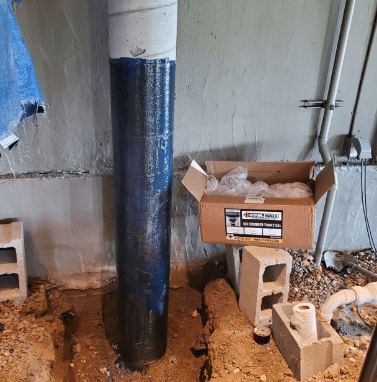
- Material Cost: Carbon fiber strips aren’t cheap, but remember you’re investing in durability and longevity. It’s pricier than traditional materials, but cheaper repairs might end up costing more in the long run.
- Installation Cost: Carbon fiber installation is less labor-intensive, translating to reduced labor costs. It’s a win-win as you save on both time and money.
- Maintenance Cost: Carbon fiber requires minimal maintenance, which means you’ll save on upkeep costs over the years.
- Cost-Benefit Analysis: Weigh the total cost against the benefits like durability, strength, and minimal disruption during installation.
Frequently Asked Questions
How Long Does the Carbon Fiber Repair Process Typically Take?
The duration of your carbon fiber repair process largely depends on the project’s complexity. However, it typically takes a few days. It’s essential you’re patient to guarantee a successful, long-lasting solution to your foundation problems.
Does Weather Impact the Effectiveness of Carbon Fiber Repairs?
Yes, weather can affect carbon fiber repairs. Humidity and temperature changes can impact the curing process. It’s best to apply it in dry, moderate conditions. So, you’ll need to take into account your local climate carefully.
Can Carbon Fiber Be Used in Combination With Other Repair Materials?
Yes, it’s like cooking a gourmet meal. Carbon fiber can indeed be combined with other repair materials to create a stronger, more fortified foundation. It’s all about choosing the right mix for your specific needs.
Are There Any Environmental Impacts Associated With Using Carbon Fiber?
Yes, there are environmental impacts. Carbon fiber production’s energy-intensive, contributing to greenhouse gas emissions. Also, it’s non-biodegradable. However, it’s durable, reducing repairs, thereby potentially offsetting its environmental footprint. It’s essential to take into account these factors.
Does Carbon Fiber Repair Require Any Specialized Maintenance or Care Post-Installation?
No, carbon fiber doesn’t require specialized maintenance or care post-installation. It’s designed to be durable and long-lasting. Just continue your regular foundation checks to verify there’s no new damage or issues.
So, is carbon fiber the right choice for your foundation repairs? It offers durability and requires minimal maintenance, but it may not be suitable for all situations. You’ll need to balance its higher upfront costs with potential long-term savings. Ultimately, it’s about understanding your specific needs. Could the strength and longevity of carbon fiber give your foundation the boost it needs? Only you can make that call.
Contact the Professionals at StablWall Today! (866) 782-5955
)
Distribution Links +
- https://smb.bluegrasslive.com
- https://smb.claiborneprogress.net
- https://smb.clantonadvertiser.com
- https://smb.brewtonstandard.com
- https://smb.demopolistimes.com
- https://smb.elizabethton.com
- https://smb.greenvilleadvocate.com
- https://smb.jessaminejournal.com
- https://smb.kenbridgevictoriadispatch.com
- https://smb.leaderpub.com
- https://smb.luvernejournal.com
- https://smb.selmatimesjournal.com
- https://smb.thesnaponline.com
- https://smb.troymessenger.com
- https://smb.windsorweekly.com
- https://smb.clemmonscourier.net
- https://smb.gatescountyindex.com
- https://smb.harlandaily.com
- https://smb.irontontribune.com
- https://smb.ourdavie.com
- https://smb.state-journal.com
- https://smb.thecharlottegazette.com
- https://smb.thecoastlandtimes.com
- https://smb.theinteriorjournal.com
- https://smb.thetidewaternews.com
- https://smb.tryondailybulletin.com
- https://smb.winchestersun.com
- https://smb.farmvilleherald.com
- https://smb.salisburypost.com