

Did you know that carbon fiber reinforcement can increase the longevity of a building’s foundation by over 40%? You might be wondering how this remarkable material, more commonly associated with aerospace and luxury automobiles, is revolutionizing the world of foundation repair. It’s lighter and stronger than traditional materials, resistant to environmental damage, and offers a significant reduction in maintenance costs. Why then, you may ask, isn’t carbon fiber used more widely in construction? The answer may surprise you, prompting further exploration into this fascinating topic.
Key Takeaways
- Carbon fiber offers superior strength and durability, outperforming traditional materials like steel in foundation repair.
- The material’s resistance to environmental damage ensures long-term stability and resilience against harsh elements.
- Carbon fiber effectively mitigates soil instability, enhancing structural integrity and safety of buildings.
- Despite higher initial costs, carbon fiber proves cost-effective in the long run due to reduced maintenance and labor expenses.
- Future trends suggest more widespread use of carbon fiber in foundation repair, with potential integration of AI, robotics, and 3D printing technologies.
Understanding Carbon Fiber Materials
While you might be familiar with the term, understanding the nature of carbon fiber materials can deepen your appreciation of their benefits. So, what’s it exactly? Carbon fiber is a polymer, which is a long chain of molecules, and it’s often referred to as graphite fiber. It’s incredibly strong, durable, and lightweight.
When you examine carbon fiber under a microscope, you’ll see thousands of tiny strands bundled together. Each strand is made up of carbon atoms linked in a pattern that makes the material extremely strong for its size. It’s the same pattern you’d find in a diamond, which is among the hardest substances on earth.
But strength isn’t the only advantage of carbon fiber. It’s also resistant to many chemicals and won’t rust like metal.
It’s rigid, yet it has a low density, which means it’s lightweight. This combination of properties makes it ideal for many applications, from aerospace to sporting goods.
Strength-to-Weight Ratio: Carbon Fiber Advantage
With respect to strength-to-weight ratio, carbon fiber truly shines. You see, this material is very light yet incredibly strong. In fact, carbon fiber is five times stronger than steel and twice as stiff, yet weighs about two-thirds less. This translates into a considerably lighter but stronger foundation repair solution.
Imagine a repair material that’s robust enough to hold up a building, but light enough for you to easily handle. That’s the carbon fiber advantage.
| Material | Strength-to-Weight Ratio |
|---|---|
| Carbon Fiber | 5x stronger than steel, 2x as stiff, 2/3 lighter |
| Steel | Standard |
| Aluminum | Less than steel, but lighter |
| Wood | Less than aluminum, but heavier |
The table above makes it clear why carbon fiber is the top choice for foundation repair. It outperforms other materials regarding strength-to-weight ratio, giving you a repair solution that’s not only effective but also convenient to use.
Resistance to Environmental Damage
You’re probably wondering how carbon fiber reinforcement stands up against the elements.
Well, it’s time to explore how this material mitigates weather-related erosion, combats soil instability, and counters water infiltration.
Get ready to see how carbon fiber can resist environmental damage, offering a level of durability that’s hard to beat.
Mitigating Weather-Related Erosion
Consider the toll that extreme weather can take on your structures. Rain, wind, and freeze-thaw cycles can gradually erode your building’s foundation, causing cracks and instability over time. This is where carbon fiber reinforcement comes into play.
Carbon fiber is highly resistant to environmental damage. Its unique properties make it an ideal solution for mitigating weather-related erosion. It doesn’t just repair damage, it prevents it. By reinforcing your building’s foundation with carbon fiber, you’re investing in long-term stability and resilience against the harsh elements.
Unlike traditional materials like steel, carbon fiber doesn’t corrode or degrade over time. It’s impervious to moisture and temperature changes, making it an excellent defense against weather-related wear and tear.
It’s also lightweight and flexible, allowing it to adapt to the shifting needs of your structure without compromising its strength.
Not only does carbon fiber reinforcement protect your foundation from erosion, it also increases its overall structural integrity. By strengthening your foundation, you’re also enhancing the safety and longevity of your structure.
Combatting Soil Instability
Soil instability can wreak havoc on your structure’s foundation. It’s a pervasive issue, particularly in areas where the ground is prone to shifting or settling. The constant movement can cause cracking, bowing, and eventual failure of your foundation.
But don’t panic just yet! Carbon fiber reinforcement is here to save the day.
This ingenious solution provides unparalleled strength and durability to your foundation. It’s like giving it a suit of armor that can withstand the relentless push and pull of unstable soil. Carbon fiber’s tensile strength is higher than steel, making it extremely resistant to stretching or breaking.
It’s also non-corrosive, meaning it won’t deteriorate over time due to environmental factors.
You’re not just fortifying your foundation against soil instability, you’re also reducing future maintenance costs. Once carbon fiber reinforcement is applied, it’s there for the long haul. You won’t need to worry about regular check-ups or expensive repairs down the line.
In the battle against soil instability, carbon fiber reinforcement is your strongest ally. It’s time to revolutionize your foundation repair approach and give your property the protection it deserves.
Countering Water Infiltration
When it comes to water infiltration, carbon fiber reinforcement is a game-changer. It’s not just about stability, but also about resilience against environmental damage. You’ll appreciate how carbon fiber combats water penetration, a common problem that can lead to costly damages.
Check out the table below to understand how carbon fiber compares to traditional materials in countering water infiltration.
| Material | Water Resistance | Durability |
|---|---|---|
| Concrete | Medium | High |
| Steel | Low | High |
| Carbon Fiber | High | Very High |
As you can see, carbon fiber outperforms both concrete and steel. Unlike these materials, it doesn’t corrode, rust, or deteriorate when exposed to water. This makes it an ideal solution for foundations in areas prone to flooding or high humidity.
But it’s not just about resistance. Carbon fiber also offers a seamless application, meaning fewer joints where water can sneak in. You’re getting a long-lasting solution that not only reinforces your foundation but also safeguards it against the elements. So, when you’re evaluating foundation repair or reinforcement, don’t forget to take into account carbon fiber. It’s a choice you won’t regret.
The Easy Installation Process
Imagine transforming your structures with an incredibly strong, lightweight material that’s simple to install. Carbon fiber reinforcement offers just that.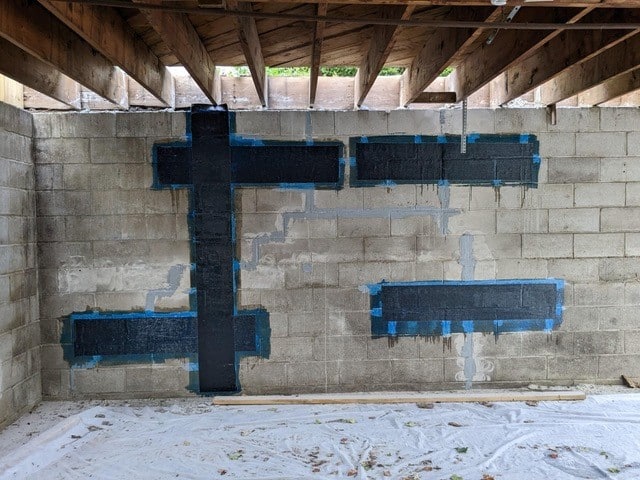
It’s not only easy to handle due to its lightness but also straightforward to put in place. You won’t need heavy machinery to install carbon fiber. A few basic tools and a bit of time are all you need.
First, you’ll need to prepare the surface by removing any loose debris and ensuring it’s clean and dry. Then, you’ll apply an epoxy resin to the surface. Next, you’ll adhere the carbon fiber strip to the resin-coated surface.
You’ll appreciate the flexibility of carbon fiber, allowing it to conform to the contours of your structure, ensuring a snug and secure fit.
Once installed, it cures quickly, meaning you won’t have to wait long before it’s ready to do its job of reinforcing your foundation.
Cost-Effectiveness of Carbon Fiber
You might be wondering about the cost-effectiveness of carbon fiber reinforcement. Well, let’s explore that.
It’s true that the initial cost of carbon fiber might seem steep, but it’s the long-term savings where you’ll really see the benefit.
While the upfront cost of carbon fiber is higher than some traditional materials, that’s just part of the picture. The durability and longevity of carbon fiber means it’s not a repair you’ll need to repeat. It’s a one-time investment that’s going to last.
Imagine not having to worry about recurring expenses for foundation repairs. That’s what carbon fiber offers you.
In the long run, carbon fiber can actually be more cost-effective than traditional materials. You’re not just paying for the material itself, but for peace of mind.
You’re investing in a solution that’s not just a patch, but a permanent fix. When you factor in the cost of potential future repairs using traditional materials, the initial higher cost of carbon fiber becomes a smart investment.
You’re paying for quality, durability, and longevity. That’s the true cost-effectiveness of carbon fiber reinforcement.
Carbon Fiber Vs. Traditional Materials
You might wonder how carbon fiber stacks up against traditional materials.
Let’s compare the strength and assess the durability over time of both. This will give you a clear understanding of why carbon fiber is often the material of choice.
Strength Comparison
When it comes to strength, carbon fiber often outperforms traditional materials. It’s lighter, yet it can withstand substantial pressure and loads.
You might be wondering how this translates to foundation repair. Well, let’s break it down:
- Weight Comparison: Carbon fiber is lighter than conventional materials like steel or wood. This makes it easier to handle and install, reducing labor costs.
- Load Capacity: Despite its lightweight nature, carbon fiber can handle massive loads, making it ideal for supporting the weight of a structure.
- Resistance to Deformation: Unlike traditional materials, carbon fiber doesn’t bend or warp under pressure. It maintains its shape, ensuring a stable foundation.
- Compatibility: Carbon fiber can be combined with other materials to create composite reinforcements. These composites often provide even greater strength.
- Environmental Impact: Carbon fiber has a smaller environmental footprint as it requires less energy to produce compared to traditional materials.
Durability Over Time
Consider the longevity of the materials you choose for your construction projects. Traditional materials like steel and concrete might seem reliable, but they can’t hold a candle to carbon fiber when it comes to durability over time.
Carbon fiber, with its high tensile strength and corrosion resistance, far outlasts traditional building materials. It’s virtually immune to the wear and tear that steel and concrete succumb to over the years. You won’t have to worry about rust or degradation with carbon fiber.
Here’s a quick comparison to illustrate this:
| Material | Tensile Strength | Corrosion Resistance |
|---|---|---|
| Steel | High | Low |
| Concrete | Moderate | Moderate |
| Carbon Fiber | Very High | Very High |
Longevity and Durability Factors
Bearing the brunt of heavy usage, carbon fiber reinforcements considerably outlast their traditional counterparts, thanks to their impressive longevity and durability factors.
You’ll find that they’re not just long-lasting, but they also retain their strength and structural integrity over the years.
But what really sets carbon fiber reinforcements apart?
Let’s look at five key factors:
- Inherent Strength: Carbon fiber is stronger than steel and concrete, making it a robust choice for foundation repair.
- Resistance to Environmental Factors: Unlike traditional materials, it’s highly resistant to corrosion and degradation, which means you’re not constantly worrying about repair and replacement costs.
- Minimal Maintenance: Once installed, carbon fiber doesn’t need frequent upkeep, saving you time and money in the long run.
- Adaptive to Temperature Changes: It can withstand extreme temperature variations without any loss in performance.
- Lightweight yet Sturdy: Despite its lightweight properties, it provides the same, if not better, support and stability as its heavier counterparts.
With these qualities, it’s no surprise that carbon fiber is revolutionizing the foundation repair industry.
Case Studies: Successful Implementations
Having seen the impressive benefits of carbon fiber reinforcement, you might be curious about its real-world applications.
Let’s explore a few case studies that illustrate its successful implementation.
In California, a homeowner was battling with a sinking foundation that threatened the structural integrity of the property. Traditional methods were proving costly and disruptive.
Enter carbon fiber reinforcement, which provided a cost-effective, durable solution. The house was lifted, the foundation repaired with carbon fiber reinforcement, and the result? A strong, long-lasting foundation that’s held up for over a decade.
Over in Ohio, a historical building was beginning to show signs of foundation failure. The challenge was to repair the foundation while preserving the building’s original architecture.
Carbon fiber reinforcement was the answer. The repair was done discretely, maintaining the aesthetics of the property, while ensuring strength and durability of the foundation.
These cases illustrate the practicality and effectiveness of carbon fiber reinforcement.
It’s not just a theory, it’s a proven solution. Whether it’s a residential property or a historical building, carbon fiber reinforcement stands up to the test, providing a robust, reliable, and cost-effective foundation repair solution.
Future Trends in Foundation Repair
Peering into the future of foundation repair, it’s clear that innovative solutions are on the horizon. You’ll see a shift towards more durable, cost-effective, and environmentally friendly materials. Carbon fiber reinforcement, already a game-changer, will become even more prevalent.
Here’s a glimpse of what you can expect:
- More use of carbon fiber: Its strength, flexibility, and durability make it perfect for foundation repair. You’ll see it being used more widely, not just for repairs but also in new construction.
- Increased focus on sustainability: Expect eco-friendly materials and processes to become the norm.
- AI and robotics: These technologies will play a bigger role in diagnosing and repairing foundation problems.
- 3D printing: This technology could revolutionize the way foundations are repaired, making the process faster and more precise.
- Remote monitoring systems: These will allow for real-time tracking of foundation health, enabling early detection and repair.
These trends will transform the foundation repair industry. You’ll see better, faster, and more affordable solutions.
Get ready for a future where foundation repairs are less disruptive, more efficient, and much more effective.
Safety Aspects of Carbon Fiber Reinforcement
When it comes to the safety aspects of carbon fiber reinforcement, there’s a lot to appreciate. This revolution in foundation repair has you covered, making your home safer and more secure.
Carbon fiber’s high tensile strength means it can withstand substantial pressure without breaking, reducing the risk of structural failure. It’s also resistant to corrosion and weather damage, increasing your home’s longevity and safety. You won’t have to worry about regular replacements or repairs, which can be both costly and dangerous.
Furthermore, the installation process is less invasive than traditional methods, reducing hazards during construction. No heavy equipment is required, eliminating the risk of injury from such machinery.
Plus, carbon fiber doesn’t release harmful substances, ensuring a healthier environment for you and your family.
Yet, it’s not just about physical safety. The peace of mind that comes with knowing your home’s foundation is secure is invaluable. You can rest easy knowing that, thanks to carbon fiber reinforcement, your home is built to last, standing strong against the elements and time.
So, you’re looking to revolutionize your foundation repair? Embracing carbon fiber reinforcement could be your golden ticket. Sure, it may seem a bit pricey upfront, but it’s a ‘pay now, save later’ game. Offering incredible strength, durability, and environmental resistance, this lightweight solution is a game-changer. It’s like giving your structure an invincible shield against time and elements. Look forward to fewer headaches, more savings, and a strong, steady foundation for years to come.
Contact the Professionals at StablWall Today! (866) 782-5955
)
Distribution Links +
- https://smb.claiborneprogress.net
- https://smb.clantonadvertiser.com
- https://smb.brewtonstandard.com
- https://smb.demopolistimes.com
- https://smb.elizabethton.com
- https://smb.greenvilleadvocate.com
- https://smb.jessaminejournal.com
- https://smb.kenbridgevictoriadispatch.com
- https://smb.leaderpub.com
- https://smb.luvernejournal.com
- https://smb.selmatimesjournal.com
- https://smb.thesnaponline.com
- https://smb.troymessenger.com
- https://smb.windsorweekly.com
- https://smb.clemmonscourier.net
- https://smb.gatescountyindex.com
- https://smb.harlandaily.com
- https://smb.irontontribune.com
- https://smb.ourdavie.com
- https://smb.state-journal.com
- https://smb.thecharlottegazette.com
- https://smb.thecoastlandtimes.com
- https://smb.theinteriorjournal.com
- https://smb.thetidewaternews.com
- https://smb.tryondailybulletin.com
- https://smb.winchestersun.com
- https://smb.farmvilleherald.com
- https://smb.salisburypost.com
- https://smb.shelbycountyreporter.com
- https://smb.smithfieldtimes.com
- https://smb.suffolknewsherald.com
- https://smb.thewashingtondailynews.com
- https://smb.thewetumpkaherald.com
- https://smb.cordeledispatch.com
- https://smb.lagrangenews.com