Wall Cracks | Atlanta, GA | StablWall

5 Reasons You Should Invest in Foundation Wall Repair – New York, NY

People understand the metaphors about the necessity of a strong foundation; however, when the literal foundation of a house may be compromised they question if it is worth fixing. There is a reason the metaphors make sense. Your foundation is literally the most important part of the house. Without a strong foundation, the whole structural integrity of the house could be compromised. While investing in foundation repair may not be a fun remodel, it is definitely necessary. Here are five reasons why you should invest in foundation wall repair.

1.) It is dangerous to ignore it

Foundation problems can lead to foundation failure. Yes, while some cracks and foundation issues are slow moving, if you never solve the issues they will get worse. As the problem gets worse, it will cost more money to fix. If the damage is extensive enough it may need to be completely rebuilt. Ignoring foundation damage will become increasingly more dangerous and could completely collapse resulting in major repairs to your entire home.

2.) It impacts the resale value of your home

You may have a great house but if you have foundation problems, it is going to be hard to sell. If you ever want to sell your house, you will have to either take a major loss on the house or fix the foundation. Most of the time the buyer will force the seller to repair the foundation before a deal is finalized. While the laws vary state to state, most places have strict laws about sales disclosures and the condition of the foundation is definitely an item on the disclosure form. If you don’t disclose a problem it can turn into a costly lawsuit or at least blow the sale.

3.) The problems will not go away on their own

Foundation problems will not fix themselves and it isn’t safe for a homeowner to do it themselves. They don’t have the right tools or the right experience to have a foundation repair job. Homeowners need to call a professional. A professional’s repairs will be certified. A home inspector will know the difference between a professional job and a DIY foundation repair and it will impact the value of your home.

4.) The issues don’t stop with the foundation

If you have need foundation repair then you probably have cracks in the foundation. If you have foundation cracks, you most likely have water issues, too. If you have water issues, you most likely have mold and mildew issues. If you have mold then you probably have indoor air quality issues. Foundation cracks could also be letting in radon and other dangerous soil gases. Basically, you need to understand that foundation cracks are actually causing your families health and breathing problems or even worse, lung cancer if you have a radon problem that you don’t know about.

5.) Fixing the foundation will fix your house

If you are in need of foundation repairs, you have probably been living with windows and doors that stick, unsightly cracks in your walls upstairs, or gaps around doors and windows letting in serious drafts or even rodents and insects. Your chimney could be leaning, tilting or even cracked. The bricks on your house could be cracked or with cracks in the mortar joints. These are just symptoms of foundation and settlement issues. You need to fix the foundation to permanently fix these issues. If you try to fix these issues before you fix the real cause you will end up refixing the same problems over and over again.

Overall, the health of your foundation impacts your whole house and the health of the home environment. The foundation should be treated and maintained as the important part of the home that it is. Don’t ignore foundation repairs. Don’t wait for it to turn into an emergency. Invest in the foundation repairs your home needs sooner than later.

Wall Cracks | Atlanta, GA | StablWall

Common Misconceptions about Foundation Cracks – Toledo, OH

If you’ve spotted some foundation cracks, you’re probably searching the internet for more information about them and what you should do. It is not uncommon to come across misleading information.

As a homeowner, you’re not expected to know or understand all the information about foundation cracks that you come across. However, it is important to verify this information. Taking action on misleading information can result in damage that could be even more expensive to repair.

The following are common misconceptions that you should avoid when it comes to the repair of cracks in foundations:

  • Cracks originate from problems that occurred when laying the foundation

Although some cracks are caused by problems that originated during the construction phase, some cracks are caused by problems that occur underneath the foundation. The condition of the soil that surrounds the foundation plays a major role in determining the health of the foundation. It is therefore important to ensure that this soil is healthy and able to support your foundation.

  • You can use hi-tech sealants to permanently fix cracks in foundations

Modern sealants made of polyurethane or epoxy are quite effective in sealing foundation cracks. They are strong and flexible. They do a great job for patchwork but aren’t a permanent solution for foundation cracks.

Cracks in the foundation are often a sign of a deeper problem. If the issue that caused the cracks in the first place is not addressed, then further damage to your foundation will occur. In some cases, the damage may be worse than the cracks you fixed with the sealant.

  • It’s better to replace a damaged foundation than to repair it

Unsuspecting homeowners may be tricked by unscrupulous contractors into replacing their foundations instead of repairing them. They are under the misguided notion that replacing, although more expensive, is a long lasting solution.

A truly experienced contractor will tell you that this isn’t always the best solution. As mentioned previously, it is important to determine the underlying cause of foundation damage before determining what solution to apply.

Replacing the damaged foundation may not always solve the problem. You’re just placing a new foundation that will likely suffer the same fate as the old one.

  • You can ignore small cracks in a concrete foundation

It is true that concrete cracks as it settles. However, small cracks in foundations can result in more serious problems as they allow water to seep through. Any and all foundation cracks ought to be inspected by a professional to ensure that the underlying cause is identified.

StablWall foundation repair

Why Carbon Fiber is the Best Solution for Cracking Basement Walls – Lexington, KY

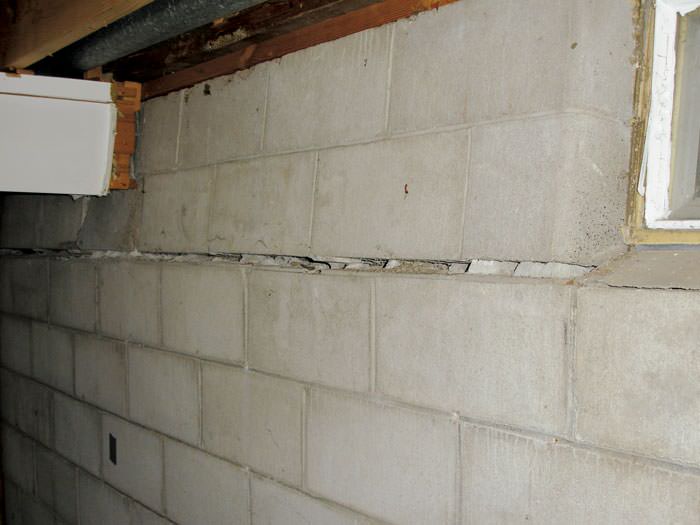
When the soil surrounding your foundation is saturated with water, it can exert a lot of pressure on the walls of your foundation. The pressure can result in cracking basement walls. Cracks in foundation walls can result in the destabilization of the entire structure of your home. If you want to ensure that your home is safe you will need to ensure that your foundation is repaired quickly.

One common method of repairing foundations today is by applying carbon fiber in the form of strips or grids. Carbon fiber is a common choice in foundation repair because it makes repair easy as well as more affordable for home owners.

What is carbon fiber?

Carbon fiber is formed from nylon fiber. The nylon fiber is baked at 3000 degrees. The result is a change in its chemical structure to a much stronger compound i.e. carbon fiber. The carbon fiber is extremely strong for its weight. The resulting strands of carbon can be woven together or placed parallel to each to produce an exceptionally strong material that can be used for construction.

Carbon fiber has undergone various tests to prove its strength. It has been proven to be 10 times stronger than steel when under tension.

Reasons to use carbon fiber for cracking basement walls
  • Non-invasive installation

If you don’t want to have holes in your basement walls, then carbon fiber is the best solution for you. The installation of carbon fiber strips is always non-invasive. It involves the use of an epoxy adhesive that does not contain VOCs. You therefore don’t have to leave your home to get away from dangerous fumes or the noise of the construction. It is a completely safe and quick solution.

  • High tensile strength

Carbon fiber has one of the highest tensile strengths amongst construction materials available today. It will not break even under very high tension. This characteristic is especially important when it comes to the repair of cracked foundation walls. You need a material that will not crack, break or stretch under the pressure from the surrounding soils.

  • Long lasting solution

The carbon fiber straps are a long term solution for cracking basement walls. They will not rust even when exposed to high moisture levels. They also will not deteriorate. This is the perfect solution for those looking for a quick and affordable way to repair cracks in their basement walls.

Wall Cracks | Atlanta, GA | StablWall

Wall Cracks – What You Need To Know About Foundation Failure – Chicago, IL

There are many misconceptions about basement wall cracks. One of the biggest is that they are a sign of foundation failure and that means they cannot be repaired. This myth is a result of misinformation. If you’re a homeowner and have spotted some cracks on the walls of your basement, here are a few things you should know.

  1. Your soil has a lot to do with it

In many cases, soil is responsible for foundation failure. It’s important to consider the characteristics of the soil surrounding your foundation before embarking on repair. This includes considering the soil type and characteristics like:

  • Elasticity
  • Expansion
  • Plasticity

A reputable foundation repair company will be able to identify the type of soil on your property and provide a solution that will deal with any problems the soil presents.

  1. Water is your biggest enemy

If your soil is involved in causing the wall cracks, it isn’t acting on its own. Changes in soil volume that cause pressure to be applied on foundation walls are the result of water retention. Soil particles expand when they take up water. This results in pressure being exerted against the wall.

The opposite happens when soil particles loose water through evaporation during the dry season. The particles shrink and the soil contracts. This results in a gap being formed between the soil and the foundation wall. The foundation wall loses its support and cracks form.

Sources of water should be identified and dealt with to prevent extreme expanding and contracting of soil.

  1. Foundations and constantly moving

Many people imagine that foundations are immovable masses. The truth is your foundation is constantly moving. This is a result of changing moisture levels in the concrete itself as well as in the soil surrounding the foundation. Regulating moisture levels in soil is therefore important to avoid extreme shifts in the foundation.

  1. Cracks don’t always show where the problem is

Most home owners think that wall cracks are an indication of where the problem with the foundation is. In most cases, foundation failure occurs in a different part of the foundation. The crack is only an indication of the weakest point in the foundation. Therefore, sealing the crack will not solve the problem. The root cause of foundation failure must be determined and addressed. To do so, contact your local basement waterproofing company.

.


StablWall | Cleveland, OH

Carbon Fiber Stiching To Repair Basement Wall Cracks – Cleveland, OH

Have you come across the term ‘carbon fiber stitching’? This method of repairing basement wall cracks has been in the industry for some time.

In the past, repairing cracks that occurred on the exterior of foundation walls was done by excavating the foundation. Steel beams were then installed to reinforce the foundation walls. These beams were placed on both the outside and the inside of the foundation. They provided support for the bowing wall and stabilized it enough to prevent further movement.

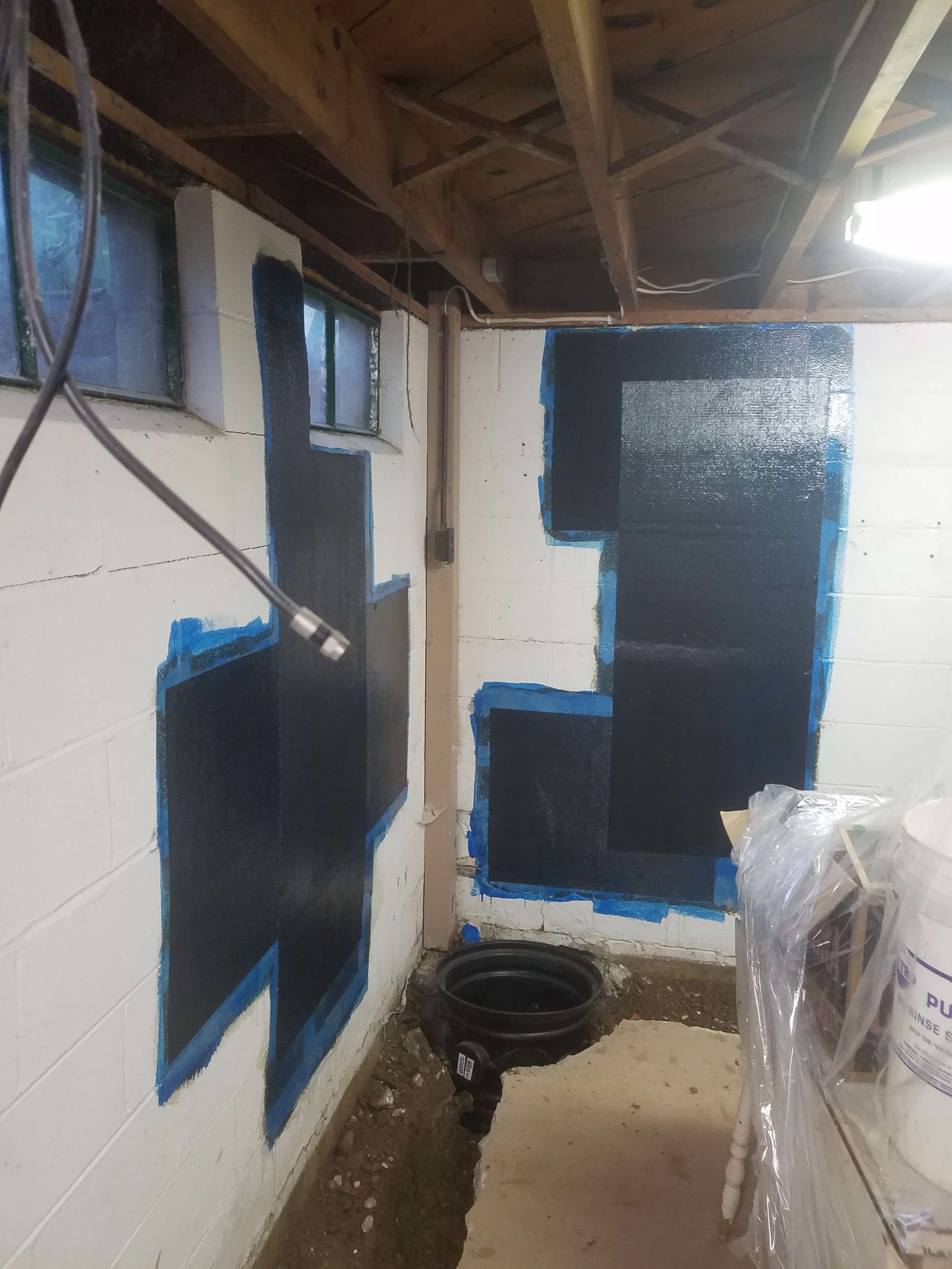
Carbon fiber stitching removes the need for excavation. All the repairs are done from the inside of the foundation. Carbon fiber staples, straps, or sheets are installed in the area of cracking to prevent further movement. The carbon fiber prevents further movements from occurring. It is a long term solution for stability.

Why you should consider carbon fiber stitching

  • No need for exterior excavation

All repairs are done from the interior of the foundation. Your plants, shrubs, and landscape will remain safe the entire time.

  • One repair for all cracks

You don’t have to deal with every type of crack individually with carbon fiber stitching. The same repair will be effective for all the cracks whether they are vertical, horizontal, or corner basement wall cracks. All the cracks are addressed with just one repair.

  • It is completed in a short time

Carbon fiber stitching is completed within a few hours at most. The repair can be done by one or two people. It is one of the least disruptive methods of repair available today for basement wall cracks

  • It causes minimal pollution

The repair of your basement walls using carbon stitching will result in minimal air and noise pollution. The installation does not involve the use of power tools, excavation, or other activities that could result in noise or the formation of dust.

  • It’s affordable and effective

Carbon fiber stitching is one of the most effective and affordable solutions for dealing with foundation cracks. The labor is minimal and the materials are affordable. There is also no need for maintenance. No future adjustments are required once the installation is completed.

Don’t take chances when it comes to the safety of you and your loved ones. Cracks in your foundation are often a sign of lack of stability in the structure. You can’t afford to wait to have your foundation repaired. Carbon stitching offers you a long term solution that is effective, easy, and affordable.

Important Questions to Ask When Choosing a Foundation Repair Contractor – Cleveland, OH

Foundation Repair Contractor

A study by the Foundation Repair Association (FRA) in 2013 found that out of 843 houses sampled, over 68% had foundation problems. Most of these issues were structural and had already exacerbated to a point of compromising the integrity of these homes.

Prompt Repairs

If your foundation walls are bowed or bulging, the doors and windows are jamming and you can observe cracks both in the exterior and interior walls, it is high time to call a foundation repair contractor. The problem comes in choosing the best because there are thousands of them in every single city.

Well, after shortlisting the available experts, there are some questions you need to ask them in order to gauge their suitability. Here are some of the most important:

  1. What is Your Assessment of the Damage?

To determine whether a foundation expert is qualified, you need to gauge their professionalism. Before hiring any contractor ask them whether your foundation actually needs any repairs. The best professionals will take the time to assess the damage and write a report on what needs to be done. If a contractor doesn’t carry out intensive investigations they are just after your money.

  1. How Long Have You Been In The Industry?

The National Foundations Repair Association (NRFA) advises all property owners to always work with an old hand in the industry. An experienced contractor has gathered invaluable skills in the field, invested heavily in technical resources and personnel and can deal with any kind of repair work you need.

  1. Are You Duly Licensed and Insured?

There are no two ways about it; when it comes to any foundation repair contractor project, you must use a contractor with relevant licensing and insurance coverage. You can easily confirm this from your state’s registration board to ensure your home is safe during the entire project. Moreover, workers must have compensation cover in case of work-related injuries.

  1. Do You Offer Warranty for Services Offered?

A good contractor always stands behind their work and you should thus hire a contractor who is ready to offer a warranty. This assures you that services offered will last and you won’t have to go looking for more repairs anytime soon.

  1. Any References and Testimonials?

The best way to identify a professional contractor is by linking with their previous customers. This will give you a feel of how this company works, especially regarding their reliability.

  1. How Do Your Prices Compare to Others in the City?

You must compare costs vs. benefits when hiring a contractor. The best way is to have a contractor give a breakdown of their prices against those of others and other concomitant benefits.

Timely foundation repair contractor can make all the difference between a collapsed structure and a nice stable home. Just make sure you hire the most qualified contractor around.

Should You Use Timber Wells for Egress Windows? – Columbus, OH

Are you planning to install egress windows? You should also make a plan for window wells. These wells will help to improve lighting in the basement and help you meet the requirements of your municipality when it comes to egress requirements.

Requirements for egress windows and window wells differ greatly. If you’re in a municipality that allows for the use of timber for window wells, you may be wondering whether or not to use them. The following is a discussion on the pros and cons of using timber for window wells.

The Pros

  1. They are long lasting

These window wells are designed to last a long time. The timber is treated to ensure that termites do not affect it. Timber is also a great choice for window wells, as it is not greatly affected by soil conditions.

  1. They’ll give you the best value

If you’re looking for the best value for money, then timber window wells are it. They are not as expensive as other commercial window wells. The materials are sourced locally making them affordable.

  1. A natural product

If you’re concerned about the effect of your activities on the environment, invest in a timber window well. They are a natural product that will not have a negative impact on the environment even years after being installed.

  1. They are aesthetically pleasing

Timber window wells are a great choice if you consider aesthetics. They will give you that natural warm look that goes with any kind of landscaping or interior décor. Your window well will probably be the best part of the basement.

The cons

  1. Skill required in installation

Not everyone is skilled enough to install a window well made of timber. There aren’t many professionals who can do it either. You therefore need to find a professional who has experience and skill in installing these types of window wells to ensure the best results.

  1. Rotting wood

If you’re not careful with the selection and installation of your window well, you may end up dealing with rot. This often occurs if the well is allowed to flood. You should therefore ensure that adequate drainage is installed in the window well.

There are various choices for window wells today. It is important to consider the pros and cons of each material before you make a decision. Consult with a basement waterproofing contractor for the best results.

foundation repair

What is the Best System for Cracked Foundation Repair in Finished Basement?

Foundation Repair

Finishing a basement is neither easy nor cheap. But it’s definitely worth it. You have the extra square footage of livable space and guess what? The value of your home just went up a couple of thousands of dollars. What could go wrong?

You may wake up one morning and find a foundation crack on your wall. While you may want to brush it off to foundation movement, cracks are often a sign of a deeper problem with the foundation. If they aren’t dealt with as soon as possible, you may have to deal with an even bigger problem.

Protecting Your Investment

When homeowners think of foundation repair, they imagine a large troop of contractors walking in and out of their homes, dragging large machines, dust, noise and vibrations. They also imagine their investment in their finished basement going up in smoke.

There’s good news for you. Foundation repair doesn’t always have to mean breaking down walls or digging up your lawn. There are systems that you can use on a finished basement that will not only repair cracks, but also ensure that the wall is provided with the strength and stability it needs.

Choosing a System

When it comes to repairing a cracked wall in a finished basement, choose a system that:

  • Provides long term benefits

Repairing a foundation can be expensive and disruptive. You don’t want to go through all this again anytime soon. You need a system that will last for a long time to come.

  • Is affordable

You’ve already spent quite a sum of money on finishing your basement. It can’t be easy finding the money to repair your foundation. Choose a system that is affordable and offers you the advantages of strength and stability.

  • Is flexible

Some systems are constraining. They can only be installed in a specific way and will have a major impact on the finishing of your basement. Choose a system that offers you flexibility in the finishing of your basement.

The Final Verdict

There is currently no better system for cracked foundation repair than carbon fiber. Carbon fiber fits the bill, especially for finished basements. It can be painted over once it is installed to conceal it. It also doesn’t take up any floor space unlike steel beams.

Carbon fiber is an affordable and durable choice for the repair of cracks. Talk to a contractor about using carbon fiber on your cracked foundation walls.

bowing walls

How to Measure Bowing Walls

Bowing Walls

Have you noticed bowing walls in your basement? Are they leaning forward or inward? Bowing walls are often a sign of a serious foundation problem. It is important to have the basement inspected by a professional to determine the underlying cause of the bowing.

Understanding just how far your walls are bowing is important in determining the level of damage and the type of repair that will be applied. It will also determine the cost of repairs associated with your walls. It is therefore always a good idea to take some of your own measurements before you approach a professional for their assessment of the problem.

To accurately measure the bowing walls, you’ll need a tape measure, chalk, pencil or pen, a nail or screw and a piece of string.

How to take measurements of bowing walls

The most effective way to get measurements for bowing walls is to measure the distance between the bottom of the floor and the tip part of the bulge i.e. the part that has bulged further out. You will therefore need to construct a plumb bob if you don’t have one. You can do this by tying one end of your string around the nail or screw and the other end around a pencil or pen. The pen or pencil will act as a weight.

Nail the string into the closest joist to the section that you’re measuring and allow the string to hang over the area of the bulge. Ensure that the string is not touching the wall. Hold the string firmly against the furthest part of the bulge and allow the ‘weight’ to gradually rest vertically. The weight shouldn’t touch the floor. Mark the spot on the floor above which the weight is hovering.

Measure the distance between the mark and the wall. This distance shouldn’t be over one inch. You’re facing a serious problem if you discover a measurement more than an inch. You should contact a professional to inspect your basement immediately.

What to do about bowing walls

It is advisable to contact more than one basement contractor in the beginning. This will allow you to compare estimates and services. This ensures that you make an informed choice and are able to get the best deal possible. Be sure not to compare the rates only but also to pay attention to the services and systems included in the quotation. Be sure to learn more about the systems that the contractors present to ensure that you make the best choice.

What Sets StablWall Apart From Everyone Else

StablWall is designed to strengthen the foundations of any building it is installed in. Through using strands of carbon fiber bound together and running in the same direction, the walls are strengthened and become more durable than ever before.

The reason why it’s so powerful is because it differs from other carbon fiber products in a number of ways.

Flexibility over Solidity

Steel plates and other carbon fiber products are rigid. They’re simply attached to the wall and provide no give. This makes the wall weaker and is likely to crack the material. StablWall is flexible and conforms to whatever surface it happens to be working with. This has the benefits of:

  • Providing more give.
  • Allows it to work with multiple surfaces.
  • Increase overall wall strength.

Customizable Direction

Most clients prefer to use this new wall system to solve already existing cracks. Each sheet can be installed over any crack in any direction. In terms of installation, this allows it to cover a greater range of scenarios. Other systems can only be installed vertically.

What about Price?

Other types of carbon fiber are more expensive. If you decide to use StablWall with a bigger building, you’ll make greater savings than expected. When rated against all types of wall strengthening systems, it’s one of the more affordable options.

Impregnation

The strips are impregnated directly onto the desired area of the wall. Other systems will use pre-prepared straps. This only leads to weaker bonding. It’s due to the belief that mixing on-site is a messy business, which is a common misconception.

All Types of Construction

There are no restrictions when it comes to the type of wall you can use this system with. Some of the walls you can use it with include poured concrete, brick, stone, block, and clay tile.

But we always recommend calling in the help of a professional to decide on the right solution for you. Every building has its own set of unique needs and requirements.

Conclusion

Whilst this is a relatively new option for owners of property, it’s also one of the most successful ones. It’s already gained critical acclaim and has successfully demonstrated its qualities through results-based tests.

However, it’s important to mention that it’s not always the best option for every building. You may have a unique scenario that calls for an alternative solution. Paying for a professional inspection will ultimately give you better results and more peace of mind.