bowed-basement-walls-stablwall-3

Facts to Keep in Mind Concerning Bowed Basement Walls

Facts to Keep in Mind Concerning Bowed Basement Walls

Basement wall bowing is a phenomenon that occurs when the walls of your basement start to bend or curve inwards. Bowed basement walls can be a serious threat to your basement and the entire house since they affect the foundation’s structure. 

What causes basement wall bowing?

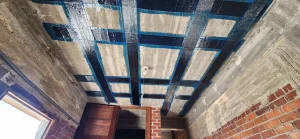
In most cases, wall bowing occurs a result of hydrostatic pressure. If the earth that surrounds the walls of your basement becomes saturated with water, it expands and exerts more pressure against your basement’s walls due to its increased weight.bowed-basement-walls-stablwall-1

Increased hydrostatic pressure can be due to flooding, poor drainage around your basement, and plumbing leaks that are not fixed in good time.

Other factors that can lead to bowed basement walls include:

  • Frost heaving – The soil near the basement walls swells towards the foundation due to an increased presence of ice during very cold seasons.
  • Expansive clay soils – The expansive soils round the basement wall can put a lot of lateral pressure on basement’s walls, especially when the level of moisture in the soil increases.
  • Presence of large roots near your house – Large and expanding roots near your house can cause your basement’s walls to bow due to the pressure they exert on the walls over time.

Signs that you have bowed basement walls

Sometimes, it may not be easy to spot bowed basement walls. However, you need to look for any sign that may suggest that your basement’s walls are bowing. Here are some of the signs.bowed-basement-walls-stablwall-2

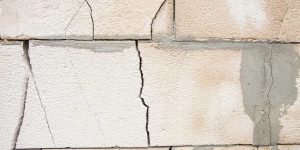
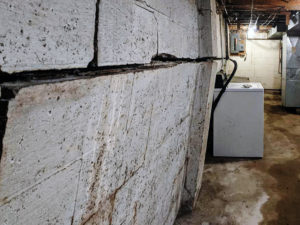
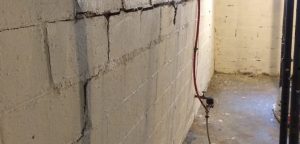
  • Horizontal cracks: Horizontal cracks often occur due to wall bowing. When the soil around the basement exerts a lot of lateral pressure against the basement’s walls, the walls can bow and form horizontal cracks along the affected area.
  • Stair step or diagonal cracks: These cracks are also likely to form as the wall bows inwards. Stairstep cracks and diagonal cracks indicate that sections of the basement’s walls are pulling apart due to the increased pressure from outside.
  • Walls that are bulging or curving inwards: You may also notice that the walls of the basement are bulging or bowing inwards. This is a clear sign that the walls are being pushed inwards by the soil that surrounds them.

What you need to do

If you see any signs of bowed basement walls, you should have a professional contractor do an inspection and repair the walls as soon as possible. If left unrepaired, basement wall bowing can continue and lead to notable structural damage.

Contact the Professionals at StablWall Today! (866) 782-5955

bowed-basement-walls-stablwall-3

How to Repair Bowed Basement Walls

How to Repair Bowed Basement Walls

Have you noticed your basement walls bowing or cracking? While this is a common problem that many homeowners face, it can be difficult to determine exactly what is causing the issue. There are several factors that could lead to bowed basement walls, and understanding these factors can help you identify the root cause of the problem.

The most common cause of bowing basement walls is settlement of the foundation. This happens when the building’s weight causes it to sink unevenly into the soil, leading to cracks and bowed walls as pressure builds up on one side of the wall. Another possible cause is hydrostatic pressure, which occurs when water accumulates around your foundation and exerts outward pressure on its walls. Finally, poor soil conditions can also contribute if there isn’t enough support for the foundation or if the soil contains too much clay or sand which tends to shrink when dried out.

No matter what the cause may be, it’s important that you address any bowed basement walls as soon as possible in order to ensure your home’s structural integrity does not suffer any further damage.bowed-basement-walls-stablwall-1

How to Fix Bowed Basement Walls

If your structure has bowed basement walls, it’s important to take steps for effective foundation repair. Here is what you need to do:

  1. To ensure an effective repair, it is essential to identify the source of bowed walls. This can be due to soil pressure, improper drainage, or hydrostatic pressure from water accumulation. Once you’ve identified the cause for your bowing walls, then you’re ready to start repairs!
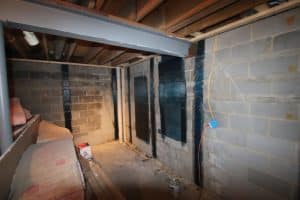
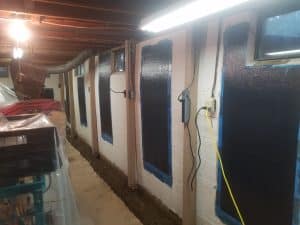
  2. Speak to an expert: Seeking the advice of a professional foundation repair technician is wise in order to determine the scope and remedy for any bowing walls. They can suggest installing anchors, carbon fiber strips, or steel braces as solutions that will ensure your home’s stability and decrease further damage.
  3. To address the root of the problem, it is imperative to resolve any drainage difficulties as well. This could involve installing a sump pump, French drain, or other water-controlling method around the foundation in order to prevent future flooding and pooling.bowed-basement-walls-stablwall-2
  4. Stay vigilant: Following the repairs, it is paramount that you keep an eye out for telltale signs of further bowing or movement on your walls. Regular monitoring will help catch any developing issues prior to them becoming major problems and causing intensive harm.

It’s essential to take immediate action on any foundation issues or bow-shaped basement walls in your home. If neglected, these problems can lead to more harm and endanger the safety of you and your family. Contact a professional foundation repair contractor who will pinpoint the main cause of this issue and suggest an appropriate solution for restoration work.

Contact the Professionals at StablWall Today! (866) 782-5955

bowed-basement-walls-stablwall-3

How Much Does it Cost to Repair Bowed Basement Walls

How Much Does it Cost to Repair Bowed Basement Walls?

Are the walls in your basement bowing? You may be wondering how much it costs to repair bowed basement walls. We discuss the costs of foundation repair below to give you a guide on what you can expect.bowed-basement-walls-stablwall-1

The national average cost of repairing a foundation is $4,542. Repairing your bowed basement walls can cost anything from just over $1000 to slightly over $10,000. The cost will be influenced by various factors including:

  1. Your location

Your geographical location will influence the cost of various factors such as labor, obtaining permits, and materials. Permits for repair on your foundation can cost anything between $75 and $150. The cost of labor will not only be influenced by the average cost of labor in your area but also the specific contractor offering your services. You should inquire about the cost of labor from the specific contractors you’re considering.

  1. The cause of the bowing

The underlying cause of the bowing will determine what solutions will be applied. For example, if your foundation is bowing because of leaking gutters, you may only have to get the gutters repaired or replaced and have the bowed walls repaired or reinforced. If the bowing is a result of poor grading, you will have to have your landscape’s grade corrected and your foundation walls repaired. The latter is more involving and will cost a lot more than the former situation.

  1. The type of foundation

Not every type of repair solution can be applied to every type of foundation. Your foundation type will therefore also influence the type of solution used to repair the bowed basement walls. Many foundation repair contractors will inspect your foundation and provide you with a comprehensive quotation outlining their preferred solution and the costs of repair.bowed-basement-walls-stablwall-2

  1. The severity of the bowing

Repairing a wall that has moved only 1 or 2 inches is less involving than repairing a foundation that has moved several inches. Foundations that are severely bowed will require intensive repair. You may even have to replace the foundation in order to ensure the security of your property.

How to determine how much-bowed basement wall repair will cost

If you want to ensure that you’re getting the best deal for foundation repair, you should have your foundation inspected by at least three contractors and compare the quotations they give you. Many foundation repair contractors offer free inspection and quotations.

Contact the Professionals at StablWall Today! (866) 782-5955

Bowed Basement Walls | Columbus, OH | StablWall

DIY Bowed Basement Walls Repair Do’s and Don’ts Columbus, OH

DIY Bowed Basement Walls Repair Do’s and Don’ts Columbus, OH

Do you have bowed basement walls? Many homeowners are tempted to go the DIY route when it comes to foundation repair. This is because information is now more widely available. However, this doesn’t mean that repairing your foundation is a job that you can handle on your own. If you insist on going the DIY route, here are some Do’s and Don’ts to keep in mind.Bowed Basement Walls | Columbus, OH | StablWall

Do’s

  1. Inspect your property to determine the source of moisture

When you notice bowed basement walls, it is a good idea to try and determine the source of moisture. This will ensure that you are able to tackle the root cause of the bowing and protect your basement from further damage. Take a walk around your foundation. Inspect your downspouts, gutters and look for signs of plumbing leaks.

  1. Have your basement inspected

It is important to have your basement inspected by a professional contractor. Bowed basement walls can be accompanied by other structural damage in your home. An inspection will reveal the cause of the bowing as well as the extent of the damage.

  1. Address obvious moisture sources

Are there sources of moisture that you can address prior to foundation repair? For example, you may want to consider cutting down shrubs that grow near your foundation wall or transplanting your garden to another location away from the foundation wall.

Don’ts

  1. Buy a DIY repair kit

DIY repair kits are cheap and easy to use. However, they won’t provide you with a long-term solution. In fact, chances are that you will be experiencing more severe bowing in time. DIY kits don’t offer a comprehensive solution to bowing. They only address the symptoms and not the disease. They are not worth spending your money or time on.Bowed Basement Walls | Columbus, OH | StablWall

  1. Ignore the bowing

It’s tempting to want to ignore your bowed basement walls. However, this won’t make the problem go away. In fact, the bowing will only become worse. You may even experience more damage including cracking and water seepage. It is, therefore, best to address the problem as soon as possible. This will help you avoid expensive repairs.

  1. Don’t go with the first solution you come across

It’s easy to be convinced by a contractor to use the method they recommend to repair your walls. However, there are several solutions available in the market. Take the time to explore different options to ensure that you choose a solution that best meets your needs.

Repairing bowed basement walls isn’t a DIY job. You should look for a professional with experience to help ensure you can enjoy the benefits of repair for the long term.

Contact the Professionals at StablWall Today! (866) 782-5955

Bowed Basement Walls | Columbus, Ohio | StablWall

Important Facts about Bowed Basement Walls Columbus, Ohio

Important Facts about Bowed Basement Walls Columbus, Ohio

Bowed basement walls may be an indication of serious foundation and basement problems, but can in some cases be difficult to detect. Basement walls often curve inwards due to hydrostatic pressure and expansive soils, both of which exert sustained pressure on your foundation or basement and crawlspace walls. The pressure causes walls to buckle, curve, or swell inwards.

How to determine if you need repair for bowed basement walls Bowed Basement Walls | Columbus, Ohio | StablWall

As noted above, detecting bowed basement walls is not always easy, but you should be concerned if you see any of the following signs:

  • Stair step or horizontal cracks in the foundation and basement walls – These types of cracks indicate that the structural integrity of the basement or foundation walls has been significantly compromised. This can be due to foundation settlement or other issues.
  • Signs of basement and foundation walls not being straight, curving inwards, or bulging
  • Presence of expansive clay soil around your building
  • Evidence of hydrostatic pressure, especially during the rainy season

If you see any of the above signs, you should let a professional basement repair company assess the damage and carry out the repair that may be required.

What are the causes of bowed basement walls?

Even as you work with an expert to repair your bowed basement walls, you need to understand the reasons why the walls are bowing. When you identify the cause of the damage to the basement, you will be able to find a lasting repair solution.

In most cases, basement wall bowing is caused by unstable soil. Soils that absorb too much water or expand significantly are likely to put notable pressure on the basement walls and cause them to bow. Some of the soil conditions that can lead to basement wall bowing include:

  • Over saturation or excess moisture: Poor drainage or defective gutters and downspouts can cause water to accumulate in the soil that surrounds the basement walls.
  • Expansive clay soils: Such soils expand when wet and shrink during the dry season. Poor drainage around the basement walls will cause such soils to exert a lot of pressure on the walls during the rainy season.
  • Frost heaving: During winter, very low temperature can cause ice structures to form on the soil. These structures cause the soil to move, and this results in foundation shifting.

How to repair bowed basement walls

Your basement repair technician will use methods such as steel bracing and basement waterproofing to straighten bowing walls and prevent further damage by water or moisture.

Contact the Professionals at StablWall Today! (866) 782-5955

Bowed Basement Walls | Philadelphia, PA | StablWall

4 Important Facts about Bowed Basement Walls Philadelphia, PA

One thing that can strike fear in the heart of a homeowner is the bowed basement walls. One day they appear okay, the next time you go into your basement, you have bowed basement walls. While this can be a severe structural concern, it is something that can usually get fixed. The trick is not to let it go for too long. Bowed basement walls are weak basement walls. They’ve become weakened because of too much pressure from the exterior of your home. It is almost always due to the soil and the weather. Soil becomes saturated with water from the rain, and it begins to push against your home’s foundation. As the pressure continues, the walls become weaker, and they bow.Bowed Basement Walls | Philadelphia, PA | StablWall

  1. Don’t Ignore the Problem.

One thing that you never want to do with any structural problem is to ignore it.

  • The problem won’t go away.
  • The bowed basement walls will not fix themselves.
  • Your wall’s issues will only continue to get worse, as the pressure will continue.
  • Eventually, the walls will crack more, crumble, or even fall.
  1. Some Causes of Wall Bowing Can Get Rectified

While most of the time, excessive water is the cause of bowing walls, there are some other reasons that this happens, and you can prevent it.

  • Have a drain put in to draw the water away from the foundation.
  • Have leaky pipes repaired
  • Keep your gutters clean.
  1. Think Ahead

Avoid having your driveway installed right up to the house’s foundation. A massive concrete driveway can put pressure on the foundation and cause bowing. You should plant trees as far away from the foundation as possible so that roots do not grow and press against the foundation.

  1. Bowing Can Get Repaired

Don’t let bowing walls make you feel defeated. Your professional foundation specialists can inspect, diagnose, and repair your walls. They have several different methods to reinforce your walls and help them become structurally sound and sturdy. Your walls will be as new and won’t give you another problem. These systems often come with warranties to help ease your mind.

The most important fact to know about bowing walls is to call for help as soon as possible. It’s up to you to take care of your foundation and see that it remains stable. When you take care of your foundation, it takes care of the rest of your home.

Contact the Professionals at StablWall Today! (866) 782-5955


Bowed Basement Walls | Philadelphia, PA | StablWall

Selling a Home with Bowing Basement Walls Houston, TX

Are you planning to sell your home? Many homeowners have their properties appraised to determine their market value. It can be very disappointing to discover that an issue such as the bowing basement walls is keeping you from getting the best value for your home.

How do I know I have bowing basement walls?

The easiest way to find out if you have a foundation issue is to take a walk around the home. Search for signs of cracking or crumbling. These are often the first signs of bowing. If you spot cracks in your foundation, you should get in touch with a foundation repair professional. They can inspect the foundation for you and determine whether the walls are indeed bowing and the cause.

Don’t take the word of just one repair contractor. Have your foundation inspected by at least 3 different contractors. Many contractors offer free inspection, so you won’t have to worry about the costs. Different opinions will enable you to make an informed decision.
Bowing Basement Walls | Houston, TX

How much does it cost to repair bowing basement walls?

The cost of foundation repair will depend on the severity of the damage. It also depends on the type of solution you choose and the contractor you hire. According to HomeAdvisor, the average cost of foundation repair is $4,033.

Many homeowners are discouraged by the high costs associated with foundation repair. However, putting off repairs does not help resolve the issue. The problems will in fact become worse. While you may have only had to deal with a bowing wall and minor cracks, you may have to deal with a flooded basement in addition to other issues if you put the repair off.

Talk to your contractor about the different options for repairing the walls. Seek a solution that is affordable such as the application of carbon fiber straps.

Should I repair the walls before selling the house?

This depends on your goals when selling the house. If you’re looking to sell your home as quickly as possible, you may not mind the loss in value. However, if you want to get the best price point, you will want your home in the best condition possible. This would mean investing in repairs before selling the house. This will be an investment in your home. You will get a significant profit on this investment.

Educate yourself on the repair of bowing foundation walls. Talk to a reliable contractor and seek a solution that will add value to your property.