

Basement walls get built to support the weight of the entire building above them. However, they are vulnerable to lateral pressure exerted by the soil around them. When hydrostatic pressure within the soil increases, it pushes against the foundation walls. When the force of hydrostatic pressure exceeds the strength of the basement walls, the walls move inward and sometimes crack.
Carbon fiber strips are proving to be a popular choice when it comes to repairing foundation cracks and bowing walls. Carbon fiber has one of the highest tensile strengths that any material currently has. It will not stretch, bend, or break even under high pressure. It is ten times stronger than steel and yet doesn’t take up any of the floor space in the basement. Installation is fast, and it gives excellent long-term results.
Carbon fiber strips may sound like the answer to all your foundation problems. However, there are some things to consider before having them installed. 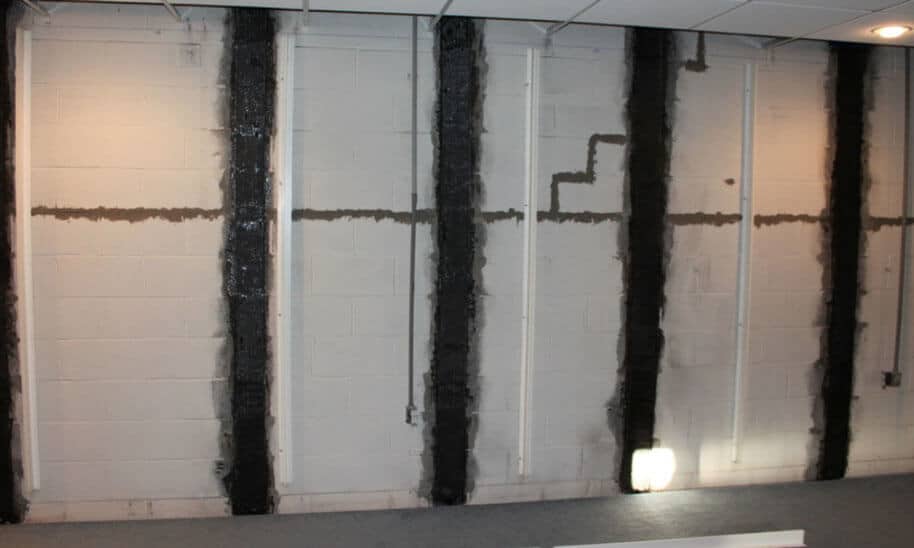
- The cracks in your wall must get filled
It isn’t enough to have the strips installed on your wall. You also need to have the cracks filled with mortar or epoxy. That gets done to prevent movement. Carbon fiber has excellent tensile strength. However, it has little sheer or compressive force. The straps installed in your wall can quickly fail if steps do not get taken to ensure that the tension is maintained. Filing up the cracks will prevent movement and make sure that theforce in the strips is maintained.
- Pay attention to tuck points
Many DIYers and inexperienced contractors install carbon fiber strips without paying attention to tuck points. When the wall moves as the conditions of the soil on the exterior change, the piece may form a bubble or even pop off. Professional and experienced contractors pay attention to tuck points to avoid this problem. It’s, therefore, a good idea to hire a certified, trained, and qualified contractor to install carbon fiber for the best results.
- It won’t straighten your walls
If your wall has bowed or moved excessively (more than two inches), carbon fiber on its own isn’t the right solution for your wall. You should consider a system that will help to straighten the walls installed, such as wall anchors. Carbon fiber can get used in conjunction with other strengthening and straightening systems for the best results.
If you’re planning to have carbon fiber installed in your walls, take note of the considerations above and make informed decisions.
Contact the Professionals at StablWall Today! (866) 782-5955

