foundation-repair-StablWall

Reasons Why Stablwall Carbon Fiber is the Future of Foundation Repair

Foundation Repair

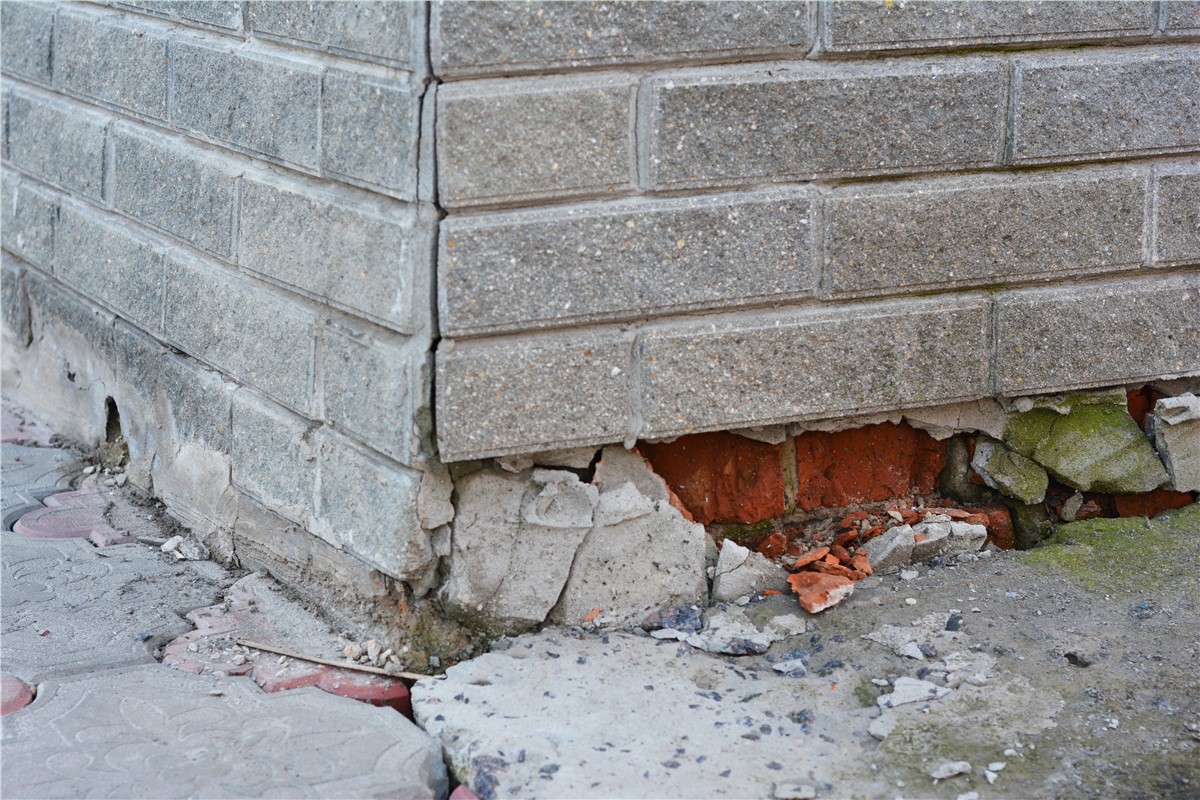
Foundation damage according to the Concrete Foundations Association (CFA) poses the greatest danger to the structural integrity of American homes. In fact, the National Association of Realtors (NAR®) says over 79% of all homes suffer from some form of structural weakness in the foundation. This is where Stablwall Carbon Fiber comes in handy.

The Smart Solution

You may already realize that a simple crack in your foundation can exacerbate to a point of ruining your precious investment. What’s more bowing and cracking foundations lead to moisture problems in the basement? Therefore, Stablwall is an innovative repair system where carbon fiber reinforces polymer sheeting in order to correct these defects.

This technology has been used in the aerospace industry for decades and its effectiveness lies behind how it works. In essence, the sheeting is composed of many carbon fibers lined up against each other. It is impregnated with specially designed epoxy bonding adhesive to bind these fibers together and to the wall.

Therefore, it is ideal to handle cracks and bowing walls because it prevents expansion of any gaps existing on the walls. To understand the reason as to why Stablwall Carbon Fiber is creating so much hype in the foundation repair industry, take a look at some of these benefits:

  1. It contains highest tensile strength, which means it cannot break easily. In fact, these strips are considered to be 10 times stronger than steel beams.
  2. They are thin strips, which are almost invisible once they are applied. Your foundation walls will not lose that aesthetic touch you desire.
  3. The durable solution with no maintenance required in future.
  4. Versatile solution that can work with poured concrete, brick walls, block and even red clay tile walls.
  5. Easy installation which saves money and time while also reducing the inconvenience of having a messy project going on in your home.

The process of applying a Stablwall starts with a diagnosis of the problem in order to recognize whether there is an underlying cause. Surface prep is then done to remove dirt and cured cement paste in order to get down to the aggregate. Cracks and joints are then filled before the epoxy is applied on the wall and on the back of the carbon fiber sheet before it is attached.

Furthermore, the Stablwall Carbon Fiber project is best done by an expert for more effectiveness. These experts know how to correctly impregnate the fiber material with epoxy. Without a doubt this is the best solution to repair any foundation damage. It is not only convenient and versatile but offers more permanency thus assuring your lovely home is safe.

Basement Cracks and Finished Basements

basement cracksBasement wall cracks are the most common source of seepage problems.  If you have a foundation that is constructed of poured concrete, there’s a very high likelihood there is a crack somewhere in your foundation.  If your basement is finished, it can become a challenge to find them.

Before you start ripping down your drywall or paneling, take a walk outside.
Walk around the exterior of your home.  It’s best if there is still daylight.  Otherwise, grab a powerful flashlight.  And make sure to bring your eyeglasses with you.

The first thing you want to do is locate the top of your foundation wall.
Ideally, it should extend above your grading at least a few inches.  If not, grab a shovel and pull back the soil enough so you can expose the top of the foundation.

Once the foundation is exposed and identified, clean off the surface of the wall.
A wire brush will usually do the trick.  Now, slowly scan the exposed portion of the foundation and look for hairline cracks.  When I say hairline, some cracks are just 1/16 of an inch wide.  Now you know why I said grab your glasses!  Here’s a photo to give you a better idea:

Spend some extra time on the sections of the wall that correspond with basement seepage.
Say, for instance you noticed the carpeting was wet about ten feet to the left of your chimney inside your basement.  When you go back outside, measure ten feet to the right of the chimney.

Don’t expect to find cracks all over the place.
The average house has between two and eight foundation cracks.  Don’t be fooled by form lines in the foundation.  They are superficial and don’t leak because they don’t go all the way through the wall.  Form lines are left in the concrete when the wood forms are pulled.  They are found at fixed intervals.

Don’t Patch Your Cracks

foundation crack patchThere are a lot of companies that do foundation wall cracks and repair them from the inside or outside with a patch method. If the basement is unfinished (no drywall or paneling) and the crack is exposed on the interior, companies typically recommend epoxy/urethane injection process. This is a two step process which involves sealing the crack on its inside face with an epoxy paste and injecting a urethane resin which fills the entire crack to the outside soil.

If the crack is obstructed by paneling or drywall, then companies address the problem from the exterior utilizing wall-clay process or using the epoxy/urethane injection process. This involves coring a small hole in the earth at the crack location and filling the hole with a granular clay to form an impermeable water barrier or injecting the urethane and using the epoxy paste.

Both foundation crack repair processes are minimally invasive and minimally effective. Most foundation wall cracks do not pose any structural concerns, but solving them correctly the first time will prevent any future needs or worries about the cracks. Certain crack pattern formations and those wider than 1/8”, however, can be a sign of a structural problem that should be further evaluated by companies who offer foundation crack repair and structural repairs.


Tips For Choosing A Foundation Repair Contractor

foundation repair contractor

We know choosing a foundation repair contractor can be a bit difficult as well as nerve wrecking.

Here are ten questions to ask the company. These will help you make your decision a little easier:

1.)  Years in the Business?
2.)  What Is Their Warranty?
3.)  What Type of System Do They Use?
4.)  Are They Insured?
5.)  Part of any Affiliations/Associations?
6.)  Price Compared to Benefits?
7.)  Sales Rep Certifications/Awards?
8.)  Sales Rep Knowledge?
9.)  Sales Rep Badmouthing Competition?
10.)  Companies Reputation?

The answers to these ten questions will give you all the answers you need to make your decision if the company is right for you. For more      information about foundation repair contractors, visit our homepage stablwallcarbonfiber.com or give us a call at 866-782-5955.

Time to Start Paying Attention To Your Aging Foundation?

Carbon Fiber Wall Repair

According to a recent American Housing Survey administered by the United States Census Bureau, the average age of a home in the US is approximately 38 years old.  Considering the life of the average concrete footing/foundation is considered a single lifetime by the National Association of Home Builders (NAHB––source), 38 years is a significant portion of the life of a foundation!

It’s clear our homes are getting older, and the increased extremity of droughts and rains in recent years certainly hasn’t made things any easier on our foundations. Droughts can cause excess soil shifting, while excess moisture can put dangerous amounts of pressure on your foundation walls, causing them to bow inward. Homeowners are increasingly turning toward carbon fiber wall repair, steel beams, and wall anchors.

The good news is, there are often early warning signs that can point to a larger potential structural issues. The bad news is, many of us simply ignore them! Here are some things to be aware of:

  • New or Worsening Leaks From Walls or Floor
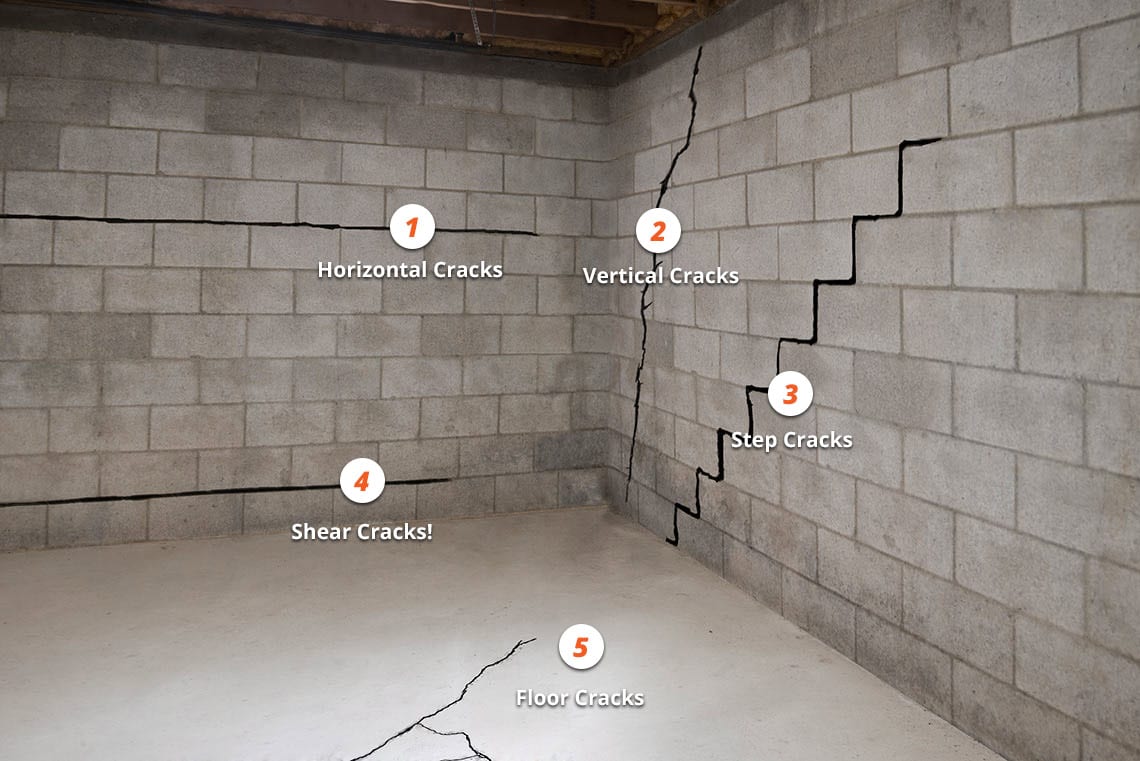
  • Vertical Hairline Cracks
  • Horizontal Cracking
  • Cracking of the Block Mortar Joints
  • Doors and Windows Out of Jamb
  • New Cracks in Drywall Throughout Home
  • Shifting/Separating Floor Slab

Avoid unwanted surprises, and develop a system of checking your foundation walls a few times a year. You may just save thousands of dollars and tons of stress and hassle!

Learn More About Carbon Fiber Wall Repair»

Potential Causes of a Failing Foundation

Foundation wall repair  becomes more and more of an issue the older your foundation becomes, and with so many aging foundations in many areas throughout the U.S., it’s no surprise many homeowners are turning to more and more solutions for their failing foundations.

But what causes a foundation’s structure to fail over time? Water is actually an important piece in the puzzle when it comes to structural foundation damage. Below we will go over some scenarios in which the structural integrity of your home may be affected over time.

1. Addition of water to the surrounding soil. Soil expansion can be attributed many foundation problems, including cracking along the mortar joints, horizontal cracking, and walls bowing inward. These are considered potential serious structural risks, and should be addressed immediately.

2. Subtraction of water form the surrounding soil. In some cases, a home’s foundation can be damaged by over-settling due to water leaving the soil around the home. This over-settling can large cracks in the concrete floor slab, as well as large diagonal cracks near the corners of your foundation.

3. Poor construction. Sometimes, a home is built upon soil that was poorly compacted, setting the home up for continued foundation troubles for decades to come.   Poor wall construction methods and materials can also contribute to ongoing structural damage.

The earlier you can identify and resolve a structural foundation issue, the better. For the most part, the problem will only become worse, forcing you to pay for more expensive repair solutions or worse–a total wall rebuild. If you have any questions about your foundation wall repair options, feel free to contact us!