Wall Cracks | Atlanta, GA | StablWall

5 Reasons You Should Invest in Foundation Wall Repair – New York, NY

People understand the metaphors about the necessity of a strong foundation; however, when the literal foundation of a house may be compromised they question if it is worth fixing. There is a reason the metaphors make sense. Your foundation is literally the most important part of the house. Without a strong foundation, the whole structural integrity of the house could be compromised. While investing in foundation repair may not be a fun remodel, it is definitely necessary. Here are five reasons why you should invest in foundation wall repair.

1.) It is dangerous to ignore it

Foundation problems can lead to foundation failure. Yes, while some cracks and foundation issues are slow moving, if you never solve the issues they will get worse. As the problem gets worse, it will cost more money to fix. If the damage is extensive enough it may need to be completely rebuilt. Ignoring foundation damage will become increasingly more dangerous and could completely collapse resulting in major repairs to your entire home.

2.) It impacts the resale value of your home

You may have a great house but if you have foundation problems, it is going to be hard to sell. If you ever want to sell your house, you will have to either take a major loss on the house or fix the foundation. Most of the time the buyer will force the seller to repair the foundation before a deal is finalized. While the laws vary state to state, most places have strict laws about sales disclosures and the condition of the foundation is definitely an item on the disclosure form. If you don’t disclose a problem it can turn into a costly lawsuit or at least blow the sale.

3.) The problems will not go away on their own

Foundation problems will not fix themselves and it isn’t safe for a homeowner to do it themselves. They don’t have the right tools or the right experience to have a foundation repair job. Homeowners need to call a professional. A professional’s repairs will be certified. A home inspector will know the difference between a professional job and a DIY foundation repair and it will impact the value of your home.

4.) The issues don’t stop with the foundation

If you have need foundation repair then you probably have cracks in the foundation. If you have foundation cracks, you most likely have water issues, too. If you have water issues, you most likely have mold and mildew issues. If you have mold then you probably have indoor air quality issues. Foundation cracks could also be letting in radon and other dangerous soil gases. Basically, you need to understand that foundation cracks are actually causing your families health and breathing problems or even worse, lung cancer if you have a radon problem that you don’t know about.

5.) Fixing the foundation will fix your house

If you are in need of foundation repairs, you have probably been living with windows and doors that stick, unsightly cracks in your walls upstairs, or gaps around doors and windows letting in serious drafts or even rodents and insects. Your chimney could be leaning, tilting or even cracked. The bricks on your house could be cracked or with cracks in the mortar joints. These are just symptoms of foundation and settlement issues. You need to fix the foundation to permanently fix these issues. If you try to fix these issues before you fix the real cause you will end up refixing the same problems over and over again.

Overall, the health of your foundation impacts your whole house and the health of the home environment. The foundation should be treated and maintained as the important part of the home that it is. Don’t ignore foundation repairs. Don’t wait for it to turn into an emergency. Invest in the foundation repairs your home needs sooner than later.

StablWall foundation repair

Why Carbon Fiber is the Best Solution for Cracking Basement Walls – Lexington, KY

When the soil surrounding your foundation is saturated with water, it can exert a lot of pressure on the walls of your foundation. The pressure can result in cracking basement walls. Cracks in foundation walls can result in the destabilization of the entire structure of your home. If you want to ensure that your home is safe you will need to ensure that your foundation is repaired quickly.

One common method of repairing foundations today is by applying carbon fiber in the form of strips or grids. Carbon fiber is a common choice in foundation repair because it makes repair easy as well as more affordable for home owners.

What is carbon fiber?

Carbon fiber is formed from nylon fiber. The nylon fiber is baked at 3000 degrees. The result is a change in its chemical structure to a much stronger compound i.e. carbon fiber. The carbon fiber is extremely strong for its weight. The resulting strands of carbon can be woven together or placed parallel to each to produce an exceptionally strong material that can be used for construction.

Carbon fiber has undergone various tests to prove its strength. It has been proven to be 10 times stronger than steel when under tension.

Reasons to use carbon fiber for cracking basement walls
  • Non-invasive installation

If you don’t want to have holes in your basement walls, then carbon fiber is the best solution for you. The installation of carbon fiber strips is always non-invasive. It involves the use of an epoxy adhesive that does not contain VOCs. You therefore don’t have to leave your home to get away from dangerous fumes or the noise of the construction. It is a completely safe and quick solution.

  • High tensile strength

Carbon fiber has one of the highest tensile strengths amongst construction materials available today. It will not break even under very high tension. This characteristic is especially important when it comes to the repair of cracked foundation walls. You need a material that will not crack, break or stretch under the pressure from the surrounding soils.

  • Long lasting solution

The carbon fiber straps are a long term solution for cracking basement walls. They will not rust even when exposed to high moisture levels. They also will not deteriorate. This is the perfect solution for those looking for a quick and affordable way to repair cracks in their basement walls.

Wall Cracks | Atlanta, GA | StablWall

Wall Cracks – What You Need To Know About Foundation Failure – Chicago, IL

There are many misconceptions about basement wall cracks. One of the biggest is that they are a sign of foundation failure and that means they cannot be repaired. This myth is a result of misinformation. If you’re a homeowner and have spotted some cracks on the walls of your basement, here are a few things you should know.

  1. Your soil has a lot to do with it

In many cases, soil is responsible for foundation failure. It’s important to consider the characteristics of the soil surrounding your foundation before embarking on repair. This includes considering the soil type and characteristics like:

  • Elasticity
  • Expansion
  • Plasticity

A reputable foundation repair company will be able to identify the type of soil on your property and provide a solution that will deal with any problems the soil presents.

  1. Water is your biggest enemy

If your soil is involved in causing the wall cracks, it isn’t acting on its own. Changes in soil volume that cause pressure to be applied on foundation walls are the result of water retention. Soil particles expand when they take up water. This results in pressure being exerted against the wall.

The opposite happens when soil particles loose water through evaporation during the dry season. The particles shrink and the soil contracts. This results in a gap being formed between the soil and the foundation wall. The foundation wall loses its support and cracks form.

Sources of water should be identified and dealt with to prevent extreme expanding and contracting of soil.

  1. Foundations and constantly moving

Many people imagine that foundations are immovable masses. The truth is your foundation is constantly moving. This is a result of changing moisture levels in the concrete itself as well as in the soil surrounding the foundation. Regulating moisture levels in soil is therefore important to avoid extreme shifts in the foundation.

  1. Cracks don’t always show where the problem is

Most home owners think that wall cracks are an indication of where the problem with the foundation is. In most cases, foundation failure occurs in a different part of the foundation. The crack is only an indication of the weakest point in the foundation. Therefore, sealing the crack will not solve the problem. The root cause of foundation failure must be determined and addressed. To do so, contact your local basement waterproofing company.

.


StablWall | Cleveland, OH

Carbon Fiber Stiching To Repair Basement Wall Cracks – Cleveland, OH

Have you come across the term ‘carbon fiber stitching’? This method of repairing basement wall cracks has been in the industry for some time.

In the past, repairing cracks that occurred on the exterior of foundation walls was done by excavating the foundation. Steel beams were then installed to reinforce the foundation walls. These beams were placed on both the outside and the inside of the foundation. They provided support for the bowing wall and stabilized it enough to prevent further movement.

Carbon fiber stitching removes the need for excavation. All the repairs are done from the inside of the foundation. Carbon fiber staples, straps, or sheets are installed in the area of cracking to prevent further movement. The carbon fiber prevents further movements from occurring. It is a long term solution for stability.

Why you should consider carbon fiber stitching

  • No need for exterior excavation

All repairs are done from the interior of the foundation. Your plants, shrubs, and landscape will remain safe the entire time.

  • One repair for all cracks

You don’t have to deal with every type of crack individually with carbon fiber stitching. The same repair will be effective for all the cracks whether they are vertical, horizontal, or corner basement wall cracks. All the cracks are addressed with just one repair.

  • It is completed in a short time

Carbon fiber stitching is completed within a few hours at most. The repair can be done by one or two people. It is one of the least disruptive methods of repair available today for basement wall cracks

  • It causes minimal pollution

The repair of your basement walls using carbon stitching will result in minimal air and noise pollution. The installation does not involve the use of power tools, excavation, or other activities that could result in noise or the formation of dust.

  • It’s affordable and effective

Carbon fiber stitching is one of the most effective and affordable solutions for dealing with foundation cracks. The labor is minimal and the materials are affordable. There is also no need for maintenance. No future adjustments are required once the installation is completed.

Don’t take chances when it comes to the safety of you and your loved ones. Cracks in your foundation are often a sign of lack of stability in the structure. You can’t afford to wait to have your foundation repaired. Carbon stitching offers you a long term solution that is effective, easy, and affordable.

Should You Use Timber Wells for Egress Windows? – Columbus, OH

Are you planning to install egress windows? You should also make a plan for window wells. These wells will help to improve lighting in the basement and help you meet the requirements of your municipality when it comes to egress requirements.

Requirements for egress windows and window wells differ greatly. If you’re in a municipality that allows for the use of timber for window wells, you may be wondering whether or not to use them. The following is a discussion on the pros and cons of using timber for window wells.

The Pros

  1. They are long lasting

These window wells are designed to last a long time. The timber is treated to ensure that termites do not affect it. Timber is also a great choice for window wells, as it is not greatly affected by soil conditions.

  1. They’ll give you the best value

If you’re looking for the best value for money, then timber window wells are it. They are not as expensive as other commercial window wells. The materials are sourced locally making them affordable.

  1. A natural product

If you’re concerned about the effect of your activities on the environment, invest in a timber window well. They are a natural product that will not have a negative impact on the environment even years after being installed.

  1. They are aesthetically pleasing

Timber window wells are a great choice if you consider aesthetics. They will give you that natural warm look that goes with any kind of landscaping or interior décor. Your window well will probably be the best part of the basement.

The cons

  1. Skill required in installation

Not everyone is skilled enough to install a window well made of timber. There aren’t many professionals who can do it either. You therefore need to find a professional who has experience and skill in installing these types of window wells to ensure the best results.

  1. Rotting wood

If you’re not careful with the selection and installation of your window well, you may end up dealing with rot. This often occurs if the well is allowed to flood. You should therefore ensure that adequate drainage is installed in the window well.

There are various choices for window wells today. It is important to consider the pros and cons of each material before you make a decision. Consult with a basement waterproofing contractor for the best results.

step cracks

Foundation Step Cracks – Why You Should Be Concerned

Foundation Step Cracks

Cracks are something that no homeowner ever wants to see in their walls. They especially never want to see them in their foundation walls. However, cracks do occur every once in a while. While some cracks are superficial resulting from the natural drying process, other cracks run deeper and are often a sign of a structural problem with the foundation.

It is important to be able to differentiate between structural and superficial cracks. This will let you know whether you should be concerned or not. It will also tell you when your foundation needs immediate attention.

Step Cracks

Masonry block foundations are built by stacking blocks on top of each other. The blocks are arranged in a staggered pattern to give the wall strength. Mortar is used between the blocks to form a bond.

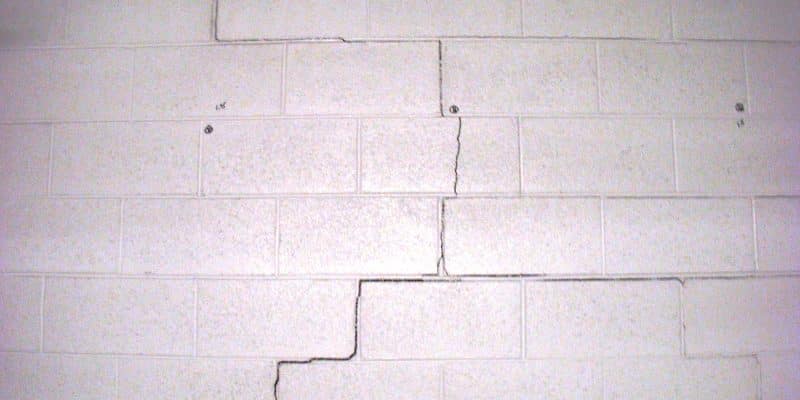
Step cracks often appear on masonry foundation walls. Cracks occur along the weakest parts of the wall. When it comes to masonry block foundation walls, the weakest part is that between the blocks. This space consists of mortar that is used to bond the blocks together and form the wall. The appearance of these cracks is therefore a clear indication of foundation failure.

The cracks appear like stair steps. This is because they follow the spaces between the blocks.

Why Your Wall is Cracking

When you notice the cracks in your foundation, you may be wondering why they occurred in the first place. This type of cracks is an indication of foundation failure. This often occurs as a result of pressure acting against the wall from the exterior. When the pressure exceeds the resistance of the wall, the wall begins to bow inward. When it comes to a masonry block foundation wall, the bowing is first noticed as step cracks.

In some cases, the soil may be doing the opposite. It may not be providing adequate support for the foundation wall for example, during a drought when the soil shrinks away from the foundation wall. The wall bows outward due to a lack of support. The cracks form at the point of bowing.

What You Should Do

If you’ve noticed step cracks in your foundation wall, don’t attempt to repair the wall on your own. This is not a DIY job. It is a job that is dangerous and requires a great deal of skill and expertise to repair properly and safely. Get in touch with a basement repair professional with experience in dealing with bowing walls.

Bowed Basement Walls | Col, OH | StablWall

Techniques for Bowing Foundation Wall Repair

Bowing Foundation Wall Repair

When you see cracks forming on your foundation wall, the first thing you should do is to call the experts. Foundation cracks are often a sign of the need for foundation repair. This isn’t a unique problem. Foundations, like any other part of the home, need maintenance.

Why You Need a Pro

You may be wondering why you should spend money and time calling a professional for only a few cracks on the wall. You’re not alone. Many homeowners will either ignore or seek do-it-yourself solutions to the cracks in an attempt to avoid what they think would be an unnecessary expense.

The problem with this is that foundation cracks often indicate a problem with the foundation, which if not properly repaired is likely to become a structural problem for the entire home. There’s also the problem of water seepage. Even cracks that aren’t allowing water through at the moment are likely to start leaking over time. You’ll end up with a wet basement that will result in further problems including damage of property as well as the growth of mold.

Repairing a Bowing Foundation Wall

Foundation cracks are often the first thing you’ll notice when your foundation is in danger. They are one of the first signs of a bowing foundation wall. In this situation, even the strongest sealants will not protect your wall from further damage.

The bowing occurs as a result of high pressure from the soils surrounding the foundation wall. It is important to not only relieve this pressure but also to provide more support for the wall. The following are two popular ways of providing support for foundation walls.

  1. Re-bracing walls

This is one of the most popular methods of repairing bowing walls. Re-bracing the walls involves reinforcing the walls. The reinforcement may be in the form of carbon fiber strips or steel beams. This provides long term support to the wall ensuring that it will not shift under pressure from the outside.

  1. Anchors

Foundation anchors are installed in a bowing foundation wall to counteract the pressure that is exerted against the foundation wall. The anchors can be installed either on the inside or the outside of the foundation wall. They are installed under the foundation wall. Modern anchors can be installed in the earth without the need for excavation.

If you have bowing foundation walls, have a chat with a professional contractor about the different options available to you.

Wall Cracks | Atlanta, GA | StablWall

When Straightening Cracking Walls is Necessary

Cracking Walls

Foundation walls whether constructed from brick, masonry block or poured concrete are built to withstand a lot of pressure. However, just like with anything else man-made, they have a limit to the abuse they can take.

Foundation walls are designed to withstand vertical pressure from the buildings placed above them. They can withstand a horizontal pressure to a certain degree. Soil pressure works horizontally against the external surface of the foundation wall. When the soil pressure exceeds the limits of resistance of the foundation wall, the wall can be severely damaged.

Pressure from the surrounding soil causes horizontal movement of the foundation walls. The movement is manifested as cracking walls. The cracks can lead to water seepage as well as above grade damage if not attended to.

Repairing Cracking Walls

Often times, cracking is a sign of a much deeper problem. Although many DIY kits are now available in the market to help repair cracks, foundation experts advise against using these kits. This is because the kits do not address the underlying cause of the cracks.

The method used to repair a cracked foundation will depend on the amount of movement the wall has experienced. Repair for minimal movement often involves the use of a restraint system such as steel braces or carbon fiber strips. Significant movement calls for the straightening of the wall.

When wall straightening is called for

Foundation experts will examine your walls to determine whether straightening is required. The signs they look for will depend on the type of foundation wall you have.

  1. Concrete block and brick foundations

These walls may require straightening much sooner than poured concrete walls. This is because they are built from pieces that are joined together. This presents several points of weakness. Cracks on these walls appear stair-like. Foundation experts will opt to straighten these walls if they move more than 1 inch laterally or 2 and a half inches inward.

  1. Poured concrete foundations

These foundations are much stronger than most. However, they can still be damaged by lateral pressure from the soil. Foundation experts often opt to straighten these walls when they have moved inward more than 30% of the thickness of the wall e.g. a 10-inch thick wall would be considered for straightening if it had moved 3 inches inward.

If you notice cracking on your foundation wall, get in touch with a professional foundation repair contractor. This will ensure that you’re provided with a lasting solution.

Bowing Cinder Block | Philidelphia, PA | StablWall

Invest in Professional Bowing Foundation Wall Systems

Bowing Foundation Wall

Have you spotted cracks on your foundation walls? Do your walls seem to be bulging inward? You may be dealing with a bowing foundation wall. While you may be tempted to ignore these signs, they are only bound to get worse. You’re not only endangering your family but also reducing the value of your home. According to the National Realtors Association (NRA), bowing foundation walls result in a 50% loss in home value at the least.

If it’s any consolation, this type of foundation problem is not uncommon. The Concrete Foundations Association’s (CFA) data shows that 59% of foundation repairs have to do with bowing walls. One of the major causes is unstable soils. Other causes include hydrostatic pressure and poor construction.

Professional Systems

The good news is that there are various contemporary solutions that professionals can provide you with. A professional inspection of your foundation must be carried out first. This ensures that the underlying cause of the bowing is determined. The contractor is therefore able to apply the right solution.

Some common contemporary solutions for a bowing foundation wall include:

  • Installation of carbon fiber sheets or strips

This is one of the most effective and easiest ways to repair bowing foundation walls. The carbon fiber offers 10 times the strength and resistance of steel beams. Installing these steel beams is easy and noninvasive. Work can be completed in a matter of hours.

  • Helical anchors

Helical anchors are used where damage is the result of instability. The anchors provide stability to foundation. These anchors are installed beneath the foundation where they offer the same stability as if the foundation was set on bedrock.

The installation process is minimally invasive. The anchors are sunk into the ground without causing a lot of disturbance to the surface of the soil. They are easy to conceal and offer a long term solution to bowing and instability.

  • Steel wall braces

These are designed to provide support to walls that are bowing inward. They consist of steel beams that are fitted onto walls. They can be tightened as time goes and are therefore a great choice for walls that have bowed extensively. They can be used to restore a bowing foundation wall back to its original position over time.

It is important to talk to your contractor and determine the best solution for your bowing foundation wall. Choose a solution that will provide you with long term benefits.

prepare your home

How to Prepare Your Home for Fall

Prepare Your Home for Fall

Summer is gone and with the warm weather now a distant memory, it is time to prepare your home for colder weather. As a home owner, you appreciate how critical it is to keep your indoors cozy while also ensuring the property is primed for more rain. With the meteorology department already giving warnings about today’s unpredictable weather, it is imperative to learn how to prepare your home for fall.

Here are some tips to help you go through fall:

  1. Clean and Fix the Gutters

The last 10 years have witnessed increased rain during this season and you need to clean the gutters to ensure effective drainage. This protects your house from stagnating water which ruins both the walls and foundation. The downspouts should also be unclogged, and if the discharge pipe is near the walls, make sure it is extended by about five feet.

  1. Seal All Air Leaks

To reduce heating and cooling costs during this season, make sure you have sealed all gaps especially on the windows and door joints. More importantly, get a professional to check for problem areas where leaks are common in order to seal them permanently. In short, keep outside air out and inside air in.

  1. Clean and Fix the Fireplace Chimney

This should be done by a professional contractor who will clear ash and charred wood from the chimney and fireplace. The damper should also be checked to ensure it doesn’t allow in a draft that will add to your heating and cooling costs.

  1. Give Your Heating System a Checkup

It is crucial to ensure that all heating ducts and vents are not blocked by furniture or curtains. This should be done by a technician with the right tools and skills to ensure the system is working seamlessly. The furnace is a critical appliance in fall and it must be checked before the onset of this cold season.

  1. Work on Paths and Walkways

Due to increased precipitation, your walkways will become slippery and they should be repaired to avoid slips and falls. Your family will be safe and you will also avoid medical bills arising from such injuries. To make the walkways even safer, invest in ENERGY STAR outdoor lights which will light up the way without increasing your energy bill.

  1. Invest in Storm Windows

To ensure your family is safe indoors, it is time to replace removable screens, which are popular during summer, with storm windows.

Of course you need to do a thorough cleaning of your home before fall considering much of your time will be spent indoors. Now that you have an idea on how to prepare your home for fall, why not get down to it? Contact us today for more information!