
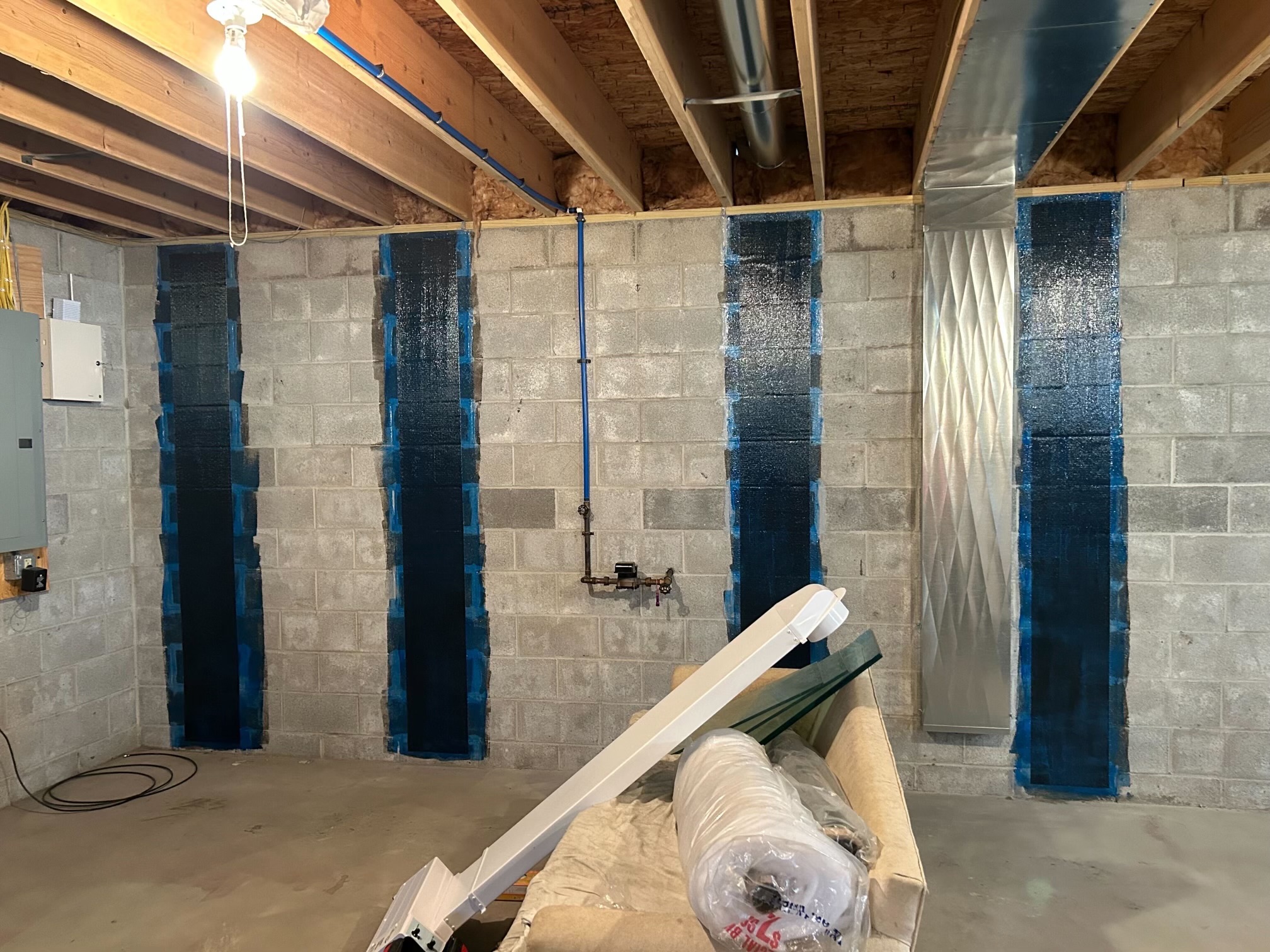
 Carbon fiber is a man-made material that is ultra-light weight, thin, and stronger than steel . For years it has been used in many different industries and for various applications. In the past decade, it has made its way into residential foundation repair and become a popular choice. Here are the top five things you need to know about Carbon Fiber Wall Repair.
Carbon fiber is best used for bowing block walls
Because of the nature of carbon fiber one of the most common applications in foundation repair is repairing a bulged or bowing block wall due to lateral pressure on the outside of a foundation wall. Carbon Fiber is installed on the inside wall of the basement to brace the wall and prevent it from moving anymore.
Carbon fiber is an alternative to steel I-beams
The old way to fix a bowing wall is with steel I-beams. Carbon fiber wall repair ultimately does the same thing as the Steel I-Beam system bracing the wall from the inside. The main difference is the final visual appeal. Carbon fiber can be painted over and made to look just like a regular wall. Although it can be done, the steel I-beams are a little harder to conceal.
Carbon fiber must be tied into the house framing
The Carbon Fiber system should be tied to the house framing to make the system complete. The bracing needs to stabilize the foundation and link it to the house framing to the structure is sound.
Carbon fiber does have its limits
Carbon fiber is not a cure-all system and doesn’t work with every foundation problem. Carbon fiber is best used for bowing walls. However, carbon fiber wall repair systems can only be used on walls that have moved two-inches or less. In the world of foundation repair, two inches is a lot and most homeowners notice the foundation damage well before that.
Not intended for the DIY
Even though carbon fiber wall repair is a fairly simple process it is not intended for the do-it-yourself homeowner. It requires the expertise and knowledge of a trained professional. Foundation repair specialists are licensed and insured to work with foundations. Working with the structural integrity of a house or building there isn’t much room for error. It is better left to the professionals.