

Foundation cracks can be a homeowner’s worst nightmare. Left unaddressed, they can lead to water damage, structural instability, and even foundation failure. Traditional repair methods, such as steel beams or wall anchors, can be effective but invasive and costly. Enter carbon fiber—an advanced solution that provides an easy, durable, and minimally disruptive way to reinforce foundation walls. This article explores the benefits of using carbon fiber for wall reinforcement, explaining how it works and why it is the preferred choice for many homeowners today.
Before diving into how carbon fiber can fix foundation cracks, it’s essential to understand why these cracks happen in the first place. Several factors can lead to foundation cracks, including:
- Hydrostatic Pressure: Water accumulation around the foundation increases the pressure on basement walls. Over time, this pressure can cause the walls to crack or bow inward.
- Soil Movement: Expansive soil, which swells when wet and shrinks when dry, can cause shifting around the foundation. This constant movement puts stress on the walls, leading to cracks.
- Natural Settling: Homes naturally settle over time, and while some minor settling is normal, excessive movement can cause cracks in the foundation.
- Poor Construction: Foundations that were improperly designed or built with subpar materials are more prone to developing cracks. Even new homes can experience these issues if the foundation wasn’t correctly constructed.
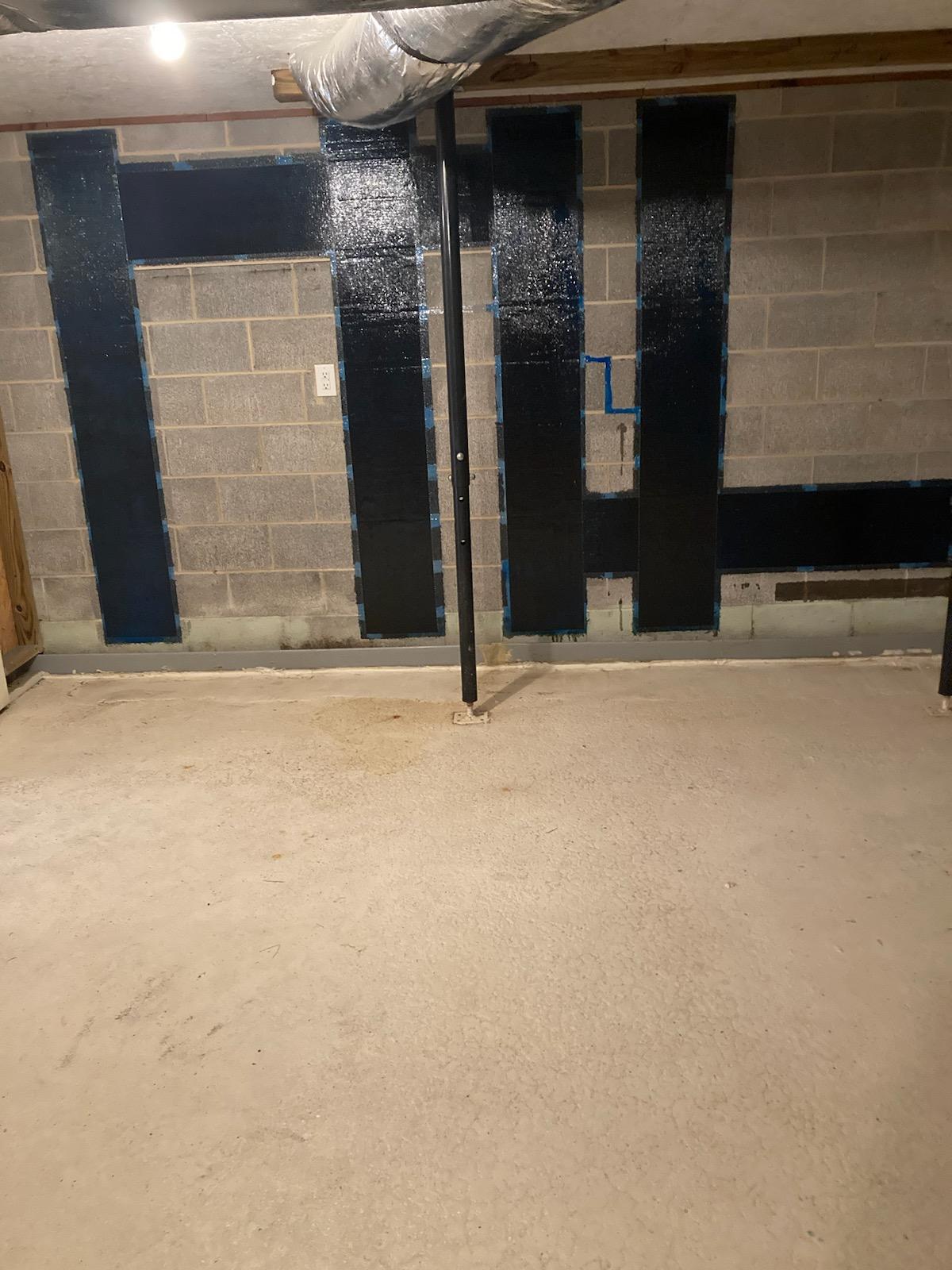
Carbon fiber reinforcement works by creating a bond between the damaged wall and the carbon fiber material, which then prevents further movement or cracking. Here’s how it’s typically applied:
- Surface Preparation: Before applying carbon fiber, the surface of the wall must be cleaned and prepped. This usually involves removing any dirt, dust, and debris, and ensuring that the cracks are exposed. In some cases, the cracks may be slightly widened to allow better penetration of the epoxy used to bond the carbon fiber.
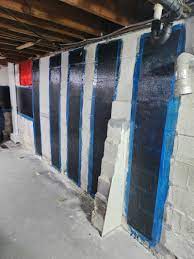
- Epoxy Injection: An epoxy adhesive is applied to the cleaned wall surface, which will bond the carbon fiber strips to the concrete. The epoxy fills in any small gaps or imperfections, creating a strong bond between the wall and the carbon fiber.
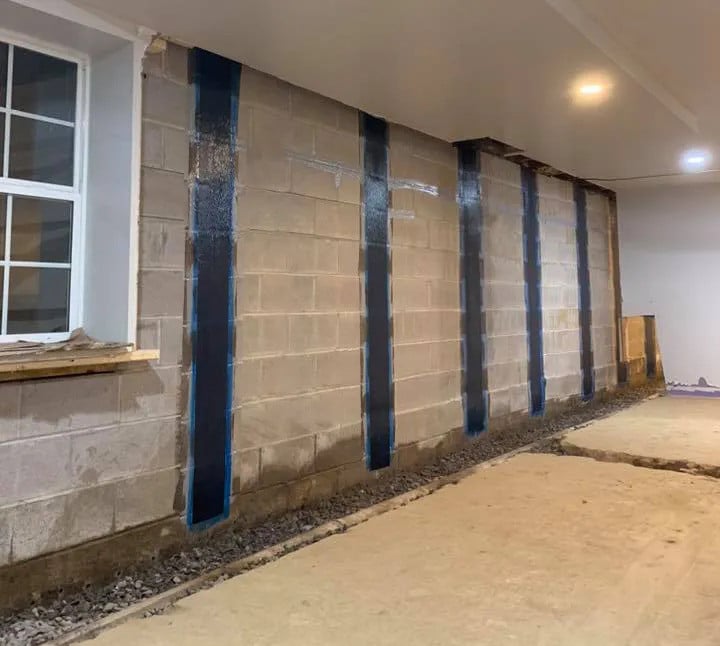
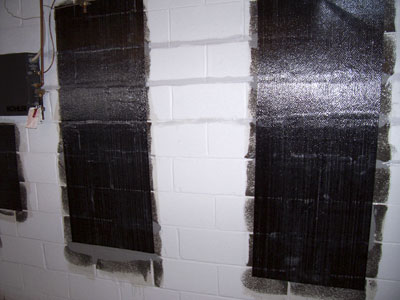
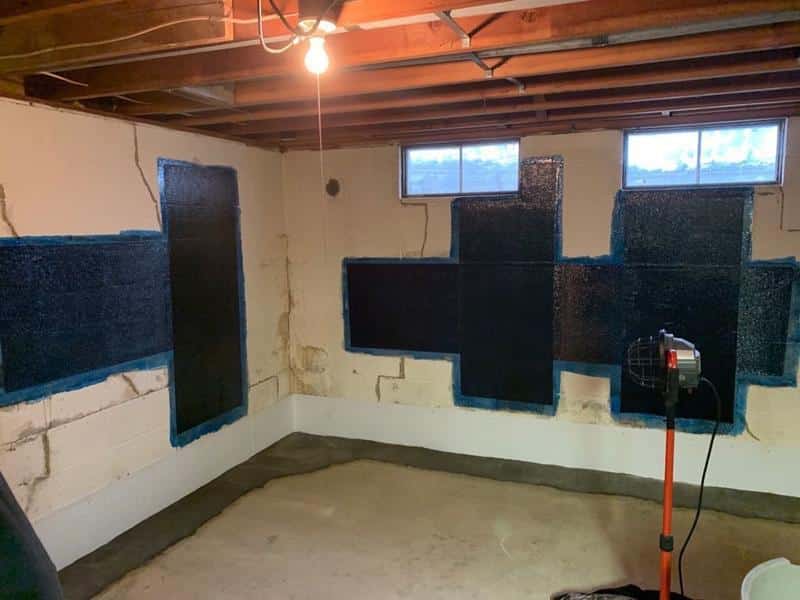
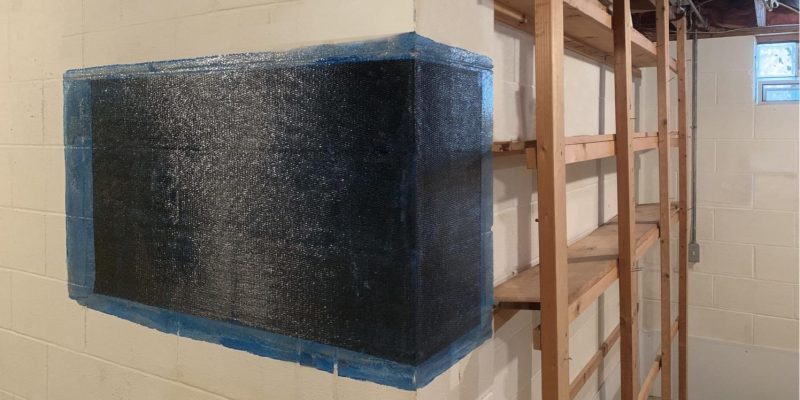
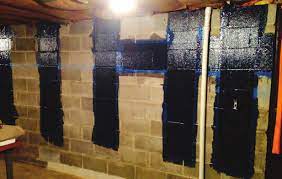
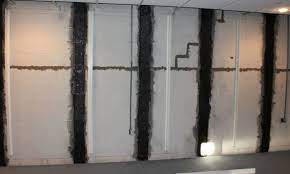
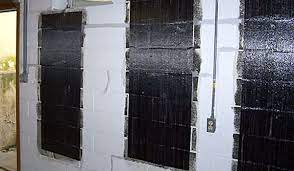
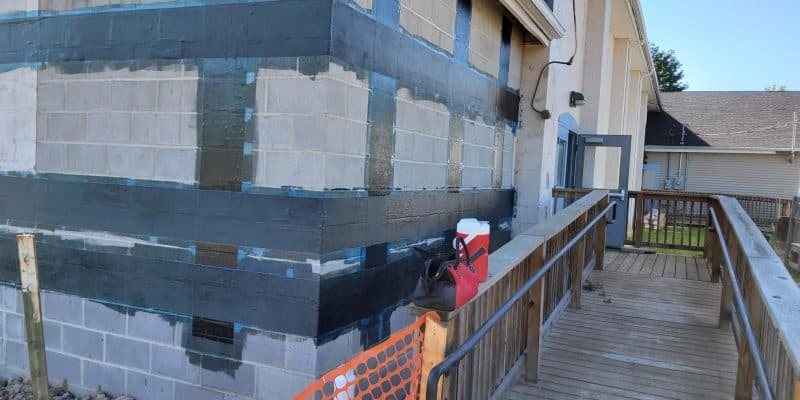
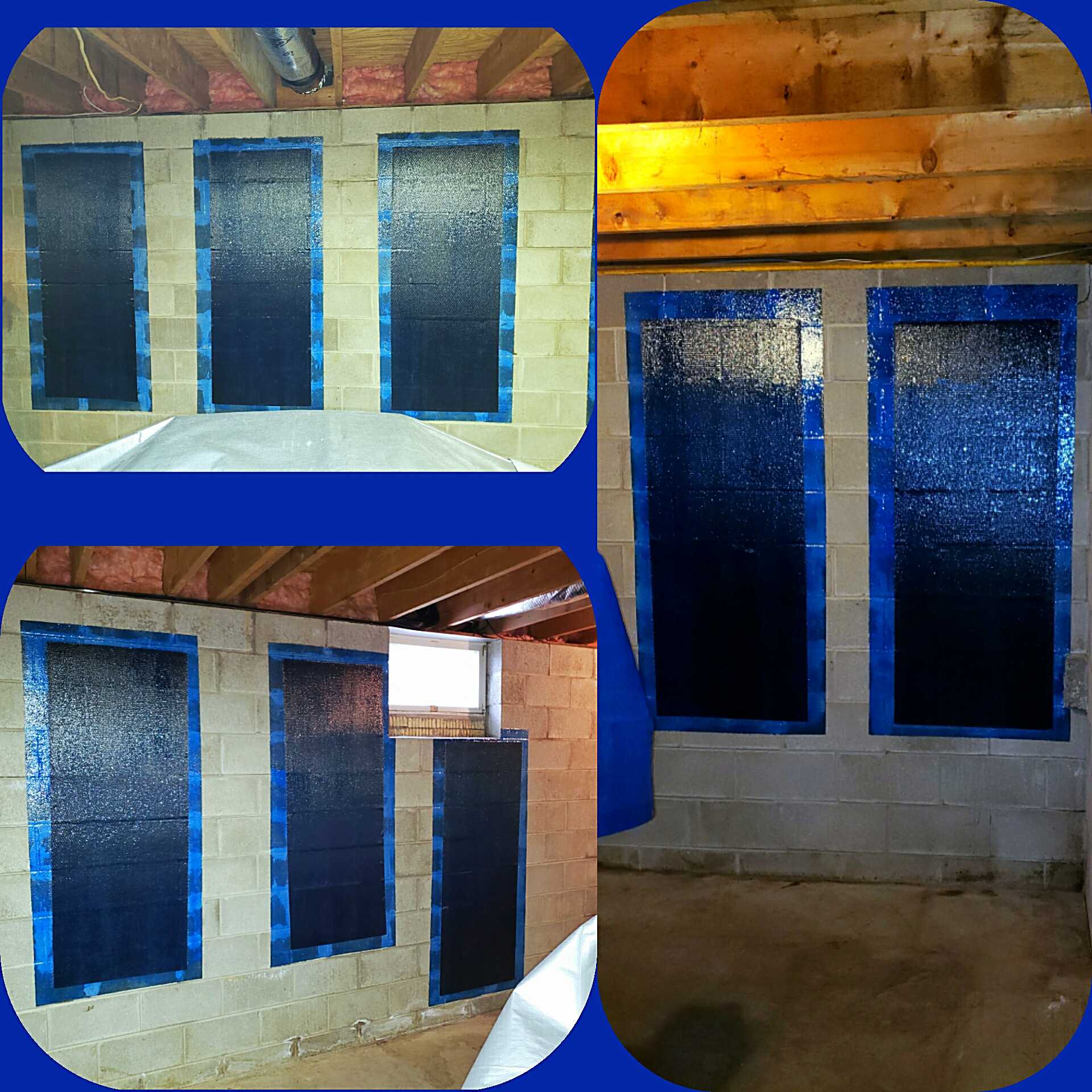
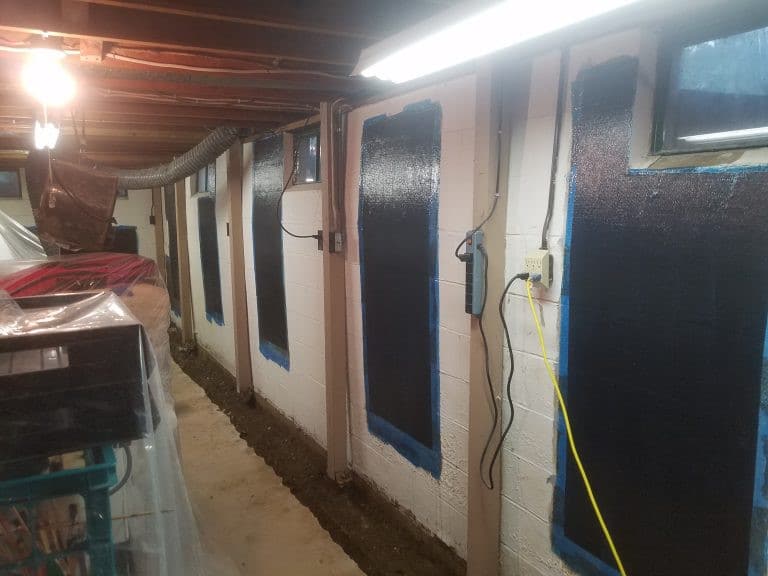
- Application of Carbon Fiber Strips: Once the epoxy is applied, carbon fiber strips are pressed onto the wall. These strips are typically placed vertically along the cracks or bowing areas of the wall. The carbon fiber material is incredibly strong, capable of withstanding high tensile forces, which helps to stabilize the wall and prevent further movement.
- Curing Process: After the carbon fiber is applied, the epoxy is left to cure. This process can take several hours to a few days, depending on the type of epoxy used and environmental conditions. Once cured, the wall is reinforced and capable of withstanding the forces that caused the cracking in the first place.
The use of carbon fiber for wall reinforcement has grown in popularity due to its numerous advantages over traditional methods of foundation repair.
- Non-Intrusive: Unlike steel beams or wall anchors that require extensive excavation or alterations to the foundation, carbon fiber is applied directly to the surface of the wall. This means there’s no need to dig up your yard or disrupt the structure of your home.
- Quick Installation: The entire process of applying carbon fiber is relatively fast compared to other methods. Most installations can be completed in a day or two, reducing the time spent on repairs and minimizing disruptions to the household.

- Cost-Effective: Carbon fiber is more affordable than traditional repair methods. Its lightweight nature means less labor is required for installation, and because it’s so durable, it typically doesn’t need ongoing maintenance or replacement.
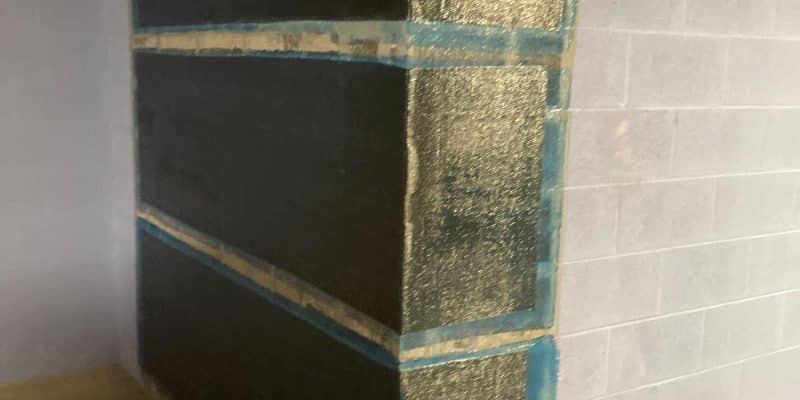
- Aesthetically Discreet: After installation, carbon fiber strips can be painted over to match the existing wall, making the repairs nearly invisible. This is particularly beneficial for homeowners who want to maintain the appearance of finished basements or other living spaces.
- Durable and Long-Lasting: Once applied, carbon fiber can last for decades without the need for additional repairs. Its resistance to moisture and corrosion makes it ideal for environments prone to dampness, such as basements.
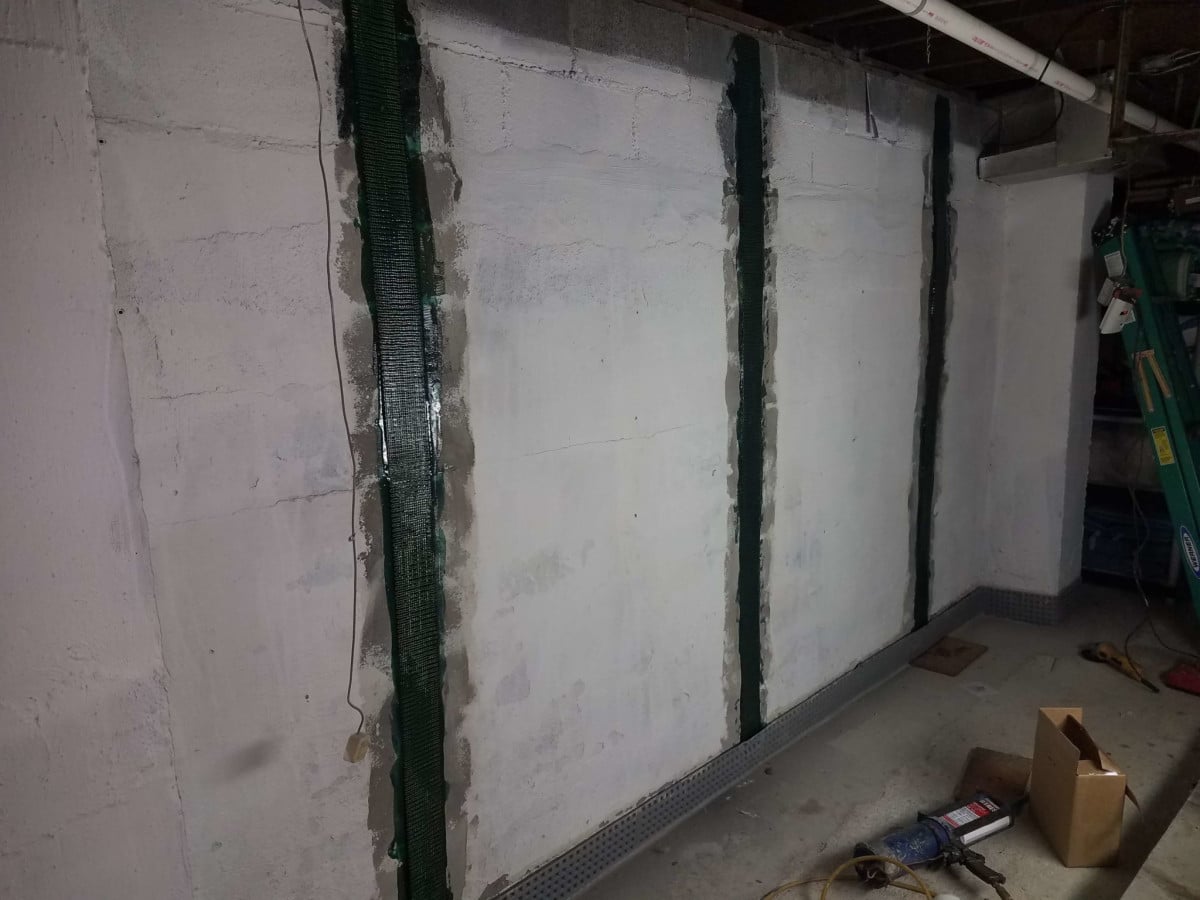
Not all foundation cracks require carbon fiber reinforcement, so it’s important to know when this method is appropriate. Generally, carbon fiber is best suited for:
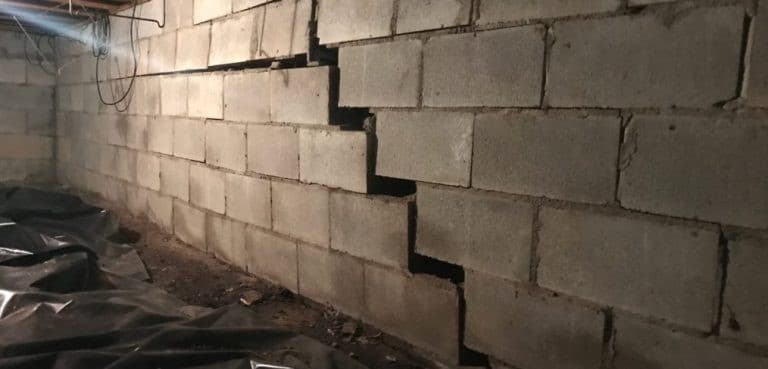
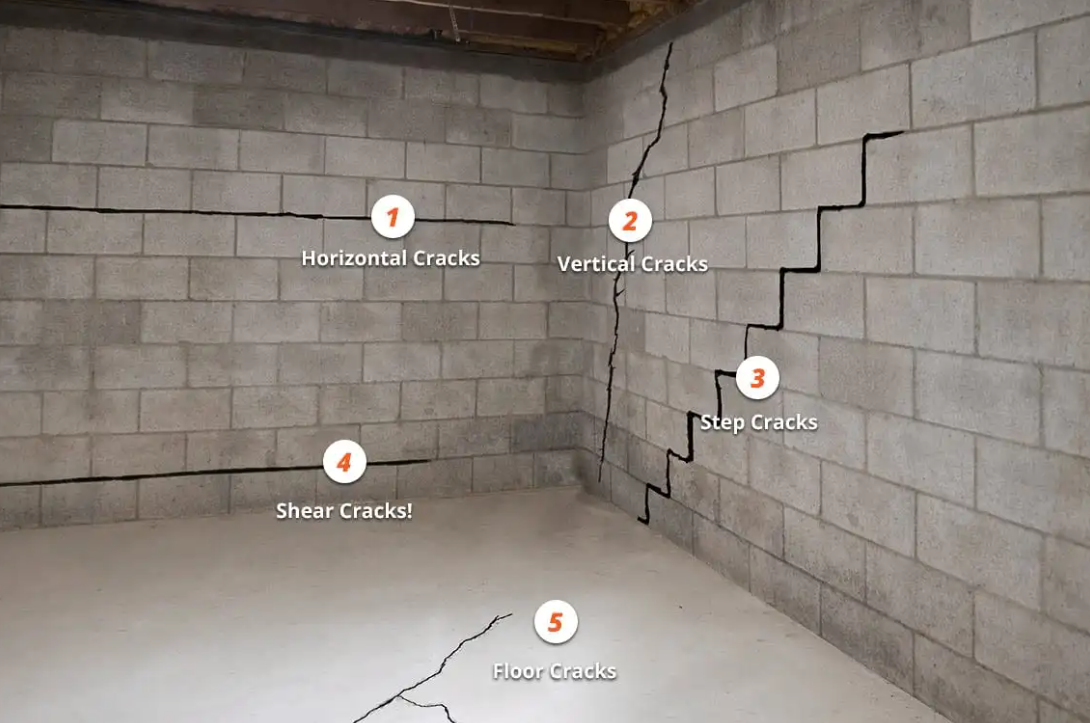
- Horizontal Cracks: Cracks that run horizontally along basement walls are often a sign of hydrostatic pressure, which can cause the walls to bow inward. Carbon fiber strips can be applied vertically to brace these walls and prevent further movement.
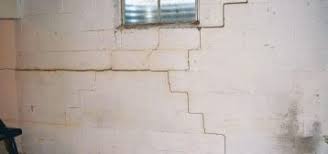
- Vertical or Diagonal Cracks: While vertical and diagonal cracks can sometimes be a result of settling, they may also indicate significant structural stress. Carbon fiber can be used to reinforce these cracks and stop them from spreading.
- Minor Bowing: If basement walls are starting to bow but haven’t yet reached a severe state, carbon fiber can be applied to stabilize the walls before more invasive repairs become necessary.
- Preventative Measures: In some cases, carbon fiber can be used as a preventative measure to stop cracks from forming. Homeowners with foundations in high-risk areas, such as regions with expansive soils or heavy rainfall, can use carbon fiber to reinforce their walls before significant damage occurs.
One of the most significant advantages of carbon fiber reinforcement is its durability. Once installed, carbon fiber strips require minimal maintenance. Because they are resistant to corrosion and moisture, they won’t degrade over time, even in damp basement environments.
It’s still essential, however, to monitor the foundation walls for any new cracks or signs of movement. If additional cracks develop or existing ones worsen, further repairs may be necessary. In most cases, though, carbon fiber reinforcement will provide long-lasting protection and keep your foundation stable for years to come.
Carbon fiber has proven to be an incredibly effective solution for reinforcing foundation walls and repairing cracks. Its non-intrusive installation, cost-effectiveness, and durability make it an attractive option for homeowners facing foundation issues. By using carbon fiber to brace and stabilize walls, homeowners can prevent further damage and protect the structural integrity of their homes for the long term.
Contact the Professionals at StablWall Today! (866) 782-5955








 mysteries of their origins and implications. Walls do more than just partition our living spaces; they are a testament to human ingenuity and craftsmanship. When cracks appear, it’s not merely a matter of aesthetics; it’s a wake-up call to the unseen battles waged within the very foundation of our structures.
 stresses gradually accumulate, causing walls to weaken and ultimately develop cracks. It’s essential to remember that these cracks are not merely surface blemishes but indications of fundamental design shortcomings.