foundation repair

What is the Best System for Cracked Foundation Repair in Finished Basement?

Foundation Repair

Finishing a basement is neither easy nor cheap. But it’s definitely worth it. You have the extra square footage of livable space and guess what? The value of your home just went up a couple of thousands of dollars. What could go wrong?

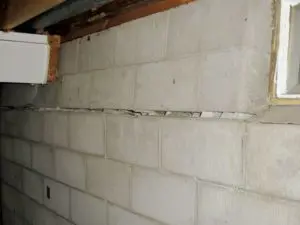
You may wake up one morning and find a foundation crack on your wall. While you may want to brush it off to foundation movement, cracks are often a sign of a deeper problem with the foundation. If they aren’t dealt with as soon as possible, you may have to deal with an even bigger problem.

Protecting Your Investment

When homeowners think of foundation repair, they imagine a large troop of contractors walking in and out of their homes, dragging large machines, dust, noise and vibrations. They also imagine their investment in their finished basement going up in smoke.

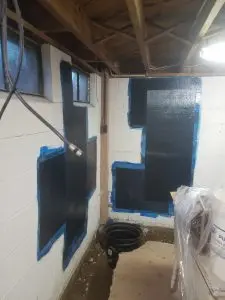
There’s good news for you. Foundation repair doesn’t always have to mean breaking down walls or digging up your lawn. There are systems that you can use on a finished basement that will not only repair cracks, but also ensure that the wall is provided with the strength and stability it needs.

Choosing a System

When it comes to repairing a cracked wall in a finished basement, choose a system that:

  • Provides long term benefits

Repairing a foundation can be expensive and disruptive. You don’t want to go through all this again anytime soon. You need a system that will last for a long time to come.

  • Is affordable

You’ve already spent quite a sum of money on finishing your basement. It can’t be easy finding the money to repair your foundation. Choose a system that is affordable and offers you the advantages of strength and stability.

  • Is flexible

Some systems are constraining. They can only be installed in a specific way and will have a major impact on the finishing of your basement. Choose a system that offers you flexibility in the finishing of your basement.

The Final Verdict

There is currently no better system for cracked foundation repair than carbon fiber. Carbon fiber fits the bill, especially for finished basements. It can be painted over once it is installed to conceal it. It also doesn’t take up any floor space unlike steel beams.

Carbon fiber is an affordable and durable choice for the repair of cracks. Talk to a contractor about using carbon fiber on your cracked foundation walls.

What Sets StablWall Apart From Everyone Else

StablWall is designed to strengthen the foundations of any building it is installed in. Through using strands of carbon fiber bound together and running in the same direction, the walls are strengthened and become more durable than ever before.

The reason why it’s so powerful is because it differs from other carbon fiber products in a number of ways.

Flexibility over Solidity

Steel plates and other carbon fiber products are rigid. They’re simply attached to the wall and provide no give. This makes the wall weaker and is likely to crack the material. StablWall is flexible and conforms to whatever surface it happens to be working with. This has the benefits of:

  • Providing more give.
  • Allows it to work with multiple surfaces.
  • Increase overall wall strength.

Customizable Direction

Most clients prefer to use this new wall system to solve already existing cracks. Each sheet can be installed over any crack in any direction. In terms of installation, this allows it to cover a greater range of scenarios. Other systems can only be installed vertically.

What about Price?

Other types of carbon fiber are more expensive. If you decide to use StablWall with a bigger building, you’ll make greater savings than expected. When rated against all types of wall strengthening systems, it’s one of the more affordable options.

Impregnation

The strips are impregnated directly onto the desired area of the wall. Other systems will use pre-prepared straps. This only leads to weaker bonding. It’s due to the belief that mixing on-site is a messy business, which is a common misconception.

All Types of Construction

There are no restrictions when it comes to the type of wall you can use this system with. Some of the walls you can use it with include poured concrete, brick, stone, block, and clay tile.

But we always recommend calling in the help of a professional to decide on the right solution for you. Every building has its own set of unique needs and requirements.

Conclusion

Whilst this is a relatively new option for owners of property, it’s also one of the most successful ones. It’s already gained critical acclaim and has successfully demonstrated its qualities through results-based tests.

However, it’s important to mention that it’s not always the best option for every building. You may have a unique scenario that calls for an alternative solution. Paying for a professional inspection will ultimately give you better results and more peace of mind.

When Should You Consider Foundation Crack Repair?

Foundation crack repair can be expensive. Whenever you’re dealing with something as important as the foundations of your house, you need to act fast, and it’s going to cost.

But what a lot of people don’t realize is that a simple crack in say, the outer plaster, isn’t a cause for concern. So when should a foundation crack should worry you?

How wide?

The first test is to measure how wide the crack is; measure from the widest point of a crack with a simple tape measure.

If it’s any wider than 1/16 inch, you have to act. This is too wide and can let in both water and termites. If it’s smaller than this, simply monitor it over the course of a few months.

Even if it doesn’t reach this 1/16 inch limit, you should opt for repair if there’s any change in the width. It’s worrying even if a 1/32 inch crack turns into a 1/20 crack.

Is it wet?

If a crack admits water, foundation crack repair is a necessity before it causes too much damage. It won’t take long for moisture to cause permanent damage to your home.

Moisture damage is one of the most common causes of serious foundation problems. You often can’t spot the extent of the internal damage. The only way to see it is to notice the wetness on the outside, where it admits water.

Grinding

Sometimes a crack’s faces can begin to grind against each other based on changes in the environment. Here are the two primary environmental changes that might influence this:

  • Temperature
  • Humidity

Check for these changes over a couple of seasons when you notice the first signs of a crack. If there’s no impact, the crack probably isn’t as serious as you think.

Should you repair minor cracks?

As you can see, it isn’t always necessary to act immediately. Minor cracks can be monitored to see how they change over time.

We still recommend taking care of cracks as soon as possible, though. The reason for this is it’s always cheaper to solve the problem as soon as you notice it. The cost of repair goes up every time the crack grows in severity.

Furthermore, solving the problem early ensures that the damage to your home’s foundations is minimal. Too many people have waited and the problem has cost them thousands in repairs. Don’t be one of them. Get help from a foundation repair expert today!

What Basement Wall Cracks Mean

Have you noticed cracks on the walls of your basement? Basement walls are under considerable pressure from the soil that surrounds them. The soil is constantly pushing against the exterior of the basement wall. The appearance of basement wall cracks is therefore often the first sign that there is a structural problem with the home.

However, there are different types of cracks that appear on basement walls. The appearance of the cracks tells a lot about what the problem is and how serious it is. Understanding the different cracks will help you determine whether your basement walls need immediate attention or not.

  • Horizontal cracks

Basement walls that are constructed without adequate vertical reinforcement succumb to the pressure of the soil around them. The walls tend to bow inwards and develop a horizontal crack that runs in the middle of the wall. The middle of the wall is the point at which the wall feels the highest pressure. This is why the crack forms at this point.

It is important to check if the wall is straight from top to bottom (i.e. plumb). If the wall is plumb, then you can wait to see if the crack will become any larger. If the wall is not plumb, contact a contractor as soon as possible.

  • Vertical cracks

Shrinking of concrete during curing is a normal occurrence. Any cracks that occur from this process are usually very small. They can’t normally be spotted. These cracks are usually negligible. They don’t affect the structure of the wall.

However, these small cracks can allow moisture in from the surrounding soil. It is therefore important to ensure that you contact a basement waterproofing contractor to check on the water proofing of your basement. This is especially important if you notice moisture on the basement walls.

Hairline vertical basement wall cracks that are only 1/16 inches wide shouldn’t be a cause for concern. Vertical cracks that are more prominent i.e. more than 1/8 inches wide should be a cause for concern. They are usually a sign that the wall is under great distress. A professional contractor should be contacted immediately to examine and repair the damage.

There are no quick fixes for cracks in basement walls. It is important to ensure that you contact a professional contractor as soon as you notice any cracks in your basement walls. This will ensure that your foundation walls are secure.