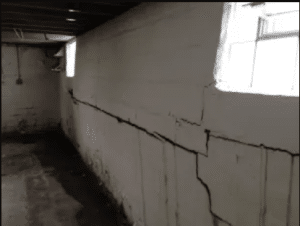
Once a homeowner learns that a horizontal foundation crack is a structural concern, the next question is almost always:
“What’s the best way to fix this, and will it actually last?”
Horizontal cracks aren’t something to experiment with. Because they’re tied to lateral pressure and wall movement, the repair method needs to do more than hide the damage. It needs to stop the force causing it.
This guide explains the most common repair options for horizontal foundation cracks, when each is appropriate, and what homeowners should realistically expect long-term.
Why Horizontal Cracks Require a Different Repair Approach
Horizontal cracks form when soil and water push inward against a foundation wall. That means the wall is being bent, not just cracked.
Because of this, repairs must:
- Reinforce the wall
- Counteract lateral pressure
- Prevent further inward movement
Simply sealing the crack does not accomplish these goals.
Carbon Fiber Reinforcement Systems
How carbon fiber repair works
Carbon fiber straps or sheets are bonded directly to the interior of the foundation wall using high-strength epoxy. Once cured, the carbon fiber acts as reinforcement, preventing the wall from bending further.
Carbon fiber is incredibly strong in tension, which makes it ideal for resisting lateral pressure.
When carbon fiber is a good option
- Early to moderate wall movement
- Horizontal cracking without severe bowing
- Homeowners who want a low-profile solution
- Situations where excavation is not desired
Why homeowners choose carbon fiber
- Minimal disruption during installation
- No loss of basement space
- Clean, low-visibility appearance
- Designed for long-term stabilization
Carbon fiber is often considered a permanent solution when used in appropriate conditions.
Steel Beam and Wall Bracing Systems
How steel bracing works
Steel beams are installed vertically against the foundation wall and anchored to the floor and framing above. These beams resist inward movement by mechanically supporting the wall.
When steel bracing is recommended
- More advanced wall movement
- Walls showing noticeable bowing
- Cases where maximum resistance is required
Pros and trade-offs
Steel systems provide strong reinforcement, but they:
- Reduce usable basement space
- Are visually more intrusive
- May limit finishing options
Steel bracing is effective, but some homeowners prefer less invasive alternatives when possible.
Wall Anchor and Tieback Systems
How wall anchors work
Wall anchors use rods or cables that extend through the foundation wall and anchor into stable soil outside the home. Over time, these systems can help pull walls back toward their original position.
When anchors are appropriate
- Severe horizontal cracking
- Significant wall bowing
- Adequate exterior space and soil conditions
Considerations
Wall anchors are powerful but:
- Require exterior excavation
- Depend on soil stability
- Involve more disruption
They are often used when corrective movement is needed, not just stabilization.
Why Crack Sealing Alone Isn’t Recommended
Crack sealing methods like epoxy or polyurethane injection are designed to stop water intrusion, not structural movement.
For horizontal cracks, sealing:
- Does not relieve pressure
- Does not reinforce the wall
- Does not prevent future movement
In some cases, sealing may be used after stabilization, but not as a standalone solution.
Which Repair Options Last the Longest?
Longevity depends less on materials and more on matching the solution to the problem.
Repairs tend to last when:
- Wall movement is fully addressed
- Pressure forces are counteracted
- Installation is done correctly
- Drainage issues are managed
Carbon fiber, steel bracing, and wall anchors are all designed to provide long-term protection when used appropriately.
Common Questions Homeowners Ask
Can a horizontal crack be permanently fixed?
Yes, when the repair method stops the movement causing the crack.
Will the crack disappear after repair?
Stabilization prevents further movement. Cosmetic crack repair may be done separately if desired.
Is one method always better than the others?
No. The “best” option depends on wall condition, severity, and site constraints.
What Homeowners Say After Choosing the Right Repair
Homeowners who choose the right reinforcement often report:
- No further wall movement
- Peace of mind during heavy rain
- Fewer moisture issues
- Confidence in their home’s structure
The most common feedback is relief that the problem was handled correctly the first time.
Why Professional Evaluation Matters
Choosing the wrong repair method can lead to wasted money and repeated issues.
Professionals like Stablwall evaluate wall movement, pressure sources, and structural conditions to recommend solutions that stabilize walls long-term, not just cover visible cracks.
The Homeowner Takeaway
Horizontal foundation cracks are not something to patch and forget.
The best repair options are those that reinforce the wall, stop movement, and protect the structure for years to come. Understanding the differences between methods allows homeowners to make informed decisions with confidence.
A lasting repair doesn’t just fix a crack. It restores stability.